
GlucoExtend Review: Ingredients, Evidence, and What to Verify Before Buying
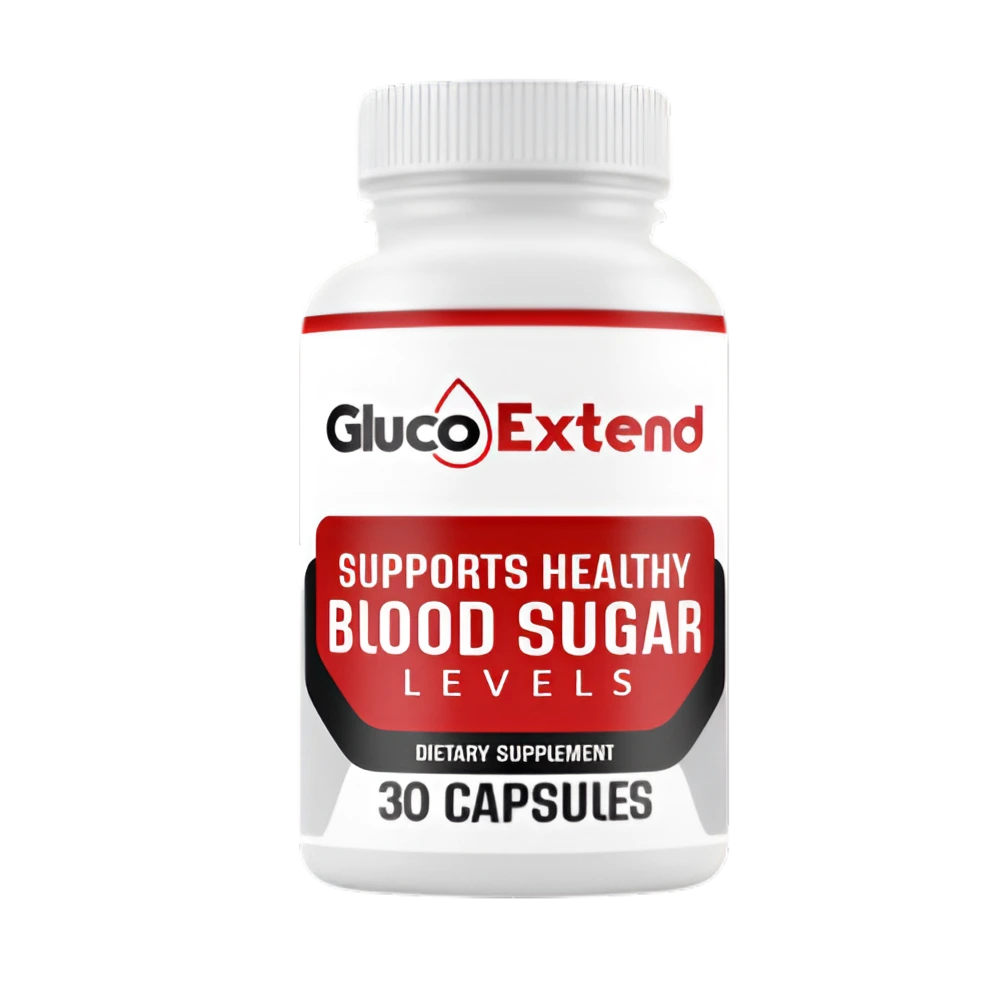
GlucoExtend is a capsule supplement marketed as support for healthy blood sugar levels, insulin sensitivity, and metabolic health. Before the ingredient breakdown, the honest starting point: we could not confirm a single, consistent version of this product. Ingredient lists, dosage instructions, and even the “official website” URL vary from one promotional source to the next — a transparency problem that matters as much as any single ingredient claim.
How We Evaluated This Product
This review follows our Supplement Review Methodology: extracting the brand’s claims, comparing ingredients to their studied doses and forms, checking for product-specific clinical evidence, reviewing safety data, and scoring transparency. Where sources conflict, or evidence is absent, we report that directly rather than smoothing it over.
What Is GlucoExtend?
GlucoExtend is sold as a capsule, taken once or twice daily, marketed around a blend described as “11+ natural ingredients.” It’s promoted as non-GMO, stimulant-free, and made in an FDA-registered, GMP-certified facility. As with any dietary supplement, “FDA-registered facility” refers to manufacturing standards, not FDA evaluation or approval of the product’s effectiveness — no supplement claiming to manage blood sugar is FDA-approved for that purpose.
A transparency flag before anything else: different promotional pages for this product list meaningfully different ingredient panels (see the table below), different dosages, different official site URLs, and duplicated customer testimonials across unrelated sites. That pattern is typical of high-volume affiliate marketing networks rather than a single, consistently documented product, and it should factor into how much weight a reader gives to any specific claim made about it.
If you want to check current pricing, packaging, or the seller’s own label listing directly, you can view GlucoExtend on the manufacturer’s page — we’d recommend doing that before reading further, so you can compare what’s actually on the label against the evidence below. (ThinkHealthTips may earn a commission from this link — see our Affiliate Disclosure above.)
Ingredients: What’s Claimed vs. What’s Supported
| Ingredient | Appears in | Individual human evidence | Product-specific evidence |
|---|---|---|---|
| Berberine | Some listings | Reasonably strong: several human trials link it to lower fasting glucose and improved insulin sensitivity, generally at 500mg, 2–3x/day | None found |
| Chromium picolinate | Most listings | Mixed: modest glycemic benefit shown mainly in people with chromium insufficiency; effect size in general populations is small | None found |
| Alpha-lipoic acid | Some listings | Moderate: some evidence for improved insulin sensitivity and reduced oxidative stress, typically at 300–600mg/day | None found |
| Bitter melon | Some listings | Limited/mixed: several small trials suggest modest glucose-lowering effects; overall evidence quality is low | None found |
| Cinnamon extract | Most listings | Mixed: some trials show a small fasting-glucose reduction; effects are inconsistent across studies and cinnamon species/extracts differ.r | None found |
| Gymnema sylvestre | Some listings | Limited: traditional use is longstanding; controlled human evidence is sparse.e | None found |
| Banaba leaf extract | Some listings | Limited: corosolic acid has a plausible mechanism; human trial evidence is thin. | None found |
| Licorice (DGL) | Some listings | Weak for blood sugar specifically; DGL is mainly studied for digestive use, not glycemic control.l | None found |
| White mulberry | Some listings | Limited: some small studies on post-meal glucose spikes; not well replicated | None found |
| Vanadium | Some listings | Weak: insulin-mimetic effects shown mainly in animal/lab studies; human evidence is minimal, and vanadium has a narrow safety margin | None found |
| L-taurine | Some listings | Weak for glucose specifically; better evidence exists for other uses (cardiovascular, exercise) | None found |
No two sources we reviewed listed the same 11 ingredients in the same order, and several listed different core ingredients entirely. Disclosed amounts per capsule were not consistently available, so even where an ingredient has real backing at a specific dose, there’s no way to confirm GlucoExtend delivers that dose.
Claim-to-Evidence Summary
| Marketing claim | What independent evidence shows | Verdict |
|---|---|---|
| “Supports healthy blood sugar levels” | Some individual ingredients have supporting human data at specific doses | Plausible mechanism, no product-level proof |
| “Improves insulin sensitivity” | Berberine and alpha-lipoic acid have the better human evidence for this among the listed ingredients | Ingredient-level only |
| “Clinically proven” (used on some promotional pages) | No clinical trial of the finished GlucoExtend formula was found | Not supported |
| “Aids weight loss” | Weak, indirect evidence at best; none of the listed ingredients have strong weight-loss-specific human data | Not well supported |
| “No side effects reported” | Several ingredients (berberine, vanadium, licorice) have known interactions or safety considerations | Overstated |
Safety
A few ingredients that show up across GlucoExtend listings carry real precautions worth knowing regardless of brand: berberine can interact with several medications, including some diabetes drugs and blood thinners, and isn’t recommended in pregnancy. Vanadium has a narrow margin between studied doses and doses associated with side effects, and long-term safety data is limited. Licorice (unless the DGL form is used and confirmed) can raise blood pressure and affect potassium levels with prolonged use. Anyone already on blood sugar or blood pressure medication should talk to a doctor or pharmacist before adding a multi-ingredient blend like this — the risk isn’t necessarily GlucoExtend specifically, but the combination of active ingredients at undisclosed doses.
FAQs
Does GlucoExtend actually lower blood sugar?
Some of the ingredients most consistently listed for it (berberine, alpha-lipoic acid, chromium) have real supporting human research in isolation, at specific doses. There’s no published evidence that the finished GlucoExtend capsule, at whatever amounts it actually contains, does the same.
Why do ingredient lists for GlucoExtend differ between websites?
That’s a fair question to ask before buying. It’s a pattern consistent with a product promoted through many independent affiliate sites rather than one controlled by a single source of accurate label information. It doesn’t necessarily mean the product is fake, but it does mean readers shouldn’t treat any one page’s ingredient list as authoritative without checking the actual bottle label.
Is GlucoExtend safe to take with diabetes medication?
Possibly not without medical supervision. Several of its commonly listed ingredients (berberine especially) can lower blood sugar further when combined with prescription glucose-lowering medication, raising the risk of hypoglycemia. This is a conversation to have with a prescriber, not a guess to make alone.
Is GlucoExtend a scam?
We’re not calling it that. What we can say: there’s no independent clinical evidence for the finished product, ingredient and dosage information conflicts across sources, and several “clinically proven” style claims outrun what’s actually documented.
Final Assessment
GlucoExtend combines ingredients that individually have a real, if mixed, evidence base for blood sugar support — berberine and alpha-lipoic acid are the strongest of the group — but there’s no clinical evidence for the assembled product itself, no consistent disclosure of ingredient amounts, and enough conflicting information across promotional sources that basic facts about the product (its ingredient list, its dosage, even its official website) aren’t reliably confirmable. That inconsistency is itself the most important finding of this review, ahead of any single ingredient’s merits.
Anyone managing diabetes or prediabetes with medication should not use this, or any similar supplement, as a substitute for medical care, and should talk to a healthcare provider before adding it alongside existing treatment.
If you’d still like to look at current packaging and pricing after reading this, you can check GlucoExtend’s listing directly — the label there is the only place to confirm actual ingredient amounts, which this review couldn’t independently verify. (Affiliate link — see our Affiliate Disclosure.)
Editorial Standards
This review was written independently of the brand and its affiliate network. Conclusions reflect available evidence, not payment or partnership status, and follow our Editorial Policy: verified sourcing, no pay-for-praise, and unconfirmed claims or credentials stated as unconfirmed rather than assumed legitimate.
Affiliate Disclosure:
ThinkHealthTips may earn a commission if you purchase GlucoExtend through a link on this page, at no extra cost to you. This did not influence the evidence assessment above. See our full Affiliate Disclosure.
Medical Disclaimer:
This article is for informational purposes only and is not medical advice. It is not intended to diagnose, treat, cure, or prevent any disease, including diabetes. Speak with a qualified healthcare provider before starting any new supplement, especially if you are pregnant, nursing, or taking medication for blood sugar or blood pressure.
References
- NCCIH – Diabetes and Dietary Supplements
Best overall source for berberine, chromium, cinnamon, alpha-lipoic acid, bitter melon, evidence limitations, and general safety. (NCCIH)
NCCIH: Diabetes and Dietary Supplements - NIH ODS – Chromium Fact Sheet
Best for your chromium evidence, dosage context, hypoglycemia, and medication-interaction claims. (ODS)
NIH ODS: Chromium - PubMed – Berberine Meta-analysis
Direct scientific evidence for your berberine/blood-glucose claims. (PubMed)
PubMed: Berberine and Type 2 Diabetes - PubMed – Alpha-Lipoic Acid Meta-analysis
Direct evidence for your ALA/glycemic-control claims. (PubMed)
PubMed: Alpha-Lipoic Acid and Type 2 Diabetes - NCCIH – Licorice Root
Use specifically for your licorice, blood-pressure, and potassium/safety claims. NCCIH: Licorice Root - NCCIH – Cinnamon
Use for cinnamon evidence, formulation differences, and safety. NCCIH: Cinnamon
