Author: Shafeek

Shafeek is a dedicated health researcher who has spent 5 years studying wellness, nutrition, and supplement science. Every article is built on peer-reviewed studies from PubMed, NIH, Mayo Clinic, and other trusted institutions. Shafeek does not provide medical advice, all content is for educational research purposes only
  • How Many Calories Do You Actually Burn While You Sleep?

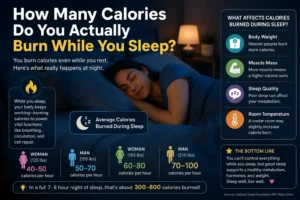
    Somewhere around 2 a.m., while you’re deep in a dream you won’t remember, your body is still working. Not exercising, not digesting a meal, just running the quiet machinery that keeps you alive. Heart beating, lungs filling, cells repairing themselves. All of that costs energy, and that energy comes from calories. A lot of people assume sleep is a kind of metabolic pause button, a stretch of hours where nothing counts. That’s not quite right. Your body doesn’t switch off at night. It shifts into a different mode, one built around repair and recovery rather than movement. And that mode still burns fuel, just at a slower, steadier pace than your waking hours. If you’ve ever wondered whether a full night’s sleep “does anything” for…

  • Why Do I Want to Sleep All the Time?

    Feeling like you could nap through the entire day is usually a sign that something is off, either with your sleep quality, your daily habits, or an underlying health condition. The most common causes are poor sleep quality, sleep apnea, low iron, thyroid problems, depression, and certain medications. Most cases improve once the root cause is treated, though a doctor should always check out persistent or worsening sleepiness. Below, we walk through the most likely reasons, how doctors sort them out, and what tends to help. Quick Facts What Does It Mean When You Want to Sleep All the Time? Doctors use the term excessive daytime sleepiness to describe a strong, ongoing urge to sleep during hours when a person is normally awake. This is…

  • Why Do People Talk in Their Sleep? What Science Knows and When It Matters

    Sleep talking catches most people off guard the first time they hear it, a mumbled sentence, a name spoken into the dark, sometimes a full conversation directed at nobody. The person in bed has no idea any of it is happening. For bed partners, roommates, or parents listening from the hallway, it can range from amusing to unsettling, depending on what gets said and how often it occurs. And the questions it raises are genuinely interesting. What is the brain doing during those moments? Is it replaying the day, processing emotion, or just misfiring signals during a transition between sleep stages? Sleep talking, known in medicine as somniloquy, is one of the more common sleep behaviors across all age groups. It tends to be dismissed…

  • Why You Wake Up Tired After 8 Hours of Sleep (Real Causes Explained)

    You did everything right. Lights off by ten, phone across the room, a full eight hours logged. And yet the alarm goes off, and your body feels like it never got the memo. If this sounds familiar, you’re not imagining it, and you’re not doing sleep wrong. The number of hours you spend in bed is only part of the story. Sleep isn’t a single, uniform state. It’s a cycle your body moves through several times a night, shifting between light sleep, deep sleep, and REM sleep. Waking up tired after a full night usually means something interrupted that cycle, even if you never noticed it happening. Sleep Quality Matters More Than Sleep Duration Eight hours of fragmented sleep is not the same as eight…

  • Is Sleep Apnea Genetic? Understanding the Role of Family History

    You may know someone who snores so loud that others leave the room. Or perhaps a parent, sibling, or partner has been told they stop breathing during sleep. After hearing stories like these, one question often comes up. Could sleep apnea run in families? The answer is not as simple as yes or no. Genes can raise the chance of developing some forms of sleep apnea, but they are only one piece of a much bigger picture. The shape of your jaw, the size of your airway, your body weight, age, and even certain medical conditions all work together. A family history does not mean you will develop sleep apnea, and having no relatives with the condition does not mean you are free from risk….

  • Is Sleep Apnea Considered a Disability? Look at Your Rights and Options

    Sleep apnea is one of the conditions that many people don’t realize they have. Your breathing will start and stop over and over while you sleep. You may feel tired after waking up, even completely after a full night of sleep, and spend years wondering why. Once you are diagnosed, it’s normal to have a lot of questions. One of the most common questions is, Is sleep apnea a disability?, and Can Sleep Apnea Kill You? Here are the complete answers. People ask this question for different reasons. Some find it hard to keep up with their job because of constant fatigue. Others struggle with everyday activities as their symptoms become more severe. Some want to know if they qualify for disability benefits or workplace…

  • Can Sleep Apnea Kill You?

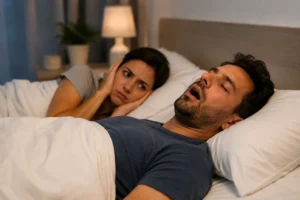
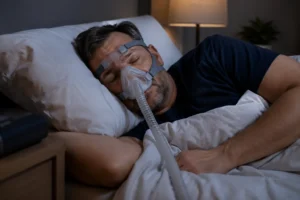
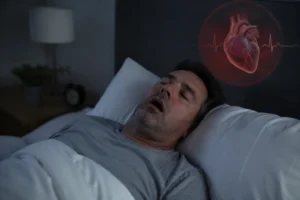
    Most people who snore think of it as an embarrassment, not a health problem. Something that wakes their partner or gets brought up at breakfast with mild annoyance, then forgotten by noon. But sleep apnea is not snoring. It is a condition in which breathing stops and restarts throughout the night, sometimes dozens of times per hour, without the person ever knowing it. And when it goes undetected for months or years, the body pays a real price. The short answer to whether sleep apnea can kill you is: it can contribute to death, through mechanisms that are well-documented in cardiovascular research. But that is not the end of the story. Sleep apnea is one of the more treatable sleep conditions once it is identified….

  • Can You Sleep With a Tampon In? What You Need to Know About Overnight Use

    You’re lying in bed, period in full swing, and the same question pops up that has crossed the mind of nearly everyone who uses tampons: Is it actually safe to leave one in overnight? Maybe you’ve heard scary stories about toxic shock syndrome from a friend or a warning label you skimmed once and never thought about again. Maybe you just want a straight answer instead of vague warnings. The short version is that yes, you can sleep with a tampon in, but there are real limits worth understanding. This isn’t about scaring you away from a product millions of people use safely every month. It’s about giving you the practical details so you can make a choice that fits your body and your sleep…

  • How to Increase REM Sleep: What Your Brain Actually Needs at Night

    Many people who struggle with poor sleep are not simply lacking energy. They experience slow thinking, less dreaming, and reduced mental sharpness, and after waking up, they do not feel fully refreshed. The reason often lies in how long you sleep, but the quality of your sleep is equally important as how long you sleep. REM sleep is one of the most important stages for true recovery and mental refreshment. REM, or rapid eye movement, is the unique stage of sleep at which time your brain becomes hyperactive, your eyes move behind your closed eyelids, and dreaming happens. But REM sleep is not only about dreams; it is also more than that. It helps your brain to store memories, maintain mental sharpness, and manage emotions….

  • Causes of Gum Recession: Why Your Gums Pull Back and What You Can Do About It

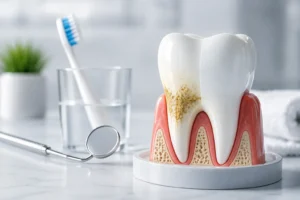
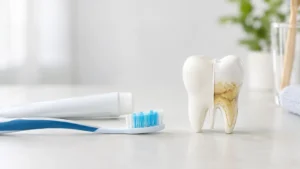
    Your gums protect your teeth. They wrap tightly around the base of each tooth and act like a seal. When that seal breaks down, the gum tissue starts to pull away. This is called gum recession. It looks simple, but the causes behind this are not always crystal clear. Many people notice gum recession too late. Because they don’t have proper knowledge. In this stage, the roots of the teeth will become exposed. The teeth look longer than normal. You may feel sensitivity while you are eating hot or cold food items. Some people feel pain when they brush. Gum recession doesn’t happen overnight. It builds slowly. So understanding the causes matters. When you know how to pull your gums back, you can prevent serious…

  • How To Sleep With a Chemo Port

    Holding a sleep is a very hard thing during cancer treatment. Add a chemotherapy port to the picture, and suddenly every position that used to feel natural now hits something tender and unfamiliar under your collarbone. A port, or implanted central venous catheter, sits just beneath the skin in the chest. It gives doctors reliable IV access without poking a new vein every session. That is genuinely useful. But it also means you are now sleeping with a raised, slightly foreign object in your chest wall, and your body is going to remind you about it the moment you roll over wrong. The good news: this is a very solvable problem. People work around it every night. The adjustments are not complicated, and most of…

  • How to Get More Deep Sleep

    You wake up after a full night in bed and still feel tired. Not a little tired. Bone-tired. Like you barely slept at all. That feeling is not just in your head, and it is not always about how many hours you slept. A lot of the time, it is about which kind of sleep you are getting. Deep sleep is the stage where your body does its most important repair work. It is quiet, slow, and powerful. And most adults are not getting nearly enough of it. This article explains what deep sleep is, what cuts into it, and what you can realistically do to get more of it every night. What Deep Sleep Actually Is Sleep is not one continuous thing. It moves…