How to Sleep With Lower Back Pain

Waking up stiff and sore is one thing. Lying in bed for hours, unable to find a position that doesn’t hurt, is something else entirely. For people with lower back pain, sleep can feel like a second problem on top of the first one.
The good news is that small changes to how you sleep, what you sleep on, and how you get in and out of bed can make a real difference. None of these fixes require surgery or expensive gadgets. Most of them cost nothing at all.
Why Lower Back Pain Gets Worse at Night
It seems strange. You’d think lying still would give your back a break. But for many people, back pain actually feels worse at night or first thing in the morning.
There are a few reasons for this.
When you lie down, the pressure on your spine changes. During the day, your spine carries your body weight evenly as you stand and move. At night, if your mattress or sleep position isn’t right, some parts of your spine get compressed while others get stretched. That imbalance can irritate already-sensitive nerves and muscles.
There’s also the stillness itself. Moving around during the day keeps blood flowing to the muscles and soft tissue around your spine. When you lie still for hours, circulation slows. Muscles can stiffen. Inflammation that was manageable during the day becomes more noticeable when everything quiets down.
According to the National Institute of Neurological Disorders and Stroke, lower back pain is one of the most common reasons people miss work and visit doctors in the United States. It affects about 80% of adults at some point in their lives. Nighttime pain is one of the most frequent complaints among that group.
The Sleep Positions That Tend to Help
Not every position works for every person. Your specific type of back pain matters. But these are positions that reduce strain on the lower spine for most people.
On Your Back With a Pillow Under Your Knees
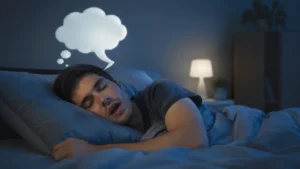
Sleeping on your back is often the best option for lower back pain. It spreads your body weight evenly across the widest surface of your body, which reduces pressure on any one spot.
The key is to place a pillow under your knees. This keeps a slight bend in your legs and lets your lumbar spine (the lower curve of your back) relax into a more natural position. Without that pillow, your legs pull flat against the mattress, which can flatten your lower back curve and cause strain.
You can also place a small rolled towel under your lower back for extra support if the curve of your back doesn’t quite touch the mattress.
On Your Side With a Pillow Between Your Knees
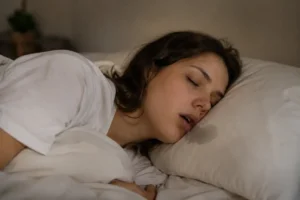
Side sleeping is the most common position. If you do it without support, though, your top leg tends to drop forward. That rotation pulls on your hips and lower back all night long.
Placing a firm pillow between your knees prevents that drop. It keeps your hips, pelvis, and spine in a neutral line. The Cleveland Clinic recommends this as one of the top positions for people with lower back pain, especially those with disc problems or sciatica.
Pull your knees up slightly toward your chest, into a gentle curl. This takes pressure off the facet joints in your lower spine, which are small joints between each vertebra that can become inflamed and painful.
If you sleep on your side and wake up with numbness or tingling down one leg, try switching sides. Sometimes the pressure from sleeping on one side consistently can irritate a nerve.
On Your Stomach: Usually the Worst Option
Stomach sleeping puts your lower back into an arched, compressed position for hours at a time. It also forces your neck to twist to one side to breathe. Most back pain specialists recommend avoiding it.
If you simply can’t sleep any other way, placing a thin pillow under your lower abdomen and pelvis (not your head) can reduce some of the strain on your lumbar spine. But it’s worth gradually trying to shift to a side or back position over time.
The American Academy of Orthopaedic Surgeons notes that stomach sleeping is the position most likely to cause or worsen lower back pain, particularly in people with disc problems.
How Your Mattress Affects Your Back
You can do everything else right and still wake up in pain if your mattress is working against you.
A mattress that’s too soft lets your hips sink lower than your shoulders. That misaligns your spine and puts pressure on the joints and nerves in your lower back.
A mattress that’s too firm doesn’t contour to the natural curves of your body. Your lower back ends up hovering slightly above the surface with no support underneath it.
What tends to work best is something in the middle: a medium-firm mattress that supports your spine’s natural curves while cushioning pressure points at your hips and shoulders.
A study published in The Lancet found that people with lower back pain who slept on medium-firm mattresses reported significantly less pain and disability than those who slept on firm mattresses. The improvement was consistent over 90 days.
If you can’t replace your mattress right now, a mattress topper can help. A 2-to-3-inch memory foam topper can add cushioning to a mattress that’s too firm, and a firmer topper or a board placed underneath can help if yours is too soft.
Pillow Placement Matters More Than Most People Realize
Your pillow isn’t just for your head. Strategic pillow placement can change how much strain your back absorbs during the night.
For back sleepers: One firm pillow under your head and neck, plus a pillow under your knees.
For side sleepers: A pillow between your knees (at the height of your hip, not just your thigh), and your head pillow should be thick enough to keep your neck level with your spine, not tilted up or drooping down.
For stomach sleepers: A thin pillow or no pillow under your head, and a pillow under your pelvis.
If you have a gap between your waist and the mattress when side sleeping (some people do, especially those with a pronounced curve at the waist), a small rolled towel or thin pillow placed there can fill that gap and reduce overnight strain.
Getting In and Out of Bed Without Making It Worse
This part is often overlooked. How you get in and out of bed matters, especially first thing in the morning when your back is stiffest.
Getting out of bed:
- Roll to your side first. Don’t sit straight up from lying flat. That movement puts a lot of strain on your lower back.
- Let your legs drop off the side of the bed.
- Use your arms to push yourself up to sitting.
- Sit at the edge for a moment before standing.
- Stand slowly, using your leg muscles rather than pushing up with your back.
Getting into bed: Reverse the same process. Sit on the edge first, then lower yourself to lying using your arms, and roll to your preferred sleeping position.
These small changes reduce the load on your lumbar spine at a moment when it’s most vulnerable.
What Causes Lower Back Pain in the First Place
Understanding what’s behind your pain can help you choose the right sleeping strategy.
Muscle strain: The most common cause. Overuse, awkward movements, or lifting something heavy can strain the muscles and ligaments in your lower back. Pain usually improves within a few weeks with rest, movement, and proper positioning.
Disc problems: Between each vertebra in your spine sits a soft disc that acts like a shock absorber. When a disc bulges or herniates (pushes out of position), it can press on nearby nerves. This often causes pain that radiates down the leg, a pattern called sciatica.
Arthritis: Osteoarthritis in the spine causes the cartilage between joints to wear down. The resulting inflammation and bone changes can cause stiffness, especially in the morning.
Spinal stenosis: This is a narrowing of the space inside the spinal canal. It can compress the spinal cord or nerves and cause pain or numbness, often in the legs as well as the lower back.
Poor posture: Hours of sitting, especially with forward head posture or a rounded lower back, puts constant low-grade strain on the lumbar spine.
According to the Mayo Clinic, most lower back pain is mechanical, meaning it comes from the muscles, ligaments, discs, or joints rather than from an underlying disease. That type of pain usually responds well to conservative treatment, including better sleep habits.
Who Is More Likely to Have Trouble Sleeping With Back Pain
Back pain affects everyone differently, but some factors make nighttime pain more likely.
Age: The discs in your spine lose water content and become less flexible as you get older. This makes them more prone to injury and less able to absorb shock. The National Institutes of Health notes that back pain is most common in people between the ages of 30 and 60.
Weight: Carrying extra weight, especially around the abdomen, shifts your center of gravity forward and puts more stress on the lumbar spine.
Sedentary lifestyle: Weak core and back muscles give your spine less support. People who sit for most of the day, then lie still all night, are particularly vulnerable.
Anxiety and poor sleep habits: Sleep quality and pain are closely linked. Research published in Sleep Medicine Reviews found that poor sleep quality can actually increase pain sensitivity. When you’re not sleeping well, pain signals feel more intense. It becomes a cycle: pain disrupts sleep, poor sleep makes pain worse.
Pregnancy: The added weight and shift in center of gravity during pregnancy commonly cause lower back pain. Side sleeping with a pillow between the knees is usually the recommended position.
Simple Things You Can Do Before Bed
Your pre-sleep routine can have a real impact on how much pain you feel overnight.
Gentle Stretching
A few minutes of gentle stretching before bed can release muscle tension and prepare your spine for lying down.
Knee-to-chest stretch: Lie on your back. Slowly bring one knee up toward your chest. Hold it there for 15 to 30 seconds, then switch sides. This gently stretches the piriformis and lower back muscles.
Child’s pose: Kneel on the floor and sit back toward your heels. Reach your arms forward along the floor and let your forehead rest down. Hold for 30 seconds. This stretches the entire lower back.
Cat-cow stretch: Get on your hands and knees. Slowly arch your back upward (like a cat stretching), then let it sag gently downward (like a cow). Move slowly and smoothly. Do 10 repetitions.
Harvard Health Publishing recommends gentle stretching as a first-line approach for managing lower back pain, particularly the type caused by muscle tension.
Heat or Cold
Applying a heating pad or warm pack to your lower back for 15 to 20 minutes before bed can relax tense muscles and improve blood flow to the area.
Cold packs work better for acute injuries or sudden flare-ups. If your pain is from a recent strain or injury that’s still swollen or inflamed, ice is usually more helpful.
For chronic lower back pain (pain that has lasted more than 3 months), heat tends to be more effective for most people.
Don’t apply heat or cold directly to bare skin. Always use a cloth barrier to prevent burns or frostbite.
Avoid Caffeine Late in the Day
This sounds basic, but sleep quality directly affects pain. Caffeine after 2 pm can delay sleep onset and reduce deep sleep, which is when your body does most of its tissue repair. For people with chronic back pain, protecting deep sleep is especially important.
Movement During the Day Helps Your Sleep at Night
Complete bed rest used to be the standard advice for back pain. That view has changed significantly.
Current guidance from the National Institute of Neurological Disorders and Stroke recommends staying active with low-impact movement rather than resting completely. Prolonged inactivity causes muscles to weaken and stiffen, which makes pain worse over time.
Walking is one of the best options. Even 20 to 30 minutes of gentle walking each day keeps the muscles and discs of your spine nourished and mobile. Swimming and water aerobics are excellent alternatives for people whose pain makes walking uncomfortable.
Strengthening the muscles that support the lower back, particularly the core muscles of the abdomen and back, reduces the load on the spine itself. A physical therapist can design a safe, targeted program based on the specific cause of your pain.
Finding a comfortable sleeping position is only one part of getting restful sleep. Maintaining a consistent sleep schedule and creating a comfortable sleep environment can also help support better rest. Read our guide to improving overall sleep quality for more practical sleep-health tips.
When Your Mattress, Pillow, and Position Aren’t Enough
Sometimes positional changes help but don’t fully resolve the problem. In those cases, a few other options are worth knowing about.
Physical therapy: A licensed physical therapist can assess your posture, movement patterns, and muscle imbalances, then design a treatment program. Many people see meaningful improvement within a few weeks. According to the American Physical Therapy Association, physical therapy is one of the most effective treatments for chronic lower back pain.
Over-the-counter pain relief: Nonsteroidal anti-inflammatory drugs (NSAIDs) like ibuprofen or naproxen can reduce inflammation and make sleep more manageable during a flare-up. They’re not a long-term solution, but they can help during acute episodes.
Cognitive behavioral therapy (CBT) for pain: This sounds unusual, but there’s solid research behind it. CBT for chronic pain helps people change unhelpful thought patterns around pain (like “I’ll never sleep well again”) and develop practical coping strategies. A review published in JAMA Internal Medicine found that CBT was effective in reducing pain intensity and improving sleep in people with chronic lower back pain.
Acupuncture: Some people with chronic lower back pain find relief through acupuncture. Evidence is mixed overall, but it has been shown to help certain individuals when other approaches haven’t worked. The American College of Physicians includes acupuncture among the non-drug options that can be tried for chronic low back pain.
When to See a Doctor
Most lower back pain, even when it’s severe, improves on its own within a few weeks. But some situations need medical attention sooner rather than later.
See a doctor if you have:
- Back pain that follows an accident, fall, or direct injury to your spine
- Pain that radiates down one or both legs, especially past the knee
- Numbness, tingling, or weakness in your legs or feet
- Bladder or bowel problems alongside the back pain (this is a medical emergency)
- Pain that is constant and does not improve with any position
- Pain that is worse at night and unrelated to how you move (this can sometimes indicate an underlying condition like infection or tumor)
- Back pain combined with unexplained weight loss or fever
The Mayo Clinic notes that these symptoms, called “red flags” in clinical settings, warrant prompt evaluation to rule out serious underlying causes.
Common Myths About Back Pain and Sleep
“A firm mattress is always better for your back.” This was common advice for decades, but the research doesn’t support it. Medium-firm tends to work better for most people. The right firmness depends on your body weight, sleep position, and the cause of your pain.
“You should stay in bed and rest until the pain goes away.” Prolonged bed rest is now known to slow recovery, not speed it up. Light movement helps.
“If it hurts to sleep, just sleep less.” Sleep deprivation increases pain sensitivity and slows tissue healing. Protecting your sleep is part of recovering from back pain, not something to sacrifice.
“Surgery is the only real fix for serious back pain.” The majority of people with lower back pain, including those with disc herniations, improve without surgery. The American College of Physicians recommends non-surgical approaches as the first line of treatment for most cases.
“Sleeping on the floor is good for your back.” Some people feel temporary relief sleeping on a hard floor, but there’s no scientific evidence that it’s better than a well-supported mattress. It tends to create pressure points at the hips and shoulders.
Frequently Asked Questions
What is the single best sleeping position for lower back pain?
For most people, sleeping on the back with a pillow under the knees works best. It distributes body weight evenly and lets the lower back relax into its natural curve. Side sleeping with a pillow between the knees is a close second and works especially well for people with disc problems or sciatica.
Can my mattress be causing my lower back pain?
Yes, it can. A mattress that’s too soft or too firm can pull your spine out of alignment while you sleep. If your back feels worse in the morning and better as the day goes on, your mattress is worth looking at. A mattress that’s more than 8 to 10 years old may have lost its ability to support you properly.
How long does it take for sleep-related back pain to improve?
With the right position, pillow support, and gentle movement during the day, most people with muscle-related lower back pain notice improvement within 2 to 4 weeks. Structural causes like disc problems or arthritis may take longer and often benefit from physical therapy.
Should I use heat or ice for back pain at night?
For chronic or long-standing back pain, heat before bed tends to work better. It relaxes tight muscles and improves circulation. For a recent injury or sudden flare-up that feels swollen or hot, use cold first for the first 48 to 72 hours, then switch to heat.
Is it okay to take pain medication to sleep through back pain?
Over-the-counter NSAIDs like ibuprofen are generally safe for short-term use and can make it easier to sleep through a flare-up. Using them every night for weeks is not ideal, though. If you need medication that often to sleep, it’s worth talking to a doctor about what’s causing the pain and whether there’s a more targeted treatment.
Can stress make lower back pain worse at night?
Yes, directly. Stress causes muscles to tense, including those in the back. It also elevates cortisol, which can increase inflammation. And stress makes it harder to fall asleep in the first place. Managing stress through breathing exercises, gentle movement, or even just reducing screen time before bed can reduce nighttime pain.
The Bottom Line
Lower back pain at night is genuinely disruptive. But it’s also something most people can improve with relatively simple changes: a better sleep position, a well-placed pillow, a gentle stretch before bed, and staying active during the day.
You don’t have to fix everything at once. Start with your sleep position. Add a pillow between or under your knees tonight. Try 10 minutes of gentle stretching before you lie down. See if a heating pad helps your muscles relax.
Small adjustments, done consistently, tend to add up. And if the pain isn’t budging after a few weeks despite these changes, that’s a clear signal to get a professional opinion. Back pain that’s caught and treated early is much easier to manage than back pain that’s been ignored for months.
Disclaimer:
This content is for informational purposes only and is not a substitute for professional medical advice, diagnosis, or treatment. Always consult a qualified healthcare provider for personalized guidance regarding lower back pain or sleep-related issues. Do not ignore or delay seeking medical advice based on the information provided here. Read our medical disclaimer for more details.
References
- National Institute of Neurological Disorders and Stroke. Low Back Pain Fact Sheet. U.S. Department of Health and Human Services. https://www.ninds.nih.gov/health-information/patient-caregiver-education/fact-sheets/low-back-pain-fact-sheet
- Mayo Clinic Staff. Back pain: Symptoms and causes. Mayo Clinic. https://www.mayoclinic.org/diseases-conditions/back-pain/symptoms-causes/syc-20369906
- Cleveland Clinic. The Best Sleeping Positions for Back Pain. Cleveland Clinic Health Essentials. https://health.clevelandclinic.org/sleeping-positions-back-pain
- American Academy of Orthopaedic Surgeons. Low Back Pain. OrthoInfo. https://orthoinfo.aaos.org/en/diseases–conditions/low-back-pain/
- Kovacs FM, Abraira V, Peña A, et al. Effect of firmness of mattress on chronic non-specific low-back pain: randomised, double-blind, controlled, multicentre trial. The Lancet. 2003;362(9396):1599–1604. https://www.thelancet.com/journals/lancet/article/PIIS0140-6736(03)14790-7/abstract
- Harvard Health Publishing. Back pain: What you can expect from conservative treatment. Harvard Medical School. https://www.health.harvard.edu/pain/back-pain-what-you-can-expect-from-conservative-treatment
- National Institutes of Health. Back Pain. MedlinePlus. https://medlineplus.gov/backpain.html
- Qaseem A, Wilt TJ, McLean RM, et al. Noninvasive Treatments for Acute, Subacute, and Chronic Low Back Pain: A Clinical Practice Guideline From the American College of Physicians. Annals of Internal Medicine. 2017;166(7):514–530. https://www.acpjournals.org/doi/10.7326/M16-2367
- American Physical Therapy Association. Physical Therapy Guide to Low Back Pain. https://www.choosept.com/guide/physical-therapy-guide-low-back-pain
- Finan PH, Goodin BR, Smith MT. The association of sleep and pain: An update and a path forward. The Journal of Pain. 2013;14(12):1539–1552. https://www.jpain.org/article/S1526-5900(13)01305-X/fulltext
- Cherkin DC, Sherman KJ, Balderson BH, et al. Effect of Mindfulness-Based Stress Reduction vs Cognitive Behavioral Therapy or Usual Care on Back Pain and Functional Limitations in Adults with Chronic Low Back Pain. JAMA. 2016;315(12):1240–1249. https://jamanetwork.com/journals/jama/fullarticle/2504811
- Mayo Clinic Staff. Low back pain: When is it a medical emergency? Mayo Clinic. https://www.mayoclinic.org/symptoms/back-pain/basics/when-to-see-doctor/sym-20050878
- Cleveland Clinic. Lower Back Pain: Causes, Treatment and When to See a Doctor. https://my.clevelandclinic.org/health/diseases/7936-lower-back-pain
- National Health Service (NHS). Back pain and sciatica. https://www.nhs.uk/conditions/back-pain/
- Weisman A, Quintner J, Bove G. Chronic Pain: A Theoretical Comparison of Two Models. Pain Medicine. 2015. (Referenced for pain sensitization and sleep interaction.) https://academic.oup.com/painmedicine/article/16/9/1736/1917963