
iGenics Reviews 2026: Does It Actually Help Your Eyes or Is It Just Another Supplement?

Affiliate Disclosure: This article may contain affiliate links. If you purchase a product through one of these links, ThinkHealthTips may earn a commission at no additional cost to you. Affiliate partnerships do not influence our editorial decisions. We strive to provide honest, research-based reviews and recommendations to help readers make informed decisions about their health and wellness.
Most people do not think much about their eyes until something starts to change.
Maybe your eyes feel tired after a long workday. Maybe driving at night is not as comfortable as it used to be. Or perhaps you find yourself increasing the font size on your phone more often than before.
That is why supplements like iGenics have become popular.
The company claims that iGenics supports eye health, helps protect the macula, and reduces damage caused by aging, screen exposure, and oxidative stress. The formula includes nutrients commonly associated with vision support, including lutein, zeaxanthin, saffron, bilberry extract, vitamins, and minerals.
But does the science support those claims?
After analyzing the ingredient profile, reviewing published research, comparing the formula to the AREDS2 study, and evaluating the product’s transparency, here is what consumers should know before buying.
Quick Verdict
| Category | Score |
|---|---|
| Ingredient Quality | 8.5/10 |
| Scientific Support | 8/10 |
| Formula Transparency | 5/10 |
| Value for Money | 7/10 |
| Manufacturing Standards | 8/10 |
| Overall Rating | 7.8/10 |
Best For
- Adults over 40
- People with high daily screen exposure
- Individuals interested in long-term eye health support
- Those looking for an AREDS2-inspired formula
Not Ideal For
- People expecting immediate results
- Anyone looking to reverse vision loss
- Individuals already using a comprehensive AREDS2 supplement
What is iGenics?
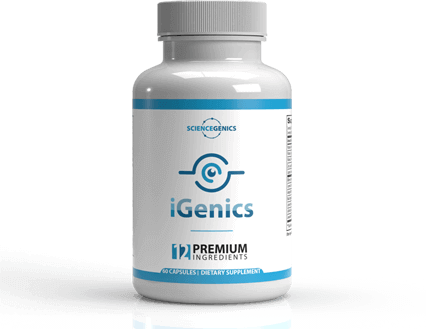
iGenics is a daily vision support supplement manufactured by ScienceGenics.
The formula combines antioxidants, carotenoids, vitamins, minerals, and botanical extracts intended to support retinal health and protect the eyes from oxidative stress.
Unlike eye drops, iGenics works through nutritional support. The goal is to provide nutrients that may help maintain healthy eye tissue over time.
Product Overview
| Detail | Information |
|---|---|
| Product Name | iGenics |
| Manufacturer | ScienceGenics |
| Category | Vision Support Supplement |
| Serving Size | 2 Capsules Daily |
| Supply Per Bottle | 30 Days |
| Refund Policy | 180 Days |
| Availability | Official Website |
| Suitable For | Adults 18+ |
Why Eye Health Is Becoming a Bigger Problem
Eye strain is no longer just an issue for older adults.
According to the American Optometric Association, many computer users regularly experience symptoms such as:
- Blurred vision
- Eye fatigue
- Dry eyes
- Headaches
- Difficulty focusing
Modern lifestyles expose the eyes to:
- Prolonged screen use
- UV radiation
- Environmental pollution
- Reduced outdoor activity
- Poor dietary intake of eye-supportive nutrients
The result is a growing number of people searching for preventive approaches before serious problems develop.
Ingredients Breakdown
| Ingredient | Potential Benefit |
|---|---|
| Lutein | Supports macular pigment density |
| Zeaxanthin | Helps filter blue light |
| Bilberry Extract | May support retinal circulation |
| Saffron | Studied for visual function support |
| Ginkgo Biloba | Supports blood flow |
| Vitamin A | Essential for night vision |
| Vitamin C | Antioxidant support |
| Vitamin E | Cellular protection |
| Zinc | Important for retinal function |
| Copper | Balances zinc intake |
| Turmeric | Supports a healthy inflammatory response |
| BioPerine | Helps nutrient absorption |
How Close Is iGenics to the AREDS2 Formula?
Many supplement companies mention AREDS2 without actually following it.
Here is how iGenics compares.
| Nutrient | AREDS2 | iGenics |
|---|---|---|
| Vitamin C | Yes | Yes |
| Vitamin E | Yes | Yes |
| Zinc | Yes | |
| Copper | Yes | |
| Lutein | Yes | |
| Zeaxanthin | Yes | |
| Bilberry | No | |
| Saffron | No | |
| Turmeric | No | |
| Ginkgo Biloba | No |
The core structure closely resembles the AREDS2 formula.
The difference is that iGenics adds several plant extracts intended to provide additional support beyond the original study.
Label Transparency Analysis
One area where iGenics falls short is transparency.
The company publicly lists ingredients but does not fully disclose the exact amount of every ingredient on all promotional materials.
| Transparency Factor | Score |
|---|---|
| Ingredient Disclosure | 6/10 |
| Dosage Transparency | 4/10 |
| Manufacturing Information | 8/10 |
| Research Alignment | 8/10 |
| Overall Transparency | 6.5/10 |
This does not mean the product is ineffective.
However, it does make it harder to compare the formula directly with published clinical research.
How Much Lutein Would You Need From Food?
Most people do not realize how difficult it can be to consistently consume large amounts of lutein through diet alone.
| Food Source | Approximate Serving Needed |
|---|---|
| Spinach | 1 to 2 cups daily |
| Kale | 1 cup daily |
| Egg Yolks | Several eggs daily |
| Corn | Multiple servings |
| Green Peas | Several servings |
This is one reason many consumers consider supplementation.
Digital Eye Strain Self-Test
Answer yes or no.
- Do your eyes feel tired after screen use?
- Do you experience blurry vision at the end of the day?
- Do you struggle with night driving?
- Do you often have dry eyes?
- Do you need brighter light to read than before?
Results
0–1 Yes Answers: Low Risk
2–3 Yes Answers: Moderate Risk
4–5 Yes Answers: Higher Risk
This is not a medical assessment, but it may help identify whether your eyes are under increased stress.
iGenics vs PreserVision AREDS2
| Feature | iGenics | PreserVision AREDS2 |
|---|---|---|
| Lutein & Zeaxanthin | Yes | Yes |
| Bilberry | Yes | No |
| Saffron | Yes | No |
| Ginkgo | Yes | No |
| Clinical Trial Match | Partial | Very Close |
| Botanical Support | Higher | Lower |
Consumers who want a formula closer to the original AREDS2 study may prefer PreserVision.
Those interested in additional botanical ingredients may find iGenics more appealing.
If you need to learn more about iGenics, visit the official site today.
Is iGenics a Scam?
Based on the information currently available, there is no evidence suggesting iGenics is a scam.
Reasons include:
- Manufactured in the USA
- 180-day refund policy
- Research-supported ingredients
- Clear supplement labeling
That said, consumers should have realistic expectations.
No supplement can:
- Restore lost vision
- Cure eye disease
- Replace medical treatment
The product should be viewed as nutritional support rather than a treatment.
Who Should Consider Buying iGenics?
Good Candidates
- Adults over 40
- Heavy computer users
- Individuals concerned about macular health
- Those with low intake of leafy greens
Who Should Speak With a Doctor First
- People taking blood thinners
- Individuals with diagnosed eye diseases
- Pregnant or breastfeeding women
- Anyone taking multiple vitamin supplements
What We Like
- Strong ingredient profile
- AREDS2-inspired foundation
- Includes saffron and bilberry
- Long refund period
- Vegan capsules
What We Do Not Like
- Limited dosage transparency
- Premium pricing
- Requires consistent use
- Not available in stores
Final Verdict
iGenics is one of the more thoughtfully formulated eye health supplements currently available. Its biggest strengths are the inclusion of lutein, zeaxanthin, saffron, and bilberry, along with a formula that generally follows the nutritional principles established by the AREDS2 research.
Its biggest weakness is transparency. Without clearly disclosed ingredient amounts, consumers cannot easily determine how closely the formula matches the dosages used in published studies.
For adults concerned about digital eye strain and long-term eye health, iGenics appears to be a reasonable option. Just remember that supplements work best alongside healthy habits such as regular eye exams, UV protection, and a nutrient-rich diet.
FAQ:
Can iGenics replace prescription glasses or contact lenses?
No. iGenics is a nutritional supplement designed to support overall eye health and protect against oxidative stress. It does not correct refractive errors such as nearsightedness, farsightedness, or astigmatism. If you require vision correction, continue using glasses or contact lenses as prescribed by your eye care professional.
Is iGenics suitable for people who spend all day in front of screens?
Many people consider iGenics because of its ingredients, such as lutein and zeaxanthin, which are associated with filtering high-energy blue light and supporting macular health. While it cannot eliminate digital eye strain, it may complement healthy screen habits like taking regular breaks and adjusting screen brightness.
Can I take iGenics even if I do not currently have vision problems?
Yes. Some adults use eye health supplements proactively rather than waiting for noticeable vision changes. Nutrients such as lutein, zeaxanthin, vitamin C, and zinc are commonly studied for their role in maintaining healthy eye tissue and supporting long-term visual function as people age.
Does iGenics contain ingredients commonly found in eye health research?
Yes. The formula includes several nutrients frequently studied in vision research, including lutein, zeaxanthin, vitamin C, vitamin E, zinc, and copper. These ingredients are also associated with the well-known AREDS2 research on age-related eye health, although commercial formulas may differ from clinical study dosages.
What lifestyle habits work best alongside iGenics?
For the best results, combine supplementation with healthy eye-care habits. This includes eating leafy green vegetables, wearing UV-protective sunglasses outdoors, following the 20-20-20 rule during screen use, staying hydrated, and scheduling regular comprehensive eye examinations with an eye care professional.
Medical Disclaimer:
The information provided in this article is for educational and informational purposes only and should not be considered medical advice. iGenics is a dietary supplement and is not intended to diagnose, treat, cure, or prevent any disease. Always consult a qualified healthcare professional before starting any supplement, especially if you have a medical condition, take medications, or are pregnant or breastfeeding.
Editorial Standards
At ThinkHealthTips, we are committed to publishing accurate, evidence-based health content. Our articles are researched using peer-reviewed studies, government health resources, and reputable medical organizations whenever available. Every review follows our commitment to transparency, factual accuracy, and reader trust. Learn more about our Editorial Policy and the standards we follow when creating health and supplement content.
References
- National Eye Institute. Age-Related Eye Disease Studies (AREDS/AREDS2). Available at: https://www.nei.nih.gov/research/clinical-trials/age-related-eye-disease-studies-aredsareds2
- National Eye Institute. Age-Related Macular Degeneration (AMD). Available at: https://www.nei.nih.gov/learn-about-eye-health/eye-conditions-and-diseases/age-related-macular-degeneration
- American Optometric Association. Computer Vision Syndrome (Digital Eye Strain). Available at: https://www.aoa.org/healthy-eyes/eye-and-vision-conditions/computer-vision-syndrome
- PubMed. Saffron Supplementation and Early Age-Related Macular Degeneration. Available at: https://pubmed.ncbi.nlm.nih.gov/20335553/
- PubMed. Bilberry Anthocyanins and Visual Function: A Review. Available at: https://pubmed.ncbi.nlm.nih.gov/33804025/
