
BioDentex Review: What the Ingredients Actually Show; And Why the Official Website Is Hard to Pin Down
Affiliate Disclosure: ThinkHealthTips may earn a commission if you purchase through links on this page, at no additional cost to you. This does not affect our editorial conclusions or the information we provide.
Medical review status:
This article was written by Shafeek, SEO Expert and Health Content Writer, based on publicly available research, not by a licensed doctor, dentist, or pharmacist. It’s provided for educational purposes only and isn’t a substitute for advice from a qualified healthcare professional.
How We Evaluate Products: This review follows our Supplement Review Methodology: establishing product identity, extracting claims, comparing ingredients to studied doses and forms, checking for product-specific clinical evidence, reviewing safety, and assessing transparency. Where sources conflict or evidence is absent, that gap is reported rather than filled in. Ingredient evidence is not automatically finished-product evidence. Manufacturer claims are not independent evidence. Failure to find evidence is not proof that no evidence exists.
What Is BioDentex?
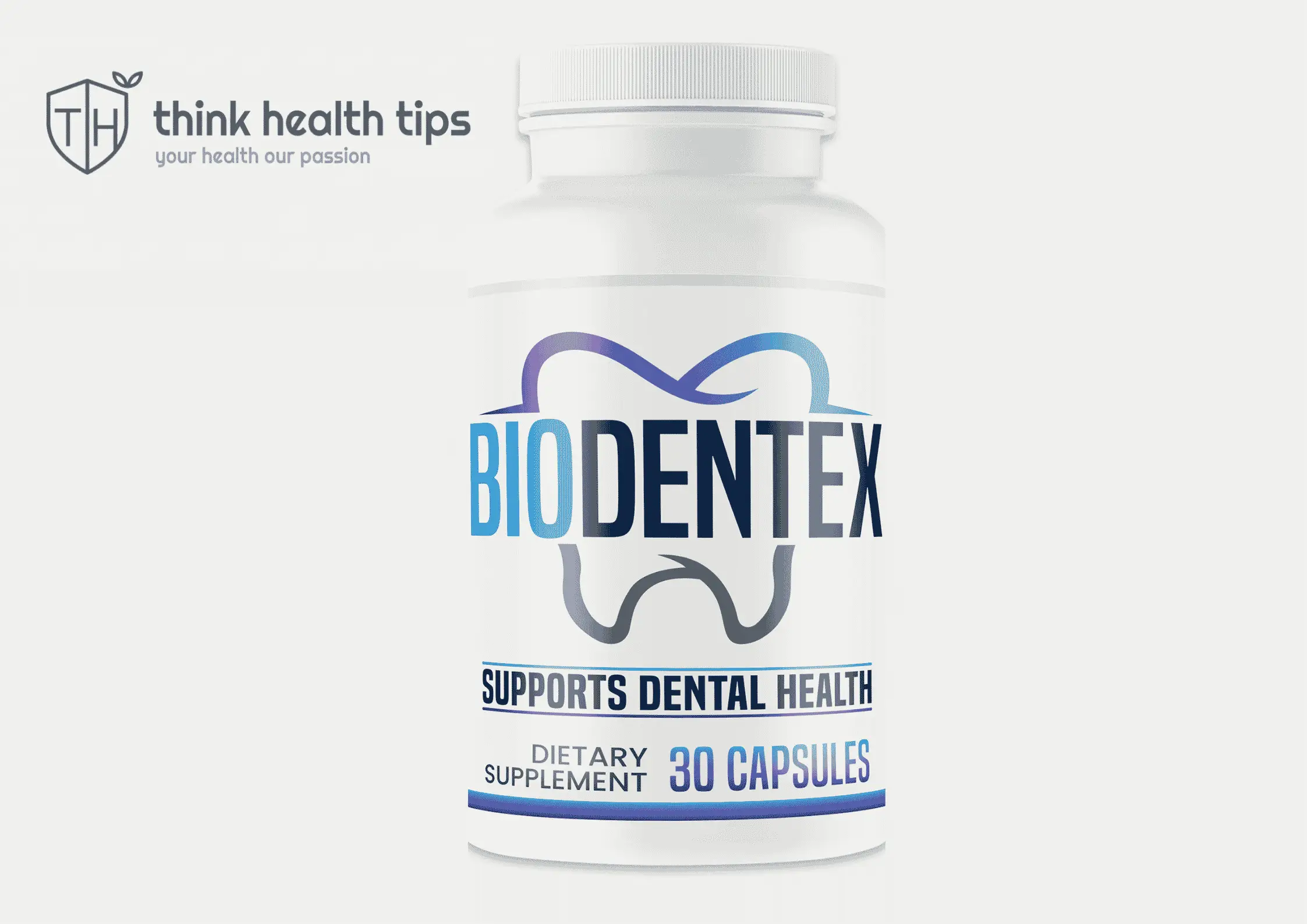
BioDentex is marketed as a daily oral health capsule combining plant-based ingredients — most commonly cited across sales pages as xylitol, stevia, grape seed extract, cranberry extract, peppermint, and carrot powder — positioned to support gum health, enamel strength, oral microbiome balance, and fresh breath. It’s sold as a “greater than 11 ingredients” proprietary blend, taken once daily with water.
That description itself required some digging. Unlike a typical single-manufacturer product page, BioDentex is currently promoted through numerous differently-branded sales domains, several of which explicitly claim to be the sole “official” source. This is worth flagging up front because it directly affects how much confidence a reader should place in any specific claim made on any one of those pages.
For more information, visit BioDentex official site to know more
What We Could Not Verify
Before getting to ingredients, it’s important to be transparent about what a careful search did not turn up:
- A single, consistent manufacturer identity. Different sales pages give different guarantee terms (90 days vs. 180 days) and, in one case, contain text apparently copy-pasted from an unrelated blood-sugar product.
- Exact ingredient quantities per serving. Sales copy names ingredients but does not consistently disclose milligram amounts, extract standardization, or a full Supplement Facts panel.
- Any product-specific clinical trial. No search result pointed to a peer-reviewed human study on the finished BioDentex formulation itself.
- Independent third-party lab testing (Certificate of Analysis). We did not find a publicly available independent laboratory report in the sources reviewed.
- A verifiable “FDA-registered” or “GMP-certified” claim tied to a specific, named facility. These claims appear in marketing copy but facility registration and GMP compliance are not the same thing as product approval or proven efficacy, and we could not independently confirm either claim against a specific manufacturing site.
None of this proves BioDentex doesn’t work or is unsafe — missing information is a transparency gap, not proof of harm. But it does mean several of the claims below rest on ingredient-level research rather than anything specific to this product.
Ingredients and What the Research Actually Supports
Xylitol. The most consistently cited ingredient across BioDentex’s marketing. Xylitol is genuinely one of the better-studied compounds in oral health — research on xylitol gum and lozenges has shown it can reduce levels of Streptococcus mutans (a key cavity-causing bacterium) and may modestly reduce cavity incidence with regular use. However, that evidence base comes primarily from chewing gum and lozenge formats used multiple times daily for sustained contact with the teeth — not from a swallowed capsule taken once a day. Whether an encapsulated, once-daily dose delivers comparable oral-cavity contact time is not established by the gum/lozenge research, and BioDentex’s marketing does not specify the xylitol dose in its capsules.
Grape seed extract. Contains proanthocyanidins with documented antioxidant and some antimicrobial properties in laboratory research, and there’s exploratory interest in its use in dental materials and mouth rinses. Evidence for an oral capsule form measurably improving gum health or enamel strength in humans is much thinner than the lab-based and topical research would suggest.
Cranberry extract. Studied mainly for urinary tract and, to a lesser degree, oral biofilm research (some in vitro work suggests cranberry proanthocyanidins may inhibit bacterial adhesion). Human clinical evidence specific to oral/dental outcomes from oral cranberry supplementation is limited.
Peppermint. Primarily included for flavor and breath-freshening; peppermint oil has some laboratory-demonstrated antimicrobial activity, but this is not equivalent to demonstrated in-mouth benefit from a swallowed capsule.
Carrot powder / stevia. Included mainly as nutrient/sweetener components rather than as ingredients with dedicated dental-outcome research behind them in supplement form.
Evidence Snapshot
| Evidence Question | Finding |
|---|---|
| Has the exact product been studied? | No |
| Has the exact formulation been studied? | No |
| Is the product dose comparable to studied doses? | Could not verify (quantities not disclosed) |
| Are key ingredients supported by human research? | Limited — mostly indirect (gum/topical/lab formats, not capsules) |
| Are complete ingredient amounts disclosed? | No |
| Is independent testing publicly available? | No |
| Is product-specific evidence sufficient? | No |
Does the Evidence Apply to This Product?
This is the central issue with BioDentex. The individual ingredients aren’t fringe — xylitol’s role in oral health is genuinely supported by research. But that research was almost entirely conducted using formats (chewing gum, lozenges, rinses) and doses that differ meaningfully from an oral capsule taken once daily with water. Research on an ingredient in one delivery format and dose does not establish that a different delivery format and an undisclosed dose in this product will produce the same outcome. Without a published Supplement Facts panel, there’s no way to compare BioDentex’s actual doses to the doses used in the underlying research at all.
If you’re also comparing other oral-health supplements, see our ProDentim review, where we examine its ingredients, marketing claims, available evidence, and how well those claims are supported by research.
Safety Considerations
Xylitol, grape seed extract, cranberry, peppermint, and carrot powder are all generally recognized as safe in typical dietary supplement amounts, and reported adverse effects in the literature are mostly mild (occasional GI upset with high-dose xylitol). That said:
- People with known plant/botanical allergies should review the full label before use.
- Xylitol is toxic to dogs — households with pets should store any xylitol-containing product securely.
- Anyone pregnant, nursing, on medication, or managing a medical condition should talk to a healthcare provider before starting a new supplement, particularly given that exact per-ingredient doses aren’t published.
- Because BioDentex is not positioned to replace brushing, flossing, or dental checkups, it should not be treated as a substitute for standard dental care.
Product Transparency and Legitimacy
This is where BioDentex’s biggest concerns actually lie — not in the ingredient list, but in how it’s sold. Multiple differently-named domains present nearly identical sales copy while each claiming exclusivity, guarantee terms vary between listings (90 vs. 180 days), and at least one page contains unrelated product text that appears to be a template artifact. Countdown-timer urgency (“Ends Soon,” “Last Chance”) and unverified testimonials appear across several of these pages. None of this proves the ingredients themselves are unsafe, but it does mean a reader should be cautious about which specific site they purchase from, verify guarantee terms directly with whichever seller they use, and not assume that scarcity messaging reflects real limited supply.
For another example of how we assess oral-health supplements, see our ProvaDent review, where we examine the product’s ingredients, evidence, claims, and available product information separately.
What the Evidence Supports — And What It Doesn’t
Reasonably supported: Xylitol has a genuine, research-backed connection to reduced cavity-causing bacteria in other delivery formats. The other named ingredients have plausible, lab-level rationale for oral health support.
Not established: That this specific capsule, at whatever undisclosed dose it contains, produces the enamel-strengthening, gum-healing, or “root cause” effects claimed in its marketing. No finished-product clinical evidence exists to confirm this.
Uncertain: Which website is the actual, singular manufacturer; what guarantee terms actually apply; and whether independent lab testing exists at all.
Oral Health Supplement Comparison
| Factor | BioDentex | ProvaDent | ProDentim |
|---|---|---|---|
| Product format | Oral-health dietary supplement capsule | Oral-health dietary supplement | Oral-health dietary supplement |
| Primary formulation approach | Combination of plant-derived and oral-health-related ingredients | Primarily positioned around probiotic/oral-health ingredients | Primarily positioned around probiotics plus additional plant/mineral ingredients |
| Key ingredients discussed in available product information | Xylitol, grape seed extract, cranberry extract, peppermint, carrot powder, stevia, plus other ingredients | Product information should be checked against the current formulation because ingredient information can vary between promotional sources | Product materials describe probiotic strains plus additional plant/mineral ingredients |
| Xylitol | Listed/discussed as an ingredient | Not established from the sources reviewed for this comparison | Not identified as a primary ingredient in the sources reviewed |
| Grape seed extract | Listed/discussed as an ingredient | Not identified in the sources reviewed | Not identified as a primary ingredient in the sources reviewed |
| Cranberry extract | Listed/discussed as an ingredient | Not identified in the sources reviewed | Not identified as a primary ingredient in the sources reviewed |
| Probiotic emphasis | Not the primary focus of the formulation discussed in this review | Probiotic-oriented positioning | Probiotic-oriented positioning |
| Exact ingredient quantities publicly verified? | Not consistently verified | Not assessed in this review | Not assessed in this review |
| Finished-product clinical evidence identified? | Not identified in the sources reviewed | Not assessed in this review | Not assessed in this review |
| Independent testing / CoA publicly verified? | Not identified in the sources reviewed | Not assessed in this review | Not assessed in this review |
| Ingredient-level evidence | Some ingredients have research relevant to oral health, but the evidence does not establish the finished BioDentex formulation | Ingredient-level evidence would need to be evaluated against the specific formulation and doses | Ingredient-level evidence for probiotics and other ingredients does not by itself establish effectiveness of the finished product |
| Does ingredient research prove the finished product works? | No | No | No |
| Main evidence limitation | Exact doses, formulation details, and product-specific clinical evidence are not sufficiently established | Current formulation and product-specific evidence require verification from reliable sources | Product-specific evidence should be distinguished from research on individual probiotic strains or ingredients |
| What this comparison can establish | Differences in formulation, available product information, and evidence limitations | Differences in formulation and available evidence when adequately verified | Differences in formulation and available evidence when adequately verified |
| What this comparison cannot establish | That BioDentex is more effective or safer than the other products | That ProvaDent is more effective or safer than the other products | That ProDentim is more effective or safer than the other products |
FAQs
Does BioDentex work?
Some of its ingredients (xylitol, in particular) have real research behind their role in oral health, but in different forms than a capsule. There’s no clinical trial on BioDentex itself.
Is BioDentex safe?
The individual ingredients are generally considered safe at typical supplement doses, but exact doses aren’t disclosed, so check with a healthcare provider, especially if pregnant, nursing, or on medication.
Is independent lab testing available?
We did not find a publicly available independent laboratory report in the sources reviewed.
Why are there so many official BioDentex websites?
This is a genuine transparency concern; verify guarantee and return terms directly with whichever seller you use before purchasing.
Final Assessment
BioDentex combines several ingredients with a real, if partial, connection to oral health research — xylitol most credibly. But the finished product has not been clinically studied, ingredient quantities aren’t disclosed, no independent testing is publicly available, and the product is marketed through a confusing scatter of near-duplicate “official” websites with inconsistent terms. The honest conclusion is that this is a supplement built on plausible ingredients wrapped in an unusually opaque sales operation — worth understanding fully before buying, not a product a reader should treat as clinically proven.
Visit the official site to know about BioDentex Supplement
Editorial Standards: This review was written independently of the brand and its affiliate network. Conclusions reflect available evidence, not payment or partnership status, and follow our Editorial Policy: verified sourcing, no pay-for-praise, and unconfirmed claims or credentials stated as unconfirmed rather than assumed legitimate.
Medical Disclaimer: This article is for informational purposes only and is not medical advice. It is not intended to diagnose, treat, cure, or prevent any disease. Speak with a qualified healthcare provider before starting any new supplement, especially if you are pregnant, nursing, or taking medication. Read a full medical disclaimer
References:
- Cochrane Library — Riley P, Moore D, Ahmed F, Sharif MO, Worthington HV. Xylitol‑containing products for preventing dental caries in children and adults. Cochrane Database of Systematic Reviews, 2015. The gold-standard systematic review on xylitol and caries prevention — directly relevant since xylitol is BioDentex’s headline ingredient.
https://www.cochranelibrary.com/cdsr/doi/10.1002/14651858.CD010743.pub2/full - PubMed / PMC (NIH) — Is xylitol effective in the prevention of dental caries? A systematic review (2024). The most recent systematic review (9 human clinical trials); concludes that xylitol’s preventive effect “was not fulfilled conclusively in all the works” — the key evidence-limitation citation for this review.
https://pubmed.ncbi.nlm.nih.gov/39544205/ - American Academy of Pediatric Dentistry — Effectiveness of Xylitol in Reducing Dental Caries in Children. A professional-body meta-analysis reporting only a small, low-certainty effect (SMD −0.24) — useful as a second, independent data point that doesn’t just echo Cochrane.
https://www.aapd.org/assets/1/7/103-10.pdf - PMC (NIH) — Jawale KD et al. Grape seed extract: An innovation in remineralization. J Conserv Dent, 2017. The best-supported human-tooth (ex vivo) study on grape seed extract’s remineralizing potential — relevant to BioDentex’s second major ingredient.
https://pmc.ncbi.nlm.nih.gov/articles/PMC5799987 - PubMed — Xie Q, Bedran-Russo AK, Wu CD. In vitro remineralization effects of grape seed extract on artificial root caries. J Dent. 2008. The original, most-cited foundational study behind grape seed extract’s dental-remineralization claims.
https://pubmed.ncbi.nlm.nih.gov/18819742/
Note: all five are ingredient-level or in vitro/ex vivo studies — none tested the finished BioDentex capsule, so they support statements about xylitol and grape seed extract generally, not about this specific product’s effectiveness.


