
ProDentim Review: Ingredients, Evidence and Safety Checked
Affiliate Disclosure: ThinkHealthTips may earn a commission if you purchase through links on this page, at no additional cost to you. This does not affect our editorial conclusions.
Quick answer
ProDentim is a chewable oral probiotic that, per its NIH label record, lists a 20 mg proprietary blend supplying 3.5 billion CFU of three named strains. Some probiotic strains have been studied for plaque and gum inflammation, but we did not identify a published trial of ProDentim itself, and the label does not give strain designations or per-strain amounts. Whether it works for you has not been established.
Evidence snapshot
- Evidence for key ingredients: Limited evidence (Lactobacillus paracasei, Lactobacillus reuteri, strain-specific and mostly from other delivery forms); no oral-health evidence identified for Bifidobacterium animalis lactis BL-04
- Finished-product evidence: Not identified in the sources reviewed
- Transparency: Strain amounts undisclosed (proprietary blend); third-party testing not verified
- Main caution: Probiotics can cause infections in severely ill or immunocompromised people, and sources disagree on the exact formula
How we reviewed this product
We compared the product’s record in the NIH Dietary Supplement Label Database with promotional pages, then checked the ingredient research, safety guidance from NIH and FDA, and the price and refund claims those pages make. Our evidence labels and verification steps are described on our Supplement Review Methodology page. Where we could not confirm something, we say so instead of filling the gap.
Medical review Status: This article has not been independently reviewed by a medical professional. It was researched using publicly available scientific literature, authoritative health sources, and product information. It is for general education and is not a substitute for individualized medical advice.
What is ProDentim?
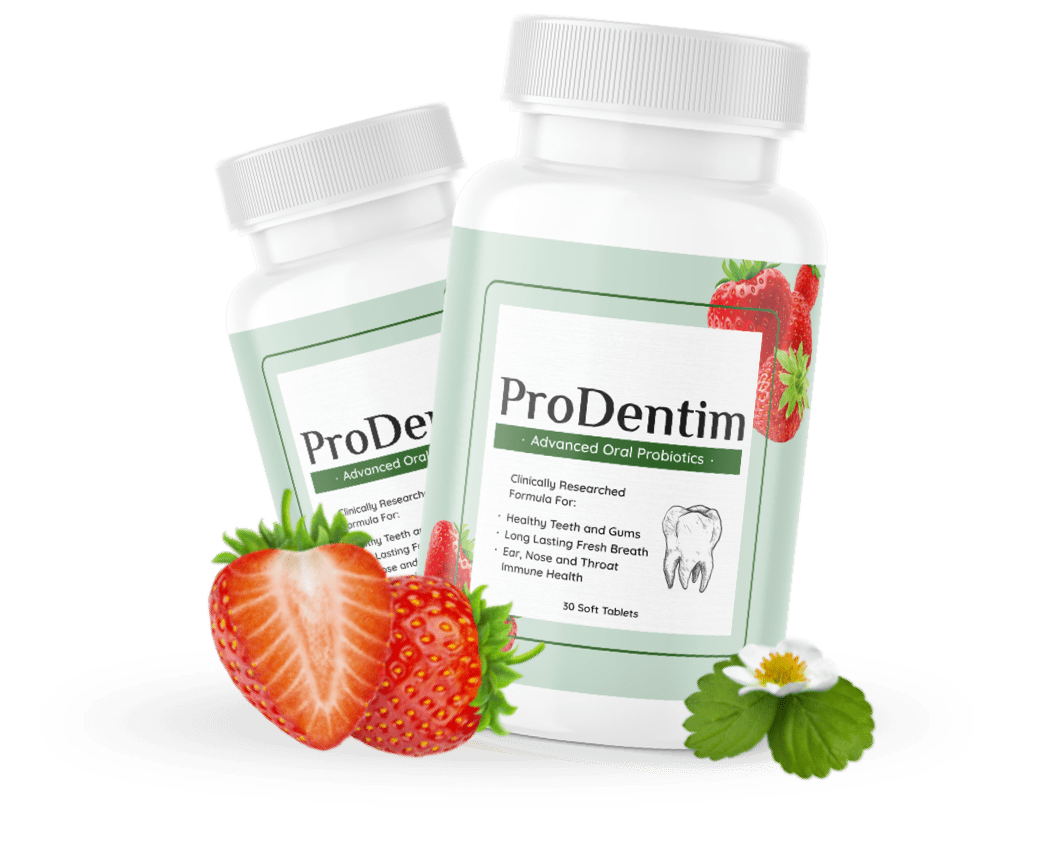
ProDentim is a probiotic supplement sold as a chewable soft tablet, marketed for gum, tooth, and breath support. The NIH label record lists one soft tablet per serving and 30 servings per container, with a target group of adults and children 4 or more years of age (NIH Dietary Supplement Label Database, ProDentim entry).
We could not confirm the manufacturer’s name from the sources we reached, and the record does not state a formula version or date. We found no separate edition for markets outside the US.
Two naming issues matter here. First, ProDentim is not Prodentis, a different product built around specific Lactobacillus reuteri strains that appears in dental research. Second, many websites with near-identical names present themselves as the official ProDentim store, so the domain you buy from deserves a check. The maker’s official product page (affiliate link) is the place to compare the current label and variants with what this review describes.
What is in ProDentim?
Our working source is the NIH label record, a public label database that can lag behind the physical label. We did not view the physical package or a manufacturer-hosted label we could confirm as genuine. Sources disagree on the formula, so treat the details below as provisional.
The NIH record lists a “Proprietary Probiotic Blend 3.5 billion CFU” at 20 mg per tablet, naming Lactobacillus paracasei, Lactobacillus reuteri, and Bifidobacterium animalis lactis BL-04. It lists the other ingredients as tricalcium phosphate, peppermint, natural strawberry flavor, blue agave, stearic acid, mannitol, magnesium stearate, silicon dioxide, sucralose and microcrystalline cellulose.
Other pages describe a different formula. One third-party label transcription lists Streptococcus salivarius at 20 mg and inulin at 100 mg as separate lines. Promotional pages variously describe three or five strains and mention inulin and malic acid. We could not resolve which version is current, so we make no dose judgment on the disputed items.
| Blend name | Total blend amount | Ingredient (as listed) | Amount per serving | Studied range (context only) | Evidence label | Assessment |
|---|---|---|---|---|---|---|
| Proprietary Probiotic Blend | 20 mg (3.5 billion CFU) | Lactobacillus paracasei | Undisclosed | Not compared | Limited evidence | Dose comparison not possible: amount not publicly disclosed |
| Proprietary Probiotic Blend | 20 mg (3.5 billion CFU) | Lactobacillus reuteri | Undisclosed | Not compared | Limited evidence | Dose comparison not possible: amount not publicly disclosed |
| Proprietary Probiotic Blend | 20 mg (3.5 billion CFU) | Bifidobacterium animalis lactis BL-04 | Undisclosed | Not compared | No product-specific evidence identified | Dose comparison not possible: amount not publicly disclosed |
Because only the total is stated, the share of each strain in the 3.5 billion CFU is unknown. The label also gives no strain designations, which matters because probiotic effects are strain-specific.
Promotional pages describe the tablet as sugar-free, while the NIH record lists blue agave among the other ingredients. We could not determine the sugar content on the current label [VERIFY: sugar content].
Ingredient evidence and dose comparison
Research on a probiotic species is not research on this tablet. Each study tests a particular strain at a particular dose in a particular delivery form, and the label here names none of those details.
Lactobacillus paracasei. A 2025 systematic review and meta-analysis in Frontiers in Oral Health pooled randomized trials of probiotic, postbiotic, and related toothpastes. It reported that L. paracasei strains showed the most consistent benefits for plaque and gum inflammation, but the included trials were small (17 to 92 participants), results varied widely between studies, and the authors rated certainty of evidence from very low to moderate (Choi and Park, 2025). Those were toothpastes, several containing inactivated bacteria, not a swallowed or chewed tablet, and the specific strains were often not reported. That is why we label the evidence limited for this product.
Lactobacillus reuteri. A systematic review of 11 studies with 369 participants examined L. reuteri as an add-on to professional scaling and root planing in chronic periodontitis and described the supporting evidence as limited (systematic review, europeanreview.org). That population is people already receiving periodontal treatment, which differs from a general reader taking a daily tablet, and the trials used specific strains the ProDentim label does not name.
Bifidobacterium animalis lactis BL-04. The only research we found cited for this strain came from a press release about ProDentim, which pointed to a 2014 trial of respiratory and gastrointestinal illness symptoms in active adults (doi:10.1016/j.clnu.2013.10.002). That is not an oral-health outcome, and we did not identify oral research on this strain in the sources reviewed.
Probiotics for gums in general. A 2022 meta-analysis in Nutrients, as described by the Frontiers authors, found that probiotics can improve gingival index, plaque index, and bleeding on probing in people with periodontal disease (Gheisary et al., doi:10.3390/nu14051036). The same 2025 paper notes that long-term efficacy and safety data are lacking.
Matching a studied strain does not prove the tablet delivers a studied effect, and nothing here lets us compare ProDentim’s amounts with studied doses.
Does ProDentim work? Evidence for the finished product
We did not identify product-specific clinical evidence in the sources reviewed. A press release announcing the product says as much, stating that no published, peer-reviewed clinical trial of the finished formula is cited and that the referenced research concerns individual ingredients (press release, WBOC).
Testimonials and star ratings on retail and promotional pages are not clinical evidence, and a failed search does not prove no study exists. What we can say is that the research that applies directly to this tablet has not been shown to us.
Manufacturer claims versus independent evidence
| Claim seen on promotional pages | Independent evidence | Verification | Limitation | What it means for you |
|---|---|---|---|---|
| “Five clinically studied” strains | Research exists on some strains; not on the product | Label record lists three strains | Pages conflict with each other and with the NIH record | The strain count is unsettled |
| Supports gum health | Some strain-specific trials in other forms | No finished-product trial identified | Strain unnamed, form differs | Plausible, not demonstrated for this tablet |
| Helps prevent cavities, plaque and gum disease | Not shown for this product | Not verified | Disease-prevention wording goes beyond what we found | Treat as marketing |
| Tooth whitening from malic acid | None retrieved | Not verified | Ingredient absent from the NIH record | Unverified |
Under US rules, products intended to cure, treat, mitigate, or prevent disease are regulated as drugs even when labeled as supplements, a point FDA has made in warning letters to other companies (FDA constituent update). We did not find a warning letter about ProDentim, but we did not search FDA’s databases directly (see the regulatory note below).
Is ProDentim safe? Side effects and interactions
Probiotics are unlikely to cause harm in healthy people, and side effects are usually minor and self-limited, such as gas, according to the NIH Office of Dietary Supplements (NIH ODS, Probiotics). The same source links probiotics to a few cases of bloodstream infection or other serious infection, mostly in people who were severely ill or immunocompromised, and notes that some trials were not designed to answer safety questions.
FDA has warned about infections, some life-threatening, in preterm infants given probiotics (NIH ODS, consumer fact sheet). NIH ODS also states probiotics are not known to interact with medications, though antibiotic and antifungal medications might reduce the effectiveness of some probiotics (NIH ODS, immune function fact sheet).
We did not identify product-specific information on pregnancy, breastfeeding, allergens, or the manufacturer’s age guidance, so confirm those with a pharmacist, physician, or dentist before use. The ingredient list includes peppermint, mannitol, and sucralose, and the NIH record names children 4 and older as a target group. Parents should check with a pediatric dentist.
Transparency and third-party testing
The label discloses a total of 20 mg and 3.5 billion CFU but not individual strains’ amounts or designations. We did not identify NSF, USP, or Informed Sport certification, or a public certificate of analysis, in the sources reviewed. We also found no independent confirmation that the tablet contains the stated CFU through the end of shelf life.
US: FDA states it does not have the authority to approve dietary supplements for safety and effectiveness before they are sold, and that responsibility for safety rests with the company (FDA 101: Dietary Supplements). That means no supplement should be described as FDA-approved, and claims about facility registration or manufacturing standards describe a facility, not proof the product works. Regulatory status is also not evidence of effectiveness, and we evaluate the two separately.
This review addresses the US market. Regulatory treatment of supplements differs by country, so readers elsewhere should check their own regulator.
Observable marketing patterns worth knowing about on pages presenting themselves as the official site include differing per-bottle prices, a struck-through “regular price” of $179 beside a much lower “today” price, “offer expires soon” language, and free bonus guides with stated dollar values. These are marketing features, not findings about the product, but they are reasons to confirm you are on the right domain.
Price, subscription, shipping, and refund
We could not confirm the genuine manufacturer’s pricing page, so price and terms are unverified. As of October 2, 2026, pages presenting themselves as the official site listed promotional prices between $49 and $69 per bottle, and some pages showed a “regular price” of $179. Most of them stated a 60-day money-back guarantee. We found no subscription terms described and did not verify the refund process.
Prices and guarantee terms change, so confirm the current price and terms (affiliate link) before deciding, and keep a copy of the terms you see at checkout.
What we could verify and what remains uncertain
Verified, in the sources checked: the NIH record’s serving size, servings per container, 3.5 billion CFU blend at 20 mg, three named strains and other ingredients; NIH and FDA safety and regulatory statements quoted above.
Not verified: the current formula, formula version, manufacturer identity, strain designations, per-strain amounts, third-party testing, current price and refund terms, allergen and pregnancy guidance, and any ProDentim-specific FDA or FTC action. The FDA warning letter and recall databases were not queried directly.
Who may want to consider it and who should use caution
For healthy adults interested in trying an oral probiotic, the available evidence does not establish that ProDentim itself improves oral health. Anyone considering it should also continue routine brushing, flossing, and dental care.
Caution is warranted for people who are severely ill or immunocompromised, parents considering it for children, people who are pregnant or breastfeeding, and anyone sensitive to the listed excipients. Ask a physician, pharmacist, or dentist first..
You may also read our related dental supplement reviews, including ProvaDent and BioDentex
Final evidence-based assessment
What the evidence supports is modest. Some probiotic strains, especially certain L. paracasei strains, have shown benefits for plaque and gum inflammation in small trials, mostly in toothpaste and lozenge forms. What it does not establish is that ProDentim delivers those effects, because no finished-product trial was identified and the label names no strains or per-strain amounts. The formula itself is disputed between sources, and third-party testing was not verified. Safety looks reassuring for healthy adults based on general probiotic data, with clear exceptions.
Before buying, compare the label on the official product page (affiliate link) with the points above, especially the strain list, whether the page shows inulin or Streptococcus salivarius, and the refund terms. If those details are missing or conflict with this review, that is worth weighing.
Frequently asked questions
Is ProDentim FDA approved?
US: FDA states it does not approve dietary supplements for safety and effectiveness before they are sold, so ProDentim should not be described as FDA approved. We did not verify ProDentim’s regulatory standing beyond this general framework. Regulatory status is not evidence that a supplement works.
How many probiotics are in ProDentim?
The NIH label record lists 3.5 billion CFU in a 20 mg blend of three strains per soft tablet. CFU stands for colony-forming units, a count of viable bacteria. Some pages describe five strains, and we could not confirm which version is current.
Does ProDentim contain Streptococcus salivarius?
It does not appear in the NIH record we reviewed. One third-party label transcription lists Streptococcus salivarius separately, but the amount and current status of that formulation could not be independently verified, and some promotional pages mention it. Because sources conflict, check the current label on the package before assuming it is present.
Can children take ProDentim?
The NIH record lists children 4 and older as a target group, but we could not verify the manufacturer’s current age guidance or find product-specific pediatric safety data. Ask a pediatric dentist or physician before giving it to a child.
References
- NIH Office of Dietary Supplements. Dietary Supplement Label Database, ProDentim label record. https://dsld.od.nih.gov/label/298948. Retrieved October 2, 2026.
- Choi E-M, Park S-K. The efficacy of lactic acid bacteria-based toothpaste on oral health: a systematic review and meta-analysis. Front Oral Health. 2025;6:1668943. doi:10.3389/froh.2025.1668943.
- Gheisary Z, et al. Clinical, microbiological, and immunological effects of probiotic supplementation on periodontal diseases: a systematic review and meta-analysis. Nutrients. 2022;14:1036. doi:10.3390/nu14051036. Cited as listed in reference 2; not independently read.
- NIH Office of Dietary Supplements. Probiotics, Health Professional Fact Sheet. https://ods.od.nih.gov/factsheets/Probiotics-HealthProfessional/. Retrieved October 2, 2026.
- NIH Office of Dietary Supplements. Probiotics, Consumer Fact Sheet. https://ods.od.nih.gov/factsheets/Probiotics-Consumer/. Retrieved October 2, 2026.
- NIH Office of Dietary Supplements. Dietary Supplements for Immune Function and Infectious Diseases, Health Professional Fact Sheet (probiotics section). https://ods.od.nih.gov/factsheets/COVID19-HealthProfessional/. Retrieved October 2, 2026.
- US Food and Drug Administration. FDA 101: Dietary Supplements. https://www.fda.gov/consumers/consumer-updates/fda-101-dietary-supplements. Retrieved October 2, 2026.
- US Food and Drug Administration. FDA and FTC Send Warning Letters to Five Companies for Illegally Selling Dietary Supplements Claiming to Treat Infertility (Constituent Update). https://www.fda.gov/food/hfp-constituent-updates/fda-and-ftc-send-warning-letters-five-companies-illegally-selling-dietary-supplements-claiming-treat. Retrieved October 2, 2026.
- “ProDentim Reviews: Oral Probiotic Chewable Delivering 3.5 Billion CFU Enters the U.S. Dental Supplement Market.” Press release, WBOC. Manufacturer-side material, cited as a claim. Retrieved October 2, 2026


