
ProstaPeak Review: What the Ingredient Evidence Actually Shows, And What ProstaPeak Doesn’t Disclose
Affiliate Disclosure: Some ThinkHealthTips reviews, including this one, contain affiliate links. If you purchase through an affiliate link, we may earn a commission at no additional cost to you. Affiliate relationships do not determine our evidence assessment or scientific conclusions, and affiliate status is not a medical endorsement. Our broader approach to editorial independence is described in our Editorial Policy.
How We Evaluate Products: This review follows our Supplement Review Methodology. Built on three principles: evidence about an ingredient is not the same as evidence about a finished product; a manufacturer’s claim is not independent scientific evidence; and not identifying evidence is not proof that no evidence exists. We distinguish ingredient-level evidence, formula-level evidence, and finished-product evidence throughout, and we report information gaps as limitations rather than accusations.
What Is ProstaPeak?
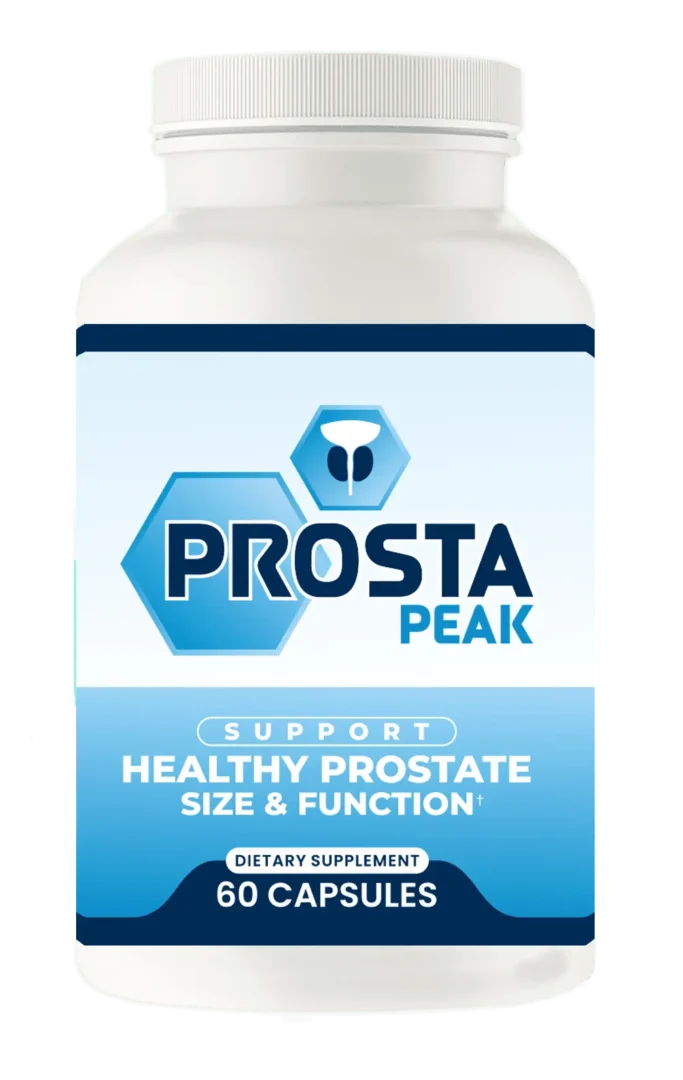
ProstaPeak is marketed as a men’s prostate health capsule, promoted as containing “20+” natural ingredients, most commonly cited as saw palmetto, pygeum, green tea, nettle root, and cat’s claw, taken once daily with a meal. It’s positioned to support prostate function, reduce urinary symptoms associated with age-related prostate enlargement (BPH), and boost general energy and vitality.
As with several products in this category, establishing a single, verifiable product identity was harder than it should be. Sales copy for ProstaPeak appears across numerous differently branded review and affiliate pages rather than one clearly identifiable manufacturer source, and some of that copy includes reviews attributed to author credentials we could not independently verify. We do not assume a website is official simply because it uses the product name, and where sources showed different details, we report the discrepancy rather than quietly choosing one version. We were not able to confirm a single, consistent manufacturer identity, a verified official product page with a full Supplement Facts panel, or independent confirmation of the “FDA-registered, GMP-certified” facility claims repeated across these pages.
If you’d like to look at ProstaPeak’s current listing and label yourself, you can check current pricing and availability here (affiliate link; see disclosure above). We’d encourage reading the transparency and evidence sections below first.
What We Could Not Verify
Consistent with our methodology, identifying information gaps is part of this review, not a substitute for it. Based on our search of publicly available scientific literature and product information as of the date above, we could not independently verify the following:
- A complete, verified ingredient list with exact quantities. Marketing consistently references “20+ ingredients,” but full doses per capsule were not found in the sources reviewed. This is a proprietary-blend-style disclosure gap: without individual ingredient amounts, we cannot meaningfully compare this product’s doses to the doses used in the research below.
- A single canonical manufacturer or official website. Multiple mirrored review/affiliate pages exist; none functioned as a clearly independent, verifiable brand source.
- Product-specific clinical evidence. We did not identify a published clinical trial evaluating the finished ProstaPeak product in the sources reviewed. This describes the result of our search; it does not establish that no such research exists anywhere.
- A publicly available Certificate of Analysis (COA). We could not independently verify a publicly available COA for ProstaPeak.
- Consistent guarantee terms. A “180-day” money-back guarantee is repeated across most promotional sources, but since it appears only on affiliate pages rather than a confirmed manufacturer page, we could not independently verify it applies to all orders as claimed. As our methodology notes, a money-back guarantee is a business policy; it does not demonstrate that a product works.
- A named medical reviewer with verifiable, independent credentials. At least one promotional source attributes its review to a named “MD, Registered Nutritionist-Dietitian,” a credential claim we could not independently verify. We use the term “medically reviewed” only when a named, appropriately qualified healthcare professional has actually reviewed the content in question; that standard is not met here.
We report these limitations without assuming that missing information proves the product is ineffective or unsafe.
Ingredients and What the Research Actually Supports
Saw palmetto. The most heavily studied ingredient in this category, and the anchor ingredient in ProstaPeak’s marketing. At the ingredient level, the evidence is genuinely mixed rather than straightforwardly positive. A 2012 Cochrane review of 32 randomized controlled trials (5,666 men) found that saw palmetto, even at two to three times the typical dose, provided no meaningful improvement in urinary flow or prostate size in men with BPH-related symptoms. A more recent Cochrane review of 27 RCTs (4,656 participants) similarly found no significant improvement in urologic symptoms or quality-of-life scores compared with placebo, at either short-term or longer-term follow-up, though it also found saw palmetto did not cause more adverse events than placebo. Separately, some meta-analyses using one specific proprietary hexanic extract (branded as Permixon) have reported modest benefits on nocturia and urine flow, a result that has not been consistently replicated across saw palmetto products broadly. This distinction matters: “saw palmetto” as an ingredient category covers meaningfully different extracts and doses, and ingredient-level evidence for one extract does not transfer automatically to another. Current clinical guidelines reflect this uncertainty: the UK’s NICE recommends against phytotherapy for BPH, the American Urological Association does not include it in its treatment algorithm, and European Association of Urology guidelines allow it only as a weak recommendation, explicitly noting modest expected benefit.
Pygeum (Pygeum africanum). Traditionally used for urinary symptoms; some smaller clinical trials have suggested modest symptom improvement, but the overall evidence base is smaller and older than saw palmetto’s, with quality and standardization varying meaningfully between extracts. This is ingredient-level evidence only; we did not identify formula-level or finished-product research combining pygeum with ProstaPeak’s other listed ingredients.
Nettle root. Often combined with saw palmetto or pygeum in BPH formulas; used traditionally to support urinary flow, with modest supporting trial data, mostly from combination formulas rather than as a standalone ingredient. Since ProstaPeak does not disclose individual ingredient amounts, we could not determine whether its nettle root content is comparable to the combination formulas that have been studied.
Green tea and cat’s claw. Included primarily for general antioxidant/anti-inflammatory rationale; neither has a substantial, dedicated body of human clinical research specific to prostate or urinary outcomes at the doses typically used in supplements. We classify the evidence for these two ingredients, as used in this formula, as preliminary at best.
Evidence Snapshot
| Evidence Question | Finding |
|---|---|
| Has the exact product been studied? | Unable to verify; no finished-product research identified |
| Has the exact formulation been studied? | Unable to verify; no formula-level research identified |
| Is the product dose comparable to studied doses? | Unable to verify (individual ingredient amounts not disclosed) |
| Are key ingredients supported by human research? | Mixed at the ingredient level; saw palmetto has a substantial RCT base with largely null recent findings, other ingredients have thinner support |
| Are complete ingredient amounts disclosed? | No |
| Is independent testing publicly available? | Unable to verify a publicly available COA |
| Is product-specific evidence sufficient to support the marketed claims? | Evidence does not directly support the specific claims made |
Claim-to-Evidence Table
| Product Claim | Supporting Evidence | Evidence Strength | Limitation |
|---|---|---|---|
| “Supports prostate function” | Ingredient-level saw palmetto and pygeum research on BPH symptoms | Mixed or conflicting evidence | Most recent, largest Cochrane reviews find no consistent benefit over placebo.o |
| “Reduces urinary symptoms” | Saw palmetto RCTs (IPSS scores) | Mixed or conflicting evidence | Larger, more recent reviews show no significant improvement; some smaller/older meta-analyses using one specific extract show modest benefit.t |
| “Boosts energy and vitality” | Manufacturer claim without adequate independent evidence | Unable to verify | No dedicated human trial data connects this formula’s ingredients to general energy or vitality outcomes |
| “20+ clinically-researched ingredients” | Manufacturer marketing language only | Unable to verify | Full ingredient list and individual doses are not disclosed, so this claim could not be checked against the actual formulation. |
Does the Evidence Apply to This Product?
This is the most important finding in this review, and it follows directly from our methodology’s central distinction between ingredient-level and finished-product evidence. Saw palmetto is genuinely one of the most-studied botanicals in men’s health, but the larger, more recent, and more rigorous Cochrane reviews conclude it does not reliably outperform placebo for BPH symptoms, despite widespread popular belief that it does. A product built around a “20+ ingredient” proprietary blend, with no disclosed individual doses, offers no way for a reader to check whether ProstaPeak uses a dose or extract type anywhere close to those tested in the trials, including the specific hexanic extract that showed more favorable results in some meta-analyses. Evidence at the ingredient level does not automatically establish evidence at the finished-product level; research showing an effect from an ingredient at one dose and form does not prove that this product, at an undisclosed dose and form, will produce the same result.
Safety Considerations, and Who Should Talk to a Professional First
Saw palmetto is generally well-tolerated; the most commonly reported adverse effect is mild gastrointestinal upset. Rare case reports have linked saw palmetto to liver injury and pancreatitis, though these are uncommon. Saw palmetto and other hormonally active botanicals in this category are not appropriate for women who are pregnant or may become pregnant, and ProstaPeak’s own marketing states it is not intended for use by women or people under 18.
Consistent with our methodology, we don’t provide exhaustive medication-interaction lists or individualized medical advice here. People taking prescription medication, managing a health condition, preparing for surgery, pregnant or breastfeeding, or considering a supplement for a child should consult a qualified healthcare professional before starting a product like this. Anyone scheduled for a PSA test should also mention any prostate supplement to their provider, since some ingredients in this category may affect PSA readings. A product marketed for symptoms of BPH should never substitute for an actual prostate evaluation by a physician, since urinary symptoms can also indicate more serious conditions that require medical diagnosis.
Product Transparency and Legitimacy
ProstaPeak is promoted almost entirely through third-party review and affiliate-style pages rather than a single, clearly identifiable manufacturer site with a full label. Several of these pages use interchangeable, templated language, unverifiable star ratings (“18,000 customer reviews,” “5.0/5.0”), and, in at least one case, an attributed “MD” reviewer whose independence and credentials could not be confirmed in this search. We are identifying this pattern as a transparency limitation, not an accusation that the product is unsafe or fraudulent; a testing claim or a credential we cannot verify is reported as unverified, not as proof of wrongdoing. Still, real ingredients with plausible rationale, wrapped in an opaque, multi-site promotional operation, is a legitimate transparency concern independent of whether the ingredients themselves are safe.
Final Assessment
ProstaPeak centers its formula on saw palmetto, an ingredient with a large clinical trial base, but that same trial base, taken as a whole via the most rigorous available Cochrane reviews, does not consistently support meaningful symptom improvement over placebo. Supporting ingredients like pygeum and nettle root have thinner, more traditional, ingredient-level evidence. We did not identify finished-product or formula-level clinical research on ProstaPeak itself; individual ingredient doses are undisclosed, and the product is marketed through a scattered, hard-to-verify set of affiliate and review pages rather than one transparent manufacturer source. Readers considering this category of supplement should treat it as, at best, an adjunct some men try alongside, never instead of, a proper medical evaluation for urinary or prostate symptoms.
If, having weighed the evidence above, you still want to review ProstaPeak’s current price and label for yourself, you can check current availability here (affiliate link; see disclosure above). This link is provided as neutral access to product information, not a recommendation to buy.
FAQs
Does ProstaPeak work?
Its main ingredient, saw palmetto, has been extensively studied at the ingredient level, but the largest and most recent systematic reviews find it does not reliably outperform placebo for BPH symptoms. We did not identify product-specific clinical research on ProstaPeak itself in the sources searched.
Is ProstaPeak safe?
Its named ingredients are generally well-tolerated at typical doses, but doses in this product aren’t disclosed, and rare but serious adverse effects (liver injury, pancreatitis) have been reported with saw palmetto specifically.
Should ProstaPeak replace a doctor’s visit for urinary symptoms?
No. Urinary and prostate symptoms can have several causes, some requiring medical treatment; a supplement should not delay a proper evaluation.
Is independent lab testing available for ProstaPeak?
We could not independently verify a publicly available Certificate of Analysis for ProstaPeak.
Does saw palmetto really work for prostate symptoms?
The ingredient-level evidence is genuinely mixed. Some smaller meta-analyses of a specific extract show modest benefit, but the largest, most recent Cochrane reviews find no consistent improvement over placebo, and major clinical guidelines mostly don’t recommend it as first-line treatment.
Is this review medically reviewed?
No. This review was researched and written by Shafeek, an SEO expert and health content writer, and is not medically reviewed by default, consistent with our methodology’s definition of that term.
How is ProstaPeak different from ProstaVive?
They overlap on saw palmetto, but their broader ingredient lists differ, and ProstaVive’s ingredient list is notably inconsistent between promotional sources, a bigger transparency concern than what we found for ProstaPeak. See the comparison table below.
How ProstaPeak Compares to ProstaVive
| ProstaPeak | ProstaVive | |
|---|---|---|
| Core ingredients | Saw palmetto, pygeum, green tea, nettle root, cat’s claw (“20+” total, undisclosed doses) | Varies notably by source: one set lists saw palmetto, beta-sitosterol, pygeum, zinc, lycopene; another lists boron, tongkat ali, ashwagandha, fenugreek, panax ginseng, maca root, artichoke extract, nettle root, zinc, magnesium, vitamin D |
| Format | Capsule, once daily with a meal | Varies by source: capsule and powder/scoop versions both described |
| Finished-product clinical evidence | Not identified | Not identified |
| Ingredient-level evidence | Saw palmetto: large Cochrane RCT base, but recent reviews show no consistent benefit over placebo; pygeum/nettle root: smaller, older, mixed trial data | Saw palmetto/beta-sitosterol (where included): same mixed evidence as ProstaPeak; boron, tongkat ali, ashwagandha, maca: general adaptogen/hormonal research exists but is not specific to prostate/BPH outcomes |
| Ingredient list consistency | Relatively consistent across sources | Inconsistent: different promotional pages list substantially different ingredient sets, which is itself a transparency concern |
| Publicly available COA | Could not independently verify | Could not independently verify |
| Manufacturer transparency | Weak: sold via numerous affiliate/review pages, no single verified manufacturer site found | Weak: sold via numerous affiliate/review pages with conflicting ingredient claims; some third-party pages use “scam warning” framing |
| Guarantee (as advertised) | 180 days (repeated across most sources, not independently confirmed; a guarantee is a business policy, not evidence of effectiveness) | 180 days (repeated across most sources, not independently confirmed; a guarantee is a business policy, not evidence of effectiveness) |
Bottom line on the comparison: Neither product has identified finished-product clinical evidence or a publicly verifiable COA, and both are sold primarily through affiliate/review-style pages rather than one clearly transparent manufacturer source. ProstaVive’s ingredient list is notably less consistent between sources than ProstaPeak’s, which is a meaningfully bigger transparency limitation on its own. Ingredient-for-ingredient, the two overlap most directly on saw palmetto, where the underlying ingredient-level research is the same for both: substantial in volume, but not clearly favorable at the population level.
Medically reviewed: No. This article was researched and written by Shafeek, SEO Expert and Health Content Writer, based on publicly available scientific literature and product information, not by a licensed doctor, urologist, or pharmacist. It is provided for general educational purposes and is not a substitute for advice from a qualified healthcare professional.
Editorial Standards: This review was written independently of the brand and its affiliate network. Conclusions reflect available evidence, not payment or partnership status, and follow our Editorial Policy: verified sourcing, no pay-for-praise, and unconfirmed claims or credentials stated as unconfirmed rather than assumed legitimate.
Medical Disclaimer: Information in this review is provided for general educational purposes and is not medical advice. Speak with a qualified healthcare professional before starting a supplement, particularly if you take medication, have a health condition, are pregnant or breastfeeding, are preparing for surgery, or are considering a supplement for a child. Read our full Medical Disclaimer.
Update History: Initial publication, September 27, 2026. No prior versions. This review may be updated if the product formula, manufacturer information, relevant clinical evidence, or safety information changes meaningfully. To report an error, outdated detail, or broken reference, contact support@thinkhealthtips.com.
References
- Cochrane review (via American Academy of Family Physicians summary), Saw Palmetto for the Treatment of Lower Urinary Tract Symptoms Due to Benign Prostatic Hyperplasia. 27 RCTs, 4,656 participants; found no significant improvement in urologic symptoms or quality of life versus placebo. https://www.aafp.org/pubs/afp/issues/2024/0500/cochrane-saw-palmetto-benign-prostatic-hyperplasia.html
- NCCIH (National Center for Complementary and Integrative Health, part of NIH), Spotlight on Saw Palmetto Science. Summarizes the 2012 Cochrane review of 32 RCTs (5,666 men) finding no improvement in urinary flow or prostate size, even at 2 to 3 times standard dose. https://www.nccih.nih.gov/health/providers/digest/spotlight-on-saw-palmetto-science
- MSD Manuals (Professional edition), Saw Palmetto. Summarizes conflicting meta-analyses, including a 2018 review of a specific hexanic extract showing modest benefit versus the larger Cochrane review showing no meaningful difference from placebo; it also lists rare adverse-effect case reports. https://www.msdmanuals.com/en-in/professional/special-subjects/dietary-supplements/saw-palmetto
- American Academy of Family Physicians, earlier Cochrane-based review summary (21 trials, 3,139 men) on saw palmetto for prostate disorders, including safety/tolerability data. https://www.aafp.org/afp/2003/0315/p1281.html
- Promotional/affiliate ProstaPeak review pages (multiple; identified in-article): promotional and affiliate content; claims as stated by the sources and not independently verified.
- Promotional/affiliate ProstaVive review pages (multiple; identified in-article): promotional and affiliate content; claims as stated by the sources and not independently verified, including conflicting ingredient lists between sources.

