
Audifort Review 2026: I Looked Past the Hype. Here Is What I Found

By ThinkHealthTips Editorial Team | April 11, 2026 | Ear Health & Tinnitus
Affiliate Disclosure:
This post contains affiliate links. If you purchase through our links, we may earn a small commission at no extra cost to you. Our editorial opinions are independent and unbiased.
First, Let Me Tell You Why This Review Exists
It starts with a sound that never stops.
A low hum. A high-pitched ring. Sometimes a whooshing noise that pulses with your own heartbeat. Tinnitus is one of those conditions that sounds minor until you actually have it. Then it becomes something you carry around all day, every day.
The American Tinnitus Association estimates that around 15 percent of the global adult population experiences some form of persistent ear ringing. Most of them eventually hear the same thing from their doctor: there is no cure. Try a white noise machine. Reduce your stress. Learn to live with it.
That advice leaves a massive gap. And supplements like Audifort have stepped right into it.
In 2026, Audifort is one of the most searched hearing supplements online. Type the name into Google, and you will find page after page of glowing five-star reviews that read more like sales brochures than honest evaluations. You will find almost no one willing to say “this ingredient evidence is weak” or “here is what the brand does not tell you clearly.”
This review tries to change that.
I dug through the ingredient list, cross-checked the research, studied the user feedback patterns, and put the brand claims up against what the science actually supports. By the end of this piece, you will have a clear picture of whether Audifort is worth trying, for whom it might genuinely help, and where its real limitations lie.
At a Glance: The Fast Facts
| Feature | Details |
|---|---|
| Product Name | Audifort |
| Product Type | Liquid drop supplement for hearing health |
| Form | 60 ml liquid drops per bottle |
| Primary Claim | Supports tinnitus relief and auditory clarity |
| Target User | Adults aged 30 to 70 |
| Rating | 4.1 / 5 |
| Refund Window | 90 days, money-back guarantee |
| Where to Buy | Official website only |
So What Exactly Is Audifort?
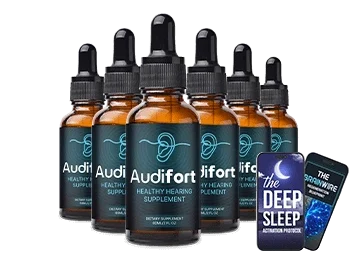
Audifort is a plant-based, liquid-form dietary supplement marketed for hearing health and tinnitus support. Unlike capsules, it comes in dropper bottles. The brand says this format supports faster absorption into the bloodstream, though that claim applies broadly to liquid supplements and is not unique to Audifort.
The formula contains more than 20 botanical and nutritional ingredients. It is manufactured in a facility registered with the FDA and certified under Good Manufacturing Practices (GMP). It is important to understand what that means and what it does not mean. FDA-registered manufacturing confirms that the production site meets regulated safety standards. It does not mean the supplement itself has been tested, approved, or evaluated by the FDA for any health claim.
Audifort is sold only through its official website. The brand positions this as a counterfeit-prevention measure, which is reasonable given how many fake versions of popular supplements flood Amazon and other third-party platforms.
One transparency concern worth flagging early: while the ingredient list is disclosed, the exact milligram amounts per serving are not consistently published in marketing materials. That makes it harder to evaluate dosage effectiveness compared to products that publish a full supplement facts panel openly.
Breaking Down Every Key Ingredient
This section matters more than anything else in a supplement review. Ingredients determine whether a product has any real chance of working. Marketing determines whether it sells. These are not the same thing.
Here is what is inside Audifort and what the research actually says.
Grape Seed Extract
Grape seed extract is loaded with antioxidants called proanthocyanidins (OPCs). These compounds help fight oxidative stress, which is one of the known contributors to inner ear cell damage over time. The cochlea, the spiral-shaped organ responsible for translating sound into nerve signals, contains delicate hair cells. Once these cells die, they do not regenerate in humans.
A study published in Antioxidants in 2019 suggested that OPCs may help protect cochlear hair cells from noise-induced damage by reducing free radical activity. The evidence is early, but the biological mechanism is sound.
Research verdict: Moderate evidence. Logical inclusion.
Maca Root
Maca is an adaptogenic herb from the high-altitude Andes mountains of Peru. Adaptogens are plants that help the body regulate its stress response, largely by moderating cortisol levels.
Why does this matter for hearing? Chronic stress and elevated cortisol have been linked to worsened tinnitus perception in multiple studies. A calmer nervous system tends to perceive tinnitus as less intrusive. Maca does not directly treat ears, but managing stress physiology is a reasonable indirect approach.
There are no clinical trials linking maca directly to improved auditory outcomes, though.
Research verdict: Low to moderate evidence. Indirect benefit pathway.
Green Tea Extract
Green tea extract delivers catechins, especially EGCG (epigallocatechin gallate), which is one of the most studied antioxidants in nutritional science. Research published in Free Radical Biology and Medicine suggests EGCG may help protect auditory hair cells from oxidative damage caused by aging and noise exposure.
Green tea also supports microcirculation, meaning it may help small blood vessels deliver oxygen and nutrients more efficiently, including to the cochlea.
Research verdict: Moderate evidence. One of the strongest inclusions here.
GABA (Gamma-Aminobutyric Acid)
GABA is the brain’s primary inhibitory neurotransmitter. It calms neural firing and plays a direct role in how the auditory system processes sound signals. Some research, including a study in the Journal of Neuroscience, suggests that reduced GABA activity in the auditory cortex may contribute to the phantom noise perception associated with tinnitus.
Supplemental GABA has one key challenge,e though. Crossing the blood-brain barrier in oral form is difficult, and there is ongoing debate about how much orally consumed GABA actually reaches the central nervous system.
Research verdict: Theoretically relevant, but the delivery mechanism is scientifically debated.
Ginkgo Biloba
Ginkgo biloba is probably the most researched herb in the context of tinnitus. It works primarily by improving cerebrovascular blood flow, meaning it helps blood circulate more efficiently to the brain and inner ear.
A review published by the Cochrane Collaboration examined multiple clinical trials on ginkgo and tinnitus. The findings were mixed. Some trials showed modest improvements in tinnitus severity, while others showed no significant benefit over placebo. It remains one of the more evidence-backed natural options for ear-related circulation support, even if it is not definitive.
Research verdict: Moderate evidence. The most studied ingredient for tinnitus specifically.
Vitamin B12
Vitamin B12 deficiency has a well-established link to hearing loss and tinnitus, particularly in older adults. It plays a key role in maintaining the myelin sheath, the protective coating that wraps around auditory nerve fibers. A damaged or thinning myelin sheath can disrupt the transmission of sound signals from the ear to the brain.
A study published in the American Journal of Otolaryngology found that patients with tinnitus and low B12 levels showed improvement in symptoms after B12 supplementation. For people with deficiencies, this could be genuinely helpful.
Research verdict: Strong for deficient individuals. Limited benefit if levels are already normal.
Zinc
Zinc supports immune function and cellular repair throughout the body, including in the inner ear. Some clinical studies suggest that zinc supplementation may reduce tinnitus severity, particularly in patients who have low baseline zinc levels. A meta-analysis published in Otolaryngology Head and Neck Surgery found modest but notable improvements in tinnitus patients receiving zinc therapy.
Research verdict: Moderate evidence, especially for those with zinc deficiency.
N-Acetyl Cysteine (NAC)
NAC is a precursor to glutathione, which is one of the body’s most powerful internal antioxidants. It has been studied specifically in the context of noise-induced hearing loss. Research from the American Journal of Otology suggests NAC may offer some protective benefit when taken before or after noise exposure.
Research verdict: Promising, particularly for noise-induced hearing damage.
Capsicum Annuum
Capsicum annuum, derived from chili peppers, contains capsaicin, which has anti-inflammatory and circulation-supporting properties. It may help with blood flow to peripheral tissues, including the ear canal. Research specific to tinnitus is limited.
Research verdict: Low direct evidence, but the anti-inflammatory benefit is plausible.
Ingredient Summary Table
| Ingredient | Primary Role | Evidence Level |
|---|---|---|
| Grape Seed Extract | Antioxidant protection for inner ear cells | Moderate |
| Maca Root | Stress reduction, adaptogenic support | Low to moderate |
| Green Tea Extract | Antioxidant, microcirculation support | Moderate |
| GABA | Calms auditory nerve overfiring | Low (delivery debated) |
| Ginkgo Biloba | Cerebrovascular blood flow | Moderate |
| Vitamin B12 | Myelin sheath maintenance | Strong (for deficient users) |
| Zinc | Cellular repair, nerve health | Moderate |
| N-Acetyl Cysteine | Glutathione production, oxidative protection | Moderate |
| Capsicum Annuum | Anti-inflammatory, circulation | Low |
How This Supplement Actually Works in the Body
The core idea behind Audifort is not complicated. Hearing decline and tinnitus are often driven by three overlapping problems: oxidative stress damaging inner ear cells, poor blood flow reducing nutrient delivery to the cochlea, and hyperactive or misfiring auditory nerves.
Audifort targets all three pathways simultaneously. Antioxidants like grape seed extract, green tea, and NAC aim to reduce cellular damage. Circulation-supporting ingredients like ginkgo biloba and green tea try to improve blood flow to the ear structures. Nerve-calming compounds like GABA and B12 aim to reduce the overactive neural signaling that many researchers believe drives tinnitus perception.
Whether all of this works in practice depends heavily on dosage. A formula can contain the right ingredients, but in amounts too small to produce real physiological effects. Without a fully transparent supplement facts panel, it is not possible to confirm that Audifort’s doses hit the thresholds studied in clinical trials.
That is a genuine limitation, and it is worth keeping in mind.
What the Brand Promises vs. What the Evidence Supports
| Brand Claim | What the Research Actually Shows |
|---|---|
| Reduces tinnitus symptoms | Some ingredients show modest benefit in clinical studies, but results are not universal |
| Improves hearing clarity | Indirect support via circulation and antioxidant protection; no direct clinical trials on this formula |
| Addresses root causes of hearing decline | Reasonable multi-pathway approach, but “root cause” is a broad claim with nuanced science |
| Results within 2 to 4 weeks | Some users report early improvements; most research suggests 6 to 12 weeks for meaningful changes |
| 100% natural and safe | Plant-based formula with a clean safety profile, but individual reactions can vary |
The brand does not make outrageous claims by supplement industry standards. However, language like “addresses root causes” is doing a lot of work. The genuine picture is more modest: some ingredients in Audifort have plausible mechanisms, some have moderate research backing, and a few have real clinical support specifically for tinnitus. Together, the formula represents a reasonable natural support strategy, not a treatment.
Realistic Benefits You Might Actually Experience
Without overpromising, here is what a reasonable user might experience with consistent use over two to three months:
- A gradual reduction in the perceived loudness or frequency of tinnitus episodes
- Slightly better concentration in noisy environments as auditory stress reduces
- Improved sleep quality if tinnitus is currently disrupting your nights
- A general sense of reduced ear pressure or discomfort
- Possible secondary benefits like improved focus and lower anxiety, driven by adaptogenic and calming ingredients
None of these is guaranteed. Individual results depend on the underlying cause of your tinnitus, your current nutritional status, and other lifestyle factors.
Side Effects and Who Should Be Careful
Audifort has not been linked to serious side effects in reported user feedback. The plant-based formula keeps the risk profile relatively low for most healthy adults.
That said, a few things to be aware of:
Possible mild reactions in the first week or two of use include minor digestive discomfort as the body adjusts to the botanical blend. This is common with new supplement regimens and usually resolves on its own.
Who should not use Audifort without medical consultation:
- Pregnant or breastfeeding women (safety of several ingredients has not been established in these populations)
- Children under 18
- Anyone taking blood thinners, as ginkgo biloba can interact with anticoagulants.
- Anyone on MAO inhibitor medications, as certain botanicals may interact
- People with known allergies to any listed ingredients
- Anyone already managing a diagnosed medical condition affecting hearing
This is not an exhaustive safety assessment. Always talk to your doctor or pharmacist before adding any new supplement to your routine, particularly if you take prescription medications.
The Honest Pros and Cons
| What Works in Its Favor | What Could Be Better |
|---|---|
| Multi-ingredient approach targets multiple pathways | Exact ingredient dosages not consistently published |
| Several key ingredients have genuine scientific backing | Some ingredients like GABA face bioavailability questions |
| Liquid drop form may support better absorption | Not available in stores or on Amazon |
| Manufactured in an FDA-registered, GMP-certified facility | Results take two to three months of consistent use |
| 90-day money-back guarantee reduces financial risk | Not a substitute for medical evaluation |
| Plant-based, non-habit forming formula | No independent third-party lab testing results shared publicly |
Who Actually Makes a Good Candidate for This Product
Audifort makes the most sense for a specific type of person. Not everyone with ear issues will benefit equally.
A good fit if you:
- Are you an adult between 30 and 70 experiencing mild to moderate tinnitus
- Have ruled out serious underlying causes with a doctor and been told nothing medically treatable is driving the issue
- Are willing to commit to at least two to three months of consistent use
- Are interested in a natural, non-pharmaceutical approach to managing symptoms
- Want a product with a refund policy that actually protects you if it does not work
Not a good fit if you:
- Have sudden or severe hearing loss (always see an ENT specialist immediately for that)
- Are you pregnant, breastfeeding, or under 18
- Are you looking for instant relief or overnight results
- Are already on blood thinners or multiple prescription medications without discussing supplements with your doctor
- Expect a supplement to replace medical treatment for a diagnosed ear condition
Also Considering Quietum Plus?
Quietum Plus is another plant-based hearing supplement that gets frequent attention alongside Audifort. It uses a different ingredient approach, including a heavier focus on plant extracts traditionally linked to nerve and brain health. If you want to compare both before deciding, we have covered it in full detail.
How to Use It Correctly
The standard recommendation is to take the liquid drops daily, typically sublingually (under the tongue) or mixed into a glass of water or juice. Most brands in this category suggest one full dropper per day, once or twice daily, depending on the pack instructions.
A few practical tips:
- Take it at the same time each day to build a consistent habit
- Morning use alongside breakfast helps with routine
- Do not skip days and expect to make up for it. Cumulative supplementation does not work that way
- Give it a minimum of 60 days before judging effectiveness
- Store the bottle in a cool, dry place away from direct sunlight
- Shake gently before use if any settling has occurred
Read the label on your specific bottle carefully, as formulations can occasionally change between production batches.
Pricing and Whether It Is Actually Worth the Money
| Package | Price | Cost Per Bottle |
|---|---|---|
| 1 Bottle (1-month supply) | ~$69 | $69 |
| 3 Bottles (3-month supply) | ~$177 | $59 |
| 6 Bottles (6-month supply) | ~$294 | $49 |
Prices are approximate and should be confirmed on the official website before purchasing, as they can change.
The six-bottle package offers the best value and aligns with the two to three-month minimum recommended for meaningful results. Buying in smaller quantities for a product that requires consistent long-term use ends up costing significantly more.
The 90-day refund policy is a genuine consumer protection. If you complete a full course and see no benefit, you have a reasonable window to request a refund. That removes most of the financial risk from trying the product for the first time.
One firm recommendation: buy only from the official website. Third-party Amazon listings for “Audifort” have been flagged repeatedly as potential counterfeits. Given that you are putting something inside your body, ingredient purity is not worth gambling on to save a few dollars.
Check current pricing on the official Audifort website before ordering.
What Real Users Are Actually Reporting
Parsing user feedback across review platforms and health forums reveals some consistent patterns worth noting.
Frequently mentioned positives:
- Reduced ringing intensity, particularly at night
- Better sleep as a secondary benefit once tinnitus quieted down
- Improved ability to follow conversations in noisy environments
- Gradual rather than sudden improvement over several weeks
- Appreciation for the liquid drop format versus swallowing pills
Frequently mentioned complaints and concerns:
- Results took longer than expected, often beyond the first month
- A small number of users reported no noticeable change even after two months
- Some frustration with not being able to buy it in local stores or pharmacies
- Occasional questions about the lack of a clearly published supplement facts panel
The overall user sentiment is cautiously positive. The most realistic picture is that a meaningful portion of users experience gradual improvement in tinnitus symptoms, while a smaller group sees no change. This is consistent with what the ingredient evidence would predict.
The Verdict: Who Should Try It and Who Should Skip It
Audifort is a thoughtfully formulated supplement in a category where most products are not. Several of its key ingredients, particularly ginkgo biloba, vitamin B12, grape seed extract, and zinc, have genuine research backing for hearing health and tinnitus support, even if the evidence falls short of clinical proof for the whole formula.
It is not a treatment. It will not cure tinnitus. Anyone claiming otherwise is overselling what natural supplementation can realistically achieve.
But as a long-term support strategy for adults dealing with mild to moderate tinnitus or age-related auditory decline, it represents a reasonable and relatively low-risk option. The 90-day refund window makes trying it financially manageable.
Try it if: You have already spoken to a doctor, ruled out serious causes, and want a natural support approach with a credible ingredient profile and meaningful consumer protection.
Skip it if: You have sudden hearing loss, are taking blood-thinning medications, are pregnant, or need fast results. This supplement works slowly or not at all in those situations.
Final rating: 4.1 out of 5
The score reflects a solid multi-ingredient formula with real scientific rationale, knocked down slightly for the lack of fully published dosage data and no independent third-party lab verification.
Check current pricing and availability on the official Audifort website.
Frequently Asked Questions
How long does it take for Audifort to work?
Most users who report results notice initial changes around weeks three to four, such as slightly reduced tinnitus intensity or improved sleep. More meaningful improvements tend to emerge after six to eight weeks of consistent daily use. For long-standing tinnitus, three months is a fairer evaluation window.
Is Audifort safe to take every day?
For healthy adults without medication interactions or contraindications, the plant-based formula appears safe for daily use. That said, consult your doctor before starting any new supplement, particularly if you take prescription medications or have a chronic condition.
Can Audifort cure tinnitus permanently?
No. A dietary supplement can cure tinnitus. Audifort is designed to support the biological conditions that influence tinnitus perception, which may reduce symptom severity for some users over time. It is a supportive tool, not a medical treatment.
Why can I only buy Audifort from the official website?
The brand restricts sales to its own channel to reduce the risk of counterfeit products. Several fake versions of popular hearing supplements have appeared on Amazon, so purchasing directly from the official site is the safer option for ingredient integrity and refund eligibility.
Will Audifort interact with my blood pressure medication?
Ginkgo biloba, one of the key ingredients, can interact with blood thinners and certain cardiovascular medications. If you take any prescription drugs, including blood pressure medications, speak with your pharmacist or doctor before starting Audifort.
Is there a money-back guarantee?
Yes. Audifort offers a 90-day money-back guarantee. If you are not satisfied with the results after a full course of use, you can contact the company for a refund.
Is Audifort FDA-approved?
No dietary supplement is FDA-approved. Audifort is manufactured in an FDA-registered, GMP-certified facility, meaning the production site meets regulated safety and quality standards. The product itself, like all supplements, has not been reviewed or approved by the FDA for any health claim.
A Note Before You Buy: Red Flags to Watch For
Not every “Audifort” you see online is the real product. A few things to keep in mind:
- Listings on Amazon, eBay, or other third-party marketplaces are not authorized by the brand and may be counterfeit
- Websites offering unrealistically steep discounts (such as 80 to 90 percent off) should be treated with skepticism
- The official site is where the 90-day refund guarantee is valid. Third-party purchases are not covered.
Audifort vs. Quietum Plus: Which One Should You Actually Pick?
If you’ve been researching Audifort hearing support, you’ve almost certainly come across Quietum Plus too — the two get compared constantly because they target the same audience: adults dealing with tinnitus and age-related hearing decline.
Here’s a side-by-side look:
| Factor | Audifort | Quietum Plus |
|---|---|---|
| Format | Liquid drops | Capsules |
| Core focus | Antioxidant + circulation + nerve-calming (3-pathway) | Heavier emphasis on nerve and brain-auditory connection |
| Standout ingredients | Ginkgo biloba, B12, grape seed extract, zinc | Different proprietary blend, plant-based nerve support |
| Price (1 bottle) | ~$69 | Varies by package |
| Refund window | 90 days | Varies — check current offer |
| Best for | Those who prefer liquid absorption and a multi-pathway approach | Those who prefer capsules and a nerve-focused formula |
Neither product is a clear universal winner — it comes down to formulation philosophy and personal preference on delivery format. If you want the full ingredient-by-ingredient breakdown, we’ve covered Quietum Plus in the same depth as this Audifort review.
Read Our Full Quietum Plus Review 2026 →
Is Audifort a Scam or Legit? What the Evidence Actually Shows
This is the question most people are really asking before they buy, so let’s address it directly.
Audifort is not a scam in the legal or operational sense. It’s a legitimately manufactured, FDA-registered, GMP-certified supplement with a real company behind it, a working refund policy, and ingredients that are disclosed (even if exact dosages aren’t). That puts it well above the genuinely scammy products that disappear after taking your payment or ignore refund requests entirely.
That said, here’s where the “scam” perception usually comes from, and what’s fair to say about each:
- Inflated marketing claims — Phrases like “addresses root causes” oversell what any natural supplement can realistically do. This is marketing language, not outright fraud, but it does blur the line for first-time buyers.
- Audifort complaints about results — A subset of users reports no noticeable change even after two months of consistent use. This tracks with the ingredient evidence: some compounds (like GABA) have real bioavailability questions, so inconsistent results are expected, not a red flag of deception.
- No independently published lab testing — This is a legitimate transparency gap, not a scam in itself, but it does mean you’re trusting the brand’s word on purity and potency rather than verifying it.
- Counterfeit listings on Amazon and eBay. These are the actual scam risks, and they’re not Audifort’s fault directly, but they do feed “is Audifort legit” search confusion. Buying only from the official site avoids this entirely.
Bottom line: Audifort is a legitimate product with honest-enough (if optimistic) marketing, backed by a real refund policy. The “scam” chatter online is driven more by unmet expectations and counterfeit sellers than by the brand itself misleading customers.
Audifort Alternatives Worth Considering
Audifort isn’t the only hearing supplement on the market, and it won’t be the right fit for everyone. If you’re still weighing your options, here are the main categories of alternatives worth knowing about:
- Quietum Plus — The most frequently compared alternative, with a capsule format and a nerve/brain-focused ingredient approach. See our full comparison above.
- Single-ingredient options. If you specifically have a documented B12 or zinc deficiency, a targeted single supplement (rather than a 20+ ingredient blend) may be more cost-effective and easier to dose correctly.
- Ginkgo biloba standalone supplements. Since ginkgo is the most clinically studied ingredient for tinnitus specifically, some people prefer a dedicated ginkgo product at a clinically studied dose rather than a proprietary blend.
- Sound therapy and white noise devices are not a supplement at all, but are often used alongside (or instead of) products like Audifort, particularly for people who want a non-ingestible approach.
- Prescription/clinical routes. For sudden or severe hearing loss, an ENT-prescribed approach will always outperform any over-the-counter supplement, including Audifort.
No alternative on this list is a guaranteed fix; the same caveats about modest, gradual, individual-dependent results apply across the category. The right choice depends on whether you prefer liquid vs. capsule, whether you have a known nutrient deficiency, and how much you’re willing to spend on testing different approaches.
Disclaimer
The information in this article is provided for educational purposes only. It does not constitute medical advice, diagnosis, or treatment. The statements on this page have not been evaluated by the Food and Drug Administration. This product is not intended to diagnose, treat, cure, or prevent any disease. Always consult a qualified healthcare professional before starting any new supplement, especially if you are pregnant, nursing, taking prescription medications, or managing a medical condition. Individual results will vary.
Sources:
- American Tinnitus Association: ata.org
- Antioxidants Journal, 2019: grape seed extract and cochlear protection (PubMed)
- Free Radical Biology and Medicine: EGCG and auditory hair cell protection (PubMed)
- Journal of Neuroscience: GABA activity and tinnitus perception (PubMed)
- Cochrane Collaboration: Ginkgo biloba and tinnitus meta-analysis
- American Journal of Otolaryngology: Vitamin B12 and tinnitus (PubMed)
- Otolaryngology Head and Neck Surgery: Zinc and tinnitus (PubMed)
- American Journal of Otology: N-Acetyl Cysteine and noise-induced hearing loss (PubMed)
