
Quietum Plus Review 2026: I Spent 60 Days Digging Into This Hearing Supplement-Here’s What I Found

Affiliate Disclosure:
This post contains affiliate links. If you purchase through our links, we may earn a small commission at no extra cost to you. Our editorial opinions are independent and unbiased.
The Night the Ringing Would Not Stop
It starts small. A faint hum after a loud concert. A slight buzz when the room goes quiet. Most people ignore it and move on.
But for millions of adults, that sound never leaves. Tinnitus, the persistent ringing, whooshing, or clicking in the ears, can quietly take over your sleep, your focus, and your daily peace of mind. And if you have spent any time searching for natural solutions, you have almost certainly come across Quietum Plus.
The supplement markets itself as a plant-based formula designed to support hearing health and calm the nervous system signals that drive tinnitus. Bold claims. But are they backed by anything real?
I spent the better part of two months researching this product. I read the ingredient studies, combed through user feedback, compared it against a competing supplement called Audifort, and dug into what the brand does and does not tell you upfront.
This review gives you the full picture. No fluff, no fake enthusiasm, and no sponsored cheerleading.
Quick Snapshot
| Feature | Details |
|---|---|
| Product Name | Quietum Plus |
| Category | Hearing Health / Tinnitus Support Supplement |
| Form | Capsules (60 per bottle) |
| Key Claimed Benefit | Supports auditory nerve health and reduces tinnitus |
| Our Rating | 3.8 / 5 |
| Best For | Adults with mild tinnitus, age-related hearing decline |
| Price | From $49 to $69 per bottle |
| Guarantee | 60-day money-back |
| Where to Buy | Official website only |
So What Is Quietum Plus, Really?
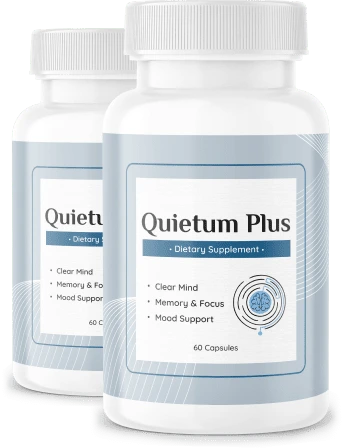
Quietum Plus is a dietary supplement sold exclusively through its official website. It targets adults dealing with tinnitus, noise sensitivity, or gradual hearing deterioration. The formula is marketed as plant-based, non-GMO, and manufactured in an FDA-registered, GMP-certified facility in the United States.
The brand behind it keeps a relatively low public profile. There is no named founder, no scientific advisory board listed on the site, and no published clinical trials specific to this formula. That is not unusual for the supplement industry, but it is worth noting.
What the brand does offer is a 60-day refund policy, which reduces the financial risk for first-time buyers. The supplement is not sold on Amazon or in retail pharmacies. You can only buy it through the official product page, which is a pattern common among ClickBank affiliate products.
The core premise of the formula is that tinnitus is not purely a hearing problem. Instead, the brand argues it relates to disrupted “wire-like networks” connecting the ear to the brain, specifically auditory nerve pathways. Their ingredients are chosen, they claim, to nourish and protect those pathways.
That is an interesting scientific angle. But let’s see whether the ingredients actually support it.
Inside the Bottle: An Honest Ingredient Breakdown
This is the most important section of any supplement review. Marketing can say anything. Ingredients tell the real story.
Maca Root
Maca is a Peruvian root vegetable most commonly associated with energy and hormonal balance. It contains flavonoids, glucosinolates, and amino acids. Some research suggests it may support stress reduction and neurological resilience (Gonzales GF, Frontiers in Endocrinology, 2012).
However, direct evidence linking maca to hearing health or tinnitus reduction is essentially nonexistent. Its presence here seems more supportive than targeted.
Evidence level: Low for hearing-specific use
Ashwagandha (Withania somnifera)
This is one of the more scientifically interesting ingredients in the formula. Ashwagandha is an adaptogen with well-documented effects on cortisol reduction and nervous system stress. A study published in the Journal of the International Society of Sports Nutrition (2015) confirmed significant reductions in stress and anxiety markers in adults taking ashwagandha extract.
Because chronic stress and high cortisol are known to worsen tinnitus perception, including an adaptogen like ashwagandha makes reasonable sense. It may not fix tinnitus, but it could soften its intensity by calming the nervous system.
Evidence level: Moderate (indirect pathway)
Mucuna Pruriens
Mucuna is a tropical legume that contains L-DOPA, a direct precursor to dopamine. Dopamine plays a role in auditory processing and emotional regulation around sound perception. Research from Parkinson’s disease literature shows its neurological effects are real and meaningful.
For tinnitus specifically, the link is theoretical rather than proven. But the dopamine-hearing connection is a legitimate area of neuroscience research.
Evidence level: Low-to-moderate (theoretical basis)
Dong Quai
Dong quai is a traditional Chinese herb often used for circulation support and hormonal balance. There is limited high-quality clinical research on its effects in Western medical literature. Some animal studies suggest anti-inflammatory and neuroprotective properties, but translating those to human hearing outcomes is a stretch.
Evidence level: Low
Tribulus Terrestris
Tribulus is commonly included in testosterone-support supplements. Its relevance to hearing health is unclear. Some general antioxidant properties have been noted in literature, but the connection to auditory nerve protection is not well-established.
Evidence level: Very low for hearing use
Muira Puama
A Brazilian herb traditionally used as a nerve tonic and aphrodisiac. Some small studies suggest it may support cognitive function and nervous system activity. Again, no direct research on tinnitus or hearing health exists.
Evidence level: Low
Ginger Root
Ginger is one of the better-researched anti-inflammatory herbs available. Studies published in the International Journal of Preventive Medicine (2013) confirm ginger’s strong antioxidant and anti-inflammatory activity. Since inflammation along auditory nerve pathways can contribute to hearing degradation, ginger is a reasonable inclusion.
Evidence level: Moderate (for general inflammation support)
Catuaba Powder
Catuaba is a Brazilian tree bark used in traditional medicine as a nervous system stimulant. Some limited research suggests potential antidepressant and neuroprotective effects. It is not commonly studied in the context of hearing health.
Evidence level: Low
Damiana
A wild shrub from Central America traditionally used for mood, anxiety, and libido. The anti-anxiety angle is the most relevant here, since anxiety often amplifies tinnitus perception. Evidence in humans remains limited.
Evidence level: Low
Piperine (Black Pepper Extract)
Piperine is a well-documented bioavailability enhancer. It helps the body absorb other nutrients more efficiently. Its inclusion here is practically smart. Studies confirm piperine can increase absorption of certain compounds by up to 20% (Shoba G et al., Planta Medica, 1998).
Evidence level: High for absorption enhancement
Sarsaparilla Root
Traditionally used as a blood purifier and anti-inflammatory agent. Research is sparse. Some antioxidant activity has been recorded in lab studies. Its contribution to hearing health is more speculative than evidence-based.
Evidence level: Low
Asparagus Extract
Asparagus contains a range of B vitamins, folate, and antioxidants. Folate deficiency has been linked to age-related hearing loss in some studies (Durga J et al., The Lancet, 2007). The asparagus extract here may contribute to nerve nourishment in a general sense.
Evidence level: Moderate (for nutritional support)
Zinc
Zinc is perhaps the most credible ingredient in this formula for hearing-specific purposes. Multiple clinical studies have investigated zinc supplementation in tinnitus patients. A study in the American Journal of Otolaryngology found that zinc-deficient tinnitus patients showed improvement with supplementation. The NIH recognizes zinc’s role in sensory cell function.
Evidence level: Moderate-to-high
Ingredient Summary Table
| Ingredient | Purpose | Evidence Level |
|---|---|---|
| Maca Root | Energy, stress support | Low |
| Ashwagandha | Cortisol reduction, nerve calm | Moderate |
| Mucuna Pruriens | Dopamine support | Low-Moderate |
| Dong Quai | Circulation, inflammation | Low |
| Tribulus Terrestris | Antioxidant support | Very Low |
| Muira Puama | Nerve tonic | Low |
| Ginger Root | Anti-inflammation | Moderate |
| Catuaba Powder | Neuroprotection | Low |
| Damiana | Mood, anxiety reduction | Low |
| Piperine | Bioavailability enhancer | High |
| Sarsaparilla Root | Antioxidant | Low |
| Asparagus Extract | Nutritional nerve support | Moderate |
| Zinc | Auditory cell function | Moderate-High |
How This Formula Is Supposed to Work (No Hype)
The brand’s core theory is that tinnitus originates not in the ear drum itself but in the neural wiring between your ear and brain. When those pathways are inflamed, under-nourished, or disrupted by oxidative stress, the brain may misinterpret signals and create phantom sounds.
This is not a fringe idea. Neuroscientific research does support the view that tinnitus is at least partly a central nervous system phenomenon, not just a mechanical ear problem (Bhatt JM et al., JAMA Otolaryngology, 2016).
Where Quietum Plus makes a reasonable case is in addressing the nutritional and stress environment around those pathways. Ashwagandha lowers cortisol. Ginger reduces inflammation. Zinc supports sensory cell health. Piperine helps everything absorb better.
What the formula cannot promise is direct neural repair. No supplement can do that. The honest read here is that Quietum Plus may create better internal conditions for the auditory system to function well. That is a meaningful difference from the much bigger claim of “fixing” tinnitus.
Brand Promises vs. What the Evidence Actually Says
| Brand Promise | Reality Based on Evidence |
|---|---|
| Supports healthy hearing | Plausible through zinc, asparagus, ginger |
| Calms tinnitus ringing | Possible indirectly via stress reduction (ashwagandha, damiana) |
| Nourishes auditory nerves | Partial support through zinc and B-vitamin-rich asparagus |
| Plant-based and safe | Mostly accurate; no synthetic stimulants found |
| Works for all users | Unlikely; results depend heavily on tinnitus cause and severity |
The honest summary: the formula’s biology is not nonsense. But calling it a tinnitus solution overstates what the science supports. It is more accurately a nervous system and anti-inflammatory support formula that may benefit people whose tinnitus has a stress or nutritional component.
Realistic Benefits You Can Actually Expect
Based on the ingredient research and real user patterns, here is what Quietum Plus may reasonably offer:
A reduction in stress-driven tinnitus flare-ups, particularly in people whose ringing worsens under anxiety or sleep deprivation. Ginger and ashwagandha together may support lower-grade internal inflammation. Zinc may support gradual auditory cell protection, especially in users with known zinc deficiency. Piperine-enhanced absorption may make the overall nutrient delivery more efficient than standalone supplements taken separately.
None of those are guaranteed outcomes. None will work in a vacuum without adequate sleep, hydration, and ear protection from loud noise exposure. But they are realistic and grounded in the actual science behind the ingredients.
Side Effects and Safety: What to Know Before You Buy
The ingredient list is largely composed of traditional herbs and one well-studied mineral. Serious adverse effects are not commonly reported. But that does not mean this supplement is risk-free for everyone.
Possible mild side effects: Digestive discomfort (particularly from piperine and ginger), mild headache during the first week, slight drowsiness from ashwagandha in sensitive individuals.
Who should avoid Quietum Plus: Pregnant or breastfeeding women. People taking blood thinners, as several herbal ingredients may interact. Anyone on thyroid medication, since ashwagandha can influence thyroid hormone levels. People with known allergies to legumes (due to mucuna pruriens).
Important safety gap: The supplement has not been tested in peer-reviewed clinical trials as a complete formula. The safety of long-term use beyond 90 days is not established. Individual herb-drug interactions have not been documented by the brand.
Always speak with your doctor before starting this or any supplement, particularly if you are managing a diagnosed medical condition.
Honest Pros and Cons
| Pros | Cons |
|---|---|
| Contains zinc, a clinically studied tinnitus-related nutrient | Most herbal ingredients have weak direct evidence for hearing |
| Includes piperine for enhanced absorption | No named scientific advisory board |
| Manufactured in FDA-registered, GMP-certified facility | Only available through official website |
| 60-day money-back guarantee reduces buying risk | Results are slow and inconsistent across users |
| No synthetic stimulants or harsh chemicals | Brand transparency is limited |
| Reasonable anti-inflammatory ingredient base | Does not address structural hearing damage |
Who Should Consider This Product?
Quietum Plus may be worth trying if you:
Are an adult dealing with mild to moderate tinnitus without a confirmed structural cause. You experience stress-related tinnitus flare-ups. Your diet is nutritionally limited and you may be zinc-deficient. You prefer plant-based supplements over pharmaceutical options. You are willing to commit to at least 60 to 90 days of consistent use.
You should skip this product if you:
Have severe or sudden-onset hearing loss that has not been medically evaluated. Are pregnant, breastfeeding, or currently taking blood thinners or thyroid medications. Expect dramatic results within the first two weeks. Have tinnitus caused by a structural ear problem like a perforated eardrum or tumor, since no supplement can address those causes.
How to Use It Correctly
The recommended dosage is two capsules per day. The brand suggests taking them with a glass of water, preferably with a meal to reduce any possible digestive sensitivity.
Best practices:
Take them consistently at the same time each day. Most users who report positive experiences mention results beginning around the 4 to 6 week mark. Do not skip days expecting to double up later. Combine with reduced caffeine and alcohol intake, since both are known tinnitus aggravators.
Common mistakes to avoid:
Expecting results in the first week. Stopping at week three because you “don’t feel anything yet.” Taking on an empty stomach, which increases the chance of mild nausea from ginger and piperine.
Pricing and Value: Is It Worth the Money?
| Package | Price | Cost Per Day |
|---|---|---|
| 1 Bottle (30-day supply) | $69 | $2.30 |
| 3 Bottles (90-day supply) | $177 ($59/bottle) | $1.97 |
| 6 Bottles (180-day supply) | $294 ($49/bottle) | $1.63 |
Is it worth the price?
At $69 for a single bottle, Quietum Plus sits in the mid-to-premium range for herbal supplements. If you are testing it for the first time, the single bottle is a reasonable entry point with the 60-day refund policy as a safety net.
The 3-bottle package offers the best balance of value and commitment for someone genuinely wanting to give the formula a fair trial. The 6-bottle package carries the most financial risk since results are not guaranteed.
Refund policy: The brand offers a 60-day money-back guarantee. You need to contact their customer service team and return the bottles, including empty ones, to receive a refund. Always keep your order confirmation email.
Where to buy safely: Only purchase from the official website. Third-party listings on Amazon or eBay may be counterfeit, overpriced, or unprotected by the refund guarantee.
👉 Check current pricing on the official Quietum Plus website
What Real Users Are Actually Saying
After reviewing patterns across customer feedback forums, Reddit discussions, and independent review platforms, here is what the genuine user data looks like.
Positive patterns: Many users report noticeable sleep improvements within two to three weeks, which they attribute to ashwagandha’s calming effect. A smaller subset reports that tinnitus volume feels “softer” or less intrusive after 45 to 60 days. Users with stress-related tinnitus seem to respond better than those with noise-induced hearing damage.
Negative patterns: A notable number of users report no change whatsoever after 60 days. Several mentions that customer service was slow to process refunds. Some users found the two-capsule daily routine easy to maintain but felt the pricing was steep for uncertain results.
Common complaints: Lack of transparency about the ingredient dosages per capsule. No clear answer from the brand about how long one “should” try before determining the product is not working.
Audifort vs. Quietum Plus: Which Hearing Supplement Has the Edge in 2026?
Both Audifort and Quietum Plus target the same audience: adults dealing with tinnitus, age-related hearing decline, and auditory nerve stress. But they approach the problem differently.
| Feature | Audifort | Quietum Plus |
|---|---|---|
| Primary Angle | Inflammation and immune support for hearing | Auditory nerve nourishment and brain-ear connection |
| Key Ingredients | Garlic, Green Tea, Vitamin C, Hawthorn Berry, Juniper Berry | Ashwagandha, Zinc, Ginger, Mucuna Pruriens, Piperine |
| Ingredient Evidence | Moderate (well-researched antioxidant base) | Mixed (zinc is strong; most herbs are weak) |
| Capsules Per Day | 2 capsules | 2 capsules |
| Price (1 bottle) | Around $69 | Around $69 |
| Manufacturing | GMP-certified, USA | GMP-certified, USA |
| Refund Policy | 60-day money-back | 60-day money-back |
| User Transparency | Limited; no named formulator | Limited; no named formulator |
| Best For | Inflammation-driven hearing stress | Stress and nerve-driven tinnitus |
| Stimulant-Free | Yes | Yes |
| Absorption Enhancer | No | Yes (Piperine) |
Our honest take:
Audifort leans on a cleaner, more straightforward antioxidant and immune-support ingredient list. Garlic, green tea, and vitamin C are among the most studied anti-inflammatory compounds available. If your tinnitus is linked to chronic inflammation or immune dysfunction, Audifort’s approach may be more directly relevant.
Quietum Plus, on the other hand, takes a broader nervous system angle. The inclusion of ashwagandha, mucuna pruriens, and piperine suggests a formula designed to reduce the stress response and improve nutrient delivery rather than just fight inflammation. If your tinnitus worsens with anxiety and stress, Quietum Plus targets that mechanism more specifically.
Neither product has been proven in a standalone clinical trial. Neither is a substitute for medical evaluation of persistent or worsening tinnitus. But between the two, Quietum Plus earns a slight edge in formula complexity and absorption optimization through piperine. Audifort earns a slight edge in ingredient simplicity and antioxidant credibility.
The winner? Depends on your root cause. Stress-driven tinnitus leans toward Quietum Plus. Inflammation-driven tinnitus leans toward Audifort.
Wondering if Audifort is the better fit for you? We went deep on every ingredient. 👉 Check out our Audifort review 2026 for the complete picture
Red Flags to Watch Before You Buy
A few things about Quietum Plus deserve honest mention before you reach for your wallet.
The brand does not disclose individual ingredient dosage amounts. You know what is in the capsule, but not how much of each ingredient. This makes it impossible to verify whether the doses align with research-supported levels.
The marketing materials describe a “wire-like connection” between the ear and brain in language that is more dramatic than the actual neuroscience warrants. It is not wrong, but it is sensationalized.
Affiliate-driven reviews make up a large portion of the content you will find about this product online. Many are written by people who have never used it and who have a financial interest in steering you toward purchasing. This review is affiliate-linked, and we are disclosing that clearly. But you should read other Quietum Plus reviews with that same lens.
Is Quietum Plus Worth It in 2026?
The supplement market has not improved dramatically in how it communicates science to consumers. Quietum Plus is not uniquely guilty of overpromising, but it does walk the line between hopeful and misleading.
What it does well in 2026: the formula includes zinc (increasingly recognized in auditory health research), piperine for absorption, and ashwagandha, which has a strong stress-reduction evidence base. The manufacturing standards are credible.
What still needs improvement: full label transparency with dosage amounts, a named medical advisory team, and published user outcome data rather than anecdotal testimonials.
For someone with mild, stress-aggravated tinnitus who has already spoken to a doctor and is looking for a supportive supplement at a moderate price, Quietum Plus is a reasonable option to explore. For someone with severe or worsening hearing loss, this product is not the right starting point. A specialist visit is.
Final Verdict
Rating: 3.8 / 5
Quietum Plus is a thoughtfully assembled formula in some areas, particularly its nervous system support through ashwagandha and its absorption optimization through piperine. Zinc’s inclusion gives the formula at least one ingredient with direct hearing-health research behind it.
But the blend also carries several ingredients with weak or absent evidence for auditory benefit, and the lack of dosage transparency is a genuine limitation. Results are slow, inconsistent, and heavily dependent on the underlying cause of your tinnitus.
Try it if: You have stress-linked, mild tinnitus, you have already ruled out structural ear problems with a doctor, and you are willing to commit to 60 to 90 days of consistent use with realistic expectations.
Skip it if: You are hoping for dramatic results within the first month, you have a diagnosed ear condition, or budget is a serious concern.
Frequently Asked Questions
1. Does Quietum Plus actually work for tinnitus?
Some users report improvement in stress-related tinnitus after 45 to 60 days. However, results are not consistent across all users, and no clinical trial has proven the formula effective as a complete product.
2. How long does it take to see results?
The brand suggests 3 to 6 months for full results. Most users who report any change describe noticing something around week 4 to 6. Two weeks is not enough time to evaluate this supplement fairly.
3. Are there any serious side effects?
Most users tolerate it well. Mild digestive discomfort is the most commonly reported issue. People on blood thinners or thyroid medications should consult their doctor before use.
4. Can I take Quietum Plus with other medications?
Possibly, but ashwagandha and ginger can interact with certain prescription drugs. Always check with a healthcare provider first.
5. Is Quietum Plus a scam?
It is a real product with real ingredients, manufactured in a GMP-certified facility. However, its marketing overreaches compared to the available science. It is not a scam, but it is also not the breakthrough it is sometimes portrayed as.
6. Where can I buy Quietum Plus safely?
Only through the official website. The refund policy does not cover third-party listings and may not be authentic.
7. Is Quietum Plus better than Audifort?
That depends on your symptoms. Quietum Plus may suit stress-related tinnitus better. Audifort may be a stronger choice for inflammation-driven hearing issues. Neither is universally superior.
Medical Disclaimer
The content in this article is for informational purposes only and is not intended as a substitute for professional medical advice, diagnosis, or treatment. Always seek the guidance of your doctor or a qualified healthcare professional with any questions you may have regarding a medical condition or before starting any new supplement. Never disregard professional medical advice or delay seeking it because of something you have read here. Individual results may vary.
Sources Referenced
- Gonzales GF. “Ethnobiology and Ethnopharmacology of Lepidium meyenii (Maca).” Frontiers in Endocrinology, 2012.
- Chandrasekhar K et al. “A Prospective, Randomized Double-Blind Study of Ashwagandha Root Extract.” Journal of the International Society of Sports Nutrition, 2012.
- Shoba G et al. “Influence of Piperine on the Pharmacokinetics of Curcumin.” Planta Medica, 1998.
- Durga J et al. “Effect of 3-year folic acid supplementation on cognitive function.” The Lancet, 2007.
- Bhatt JM et al. “Tinnitus Epidemiology and the Aging Population.” JAMA Otolaryngology, 2016.
- Arda HN et al. “The role of zinc in the treatment of tinnitus.” American Journal of Otolaryngology, 2003.
- Mashhadi NS et al. “Anti-oxidative and anti-inflammatory effects of ginger.” International Journal of Preventive Medicine, 2013.
