Can Sleep Apnea Kill You?
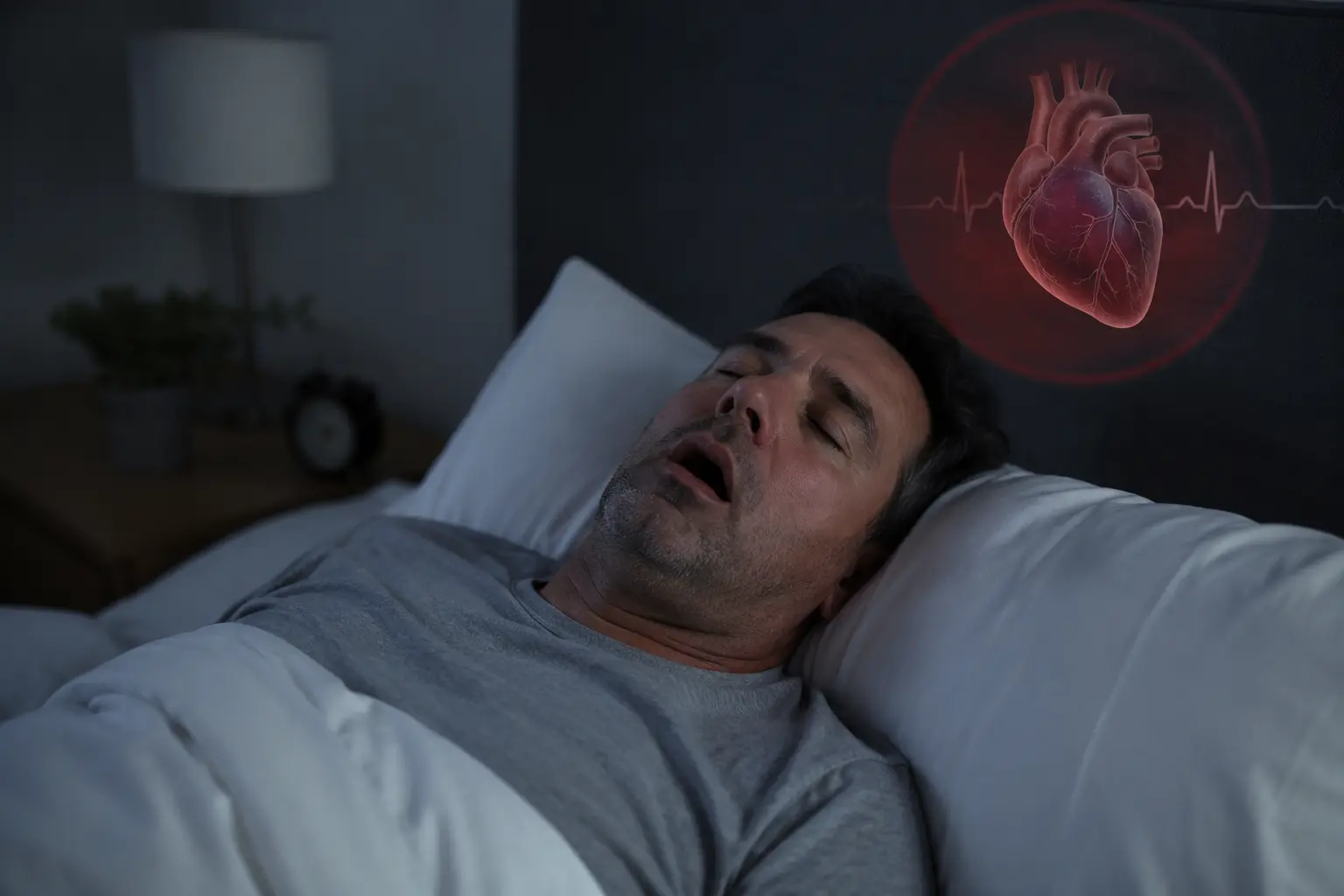
Most people who snore think of it as an embarrassment, not a health problem. Something that wakes their partner or gets brought up at breakfast with mild annoyance, then forgotten by noon.
But sleep apnea is not snoring. It is a condition in which breathing stops and restarts throughout the night, sometimes dozens of times per hour, without the person ever knowing it. And when it goes undetected for months or years, the body pays a real price.
The short answer to whether sleep apnea can kill you is: it can contribute to death, through mechanisms that are well-documented in cardiovascular research. But that is not the end of the story. Sleep apnea is one of the more treatable sleep conditions once it is identified. The real danger is in leaving it undiscovered while the damage accumulates in the background.
What Happens Inside Your Body During Sleep Apnea
The mechanics are worth understanding because they explain every downstream risk.
In the most common form, obstructive sleep apnea, the soft tissue at the back of the throat relaxes during sleep and collapses inward, blocking the airway. Breathing stops. Oxygen levels in the blood begin to fall. The brain detects the change and triggers a partial arousal that forces the airway back open. Then the person drops back into sleep, with no memory of any of it.
This can repeat 5 times per hour in mild cases. In severe sleep apnea, it can happen 30, 50, or more than 100 times per hour.
Each episode is a physiological stress event. Blood pressure spikes. Heart rate surges. The adrenal glands release cortisol and adrenaline. The body treats every breathing pause as an emergency.
Night after night, this pattern wears on the heart and blood vessels, building over time. Sleep is supposed to provide cardiovascular recovery. In people with untreated sleep apnea, that recovery never fully comes.
Apnea stays invisible. That is part of what makes it dangerous.
The Connection Between Sleep Apnea and Heart Disease
Heart disease is the most documented consequence tied to untreated sleep apnea, and the relationship has clear biological logic behind it.
Each time oxygen drops during an apnea event, it generates oxidative stress in the walls of blood vessels. Over months and years, this promotes atherosclerosis, the accumulation of plaques inside arteries that underlies most heart attacks and coronary disease.
High blood pressure is among the clearest outcomes. A landmark paper in the New England Journal of Medicine found a dose-dependent relationship between the frequency of sleep-disordered breathing events and hypertension. More events per hour meant higher blood pressure, independent of weight, age, and other factors. The repeated surges during overnight episodes push the baseline upward, and the cardiovascular system never returns to true rest.
The heart responds to sustained elevated pressure by thickening its muscle walls, a condition called left ventricular hypertrophy. A thicker wall reduces pumping efficiency and raises the risk of heart failure over time.
And then there is atrial fibrillation, an irregular heart rhythm that is more common in people with untreated sleep apnea. Repeated drops in oxygen and disruption to the autonomic nervous system create electrical instability in the heart. Atrial fibrillation matters beyond the rhythm problem itself. It raises stroke risk by allowing blood clots to form inside the heart.
Research published in the journal Circulation documented elevated rates of hypertension, coronary artery disease, and heart failure in people with untreated obstructive sleep apnea compared to those without it.
Stroke Risk and Sleep Apnea
The stroke connection deserves its own attention. The mechanisms overlap with heart disease but include some distinct pathways.
Clots formed during atrial fibrillation can travel to the brain. Chronic elevated blood pressure weakens vessel walls and raises the risk of both ischemic strokes, caused by clots, and hemorrhagic strokes, caused by vessel rupture. Markers of inflammation and platelet activity, both elevated by repeated oxygen drops, create a blood environment more prone to clotting.
The Wisconsin Sleep Cohort, one of the more detailed long-running sleep studies in the United States, followed participants across many years and found that people with severe obstructive sleep apnea faced a meaningful increase in stroke risk compared to those without it, even after accounting for age, weight, smoking, and blood pressure.
One detail stands out. Stroke events in people with untreated sleep apnea tend to cluster in the hours between midnight and early morning, which is also when apnea events are most frequent and most severe. That pattern points toward a direct contribution rather than coincidence.
Learn more about whether sleep apnea is a disability to understand when it may qualify for benefits, what medical evidence is needed, and how eligibility is determined.
Sudden Cardiac Death: What the Data Shows
This is the question most people hesitate to ask but want answered.
Research published in the New England Journal of Medicine examined the timing of sudden cardiac death across different populations. In people without sleep apnea, sudden cardiac death peaks in the morning hours after waking. In people with obstructive sleep apnea, the peak shifts to the overnight window, from midnight to roughly 6 a.m.
That reversal is significant. It points to the apnea events themselves, not just general cardiovascular risk, as a contributing factor. During a severe episode, the combination of oxygen deprivation, blood pressure surge, and heart rate instability can push a compromised heart into a fatal arrhythmia.
This risk is not uniform across all sleep apnea cases. It concentrates in people with severe apnea, those with existing heart disease, and those who have spent years without treatment. But the data is direct enough to warrant a straight answer rather than a softened one.
Other Health Complications That Build Over Time
The cardiovascular angle dominates the literature, but sleep apnea’s reach extends further.
Metabolic and Blood Sugar Effects
Disrupted sleep interferes with the body’s insulin response. People with untreated sleep apnea face elevated rates of type 2 diabetes, and the relationship runs in both directions. Diabetes can impair the nerve signals that regulate breathing, making apnea worse. Apnea disrupts glucose control, making diabetes harder to manage. The two conditions can reinforce each other in ways that push both in a worse direction over time.
Brain Health and Cognitive Decline
The brain depends on a steady oxygen supply. Repeated overnight drops leave a mark across years. People with long-standing untreated sleep apnea show higher rates of memory problems, reduced processing speed, and trouble with sustained attention. Some imaging studies have found volume changes in brain areas tied to memory in this population. Several researchers now consider sleep apnea a modifiable risk factor for dementia, though the full picture is still emerging.
Mental Health
Depression and sleep apnea coexist at rates higher than chance would predict. The disruption to deep sleep and REM sleep reduces the brain’s natural restoration overnight. Mood becomes harder to regulate. Anxiety worsens. Some people spend years on antidepressants with modest results before anyone investigates whether a breathing problem is the underlying driver.
Daytime Safety
Excessive daytime sleepiness impairs reaction time and judgment in ways that raise accident risk. The National Highway Traffic Safety Administration recognizes drowsy driving as a factor in tens of thousands of crashes each year. People with untreated sleep apnea are in a high-risk group for this.
Who Is Most Vulnerable
Not everyone with sleep apnea faces the same level of danger. Several factors shape both the likelihood of developing the condition and the severity of long-term effects.
Risk factors for developing sleep apnea include:
- Excess weight, in particular fat stored around the neck and upper airway
- Male sex, though this gap narrows after menopause in women
- Age above 40, though younger adults and children can be affected
- A narrow upper airway, small jaw, or recessed chin
- Large tonsils or adenoids
- Family history of the condition
- Alcohol use before bed, which relaxes throat muscles
- Sedative medications that suppress breathing
- Smoking, which inflames and narrows airway tissue
Risk factors for more severe health consequences:
- An apnea-hypopnea index at or above 30 events per hour (the severe range)
- Existing heart disease, prior stroke, or uncontrolled blood pressure
- Type 2 diabetes
- Long duration without treatment or diagnosis
- Frequent drops in blood oxygen levels overnight
People at the intersection of several of these factors deserve evaluation sooner rather than later.
Recognizing the Symptoms
The defining events of sleep apnea happen while the person is asleep and unaware. Partners and family members are often the first to notice something is wrong.
Signs that should prompt a conversation with a doctor:
- Loud, persistent snoring with pauses, gasps, or choking sounds observed by someone else
- Morning headaches, dry mouth, or sore throat
- Feeling exhausted after what should have been enough sleep
- Falling asleep without intending to during quiet activities like reading or watching television
- Trouble concentrating or retaining information
- Irritability or mood changes that feel out of character
- Waking at night to urinate more than once
Central sleep apnea, a less common form where the brain fails to send the right signals to breathing muscles rather than a blockage causing the problem, may not produce loud snoring. It can be quieter and harder to identify without a sleep study.
Getting Diagnosed
Diagnosis requires a sleep study. Two main paths are available.
In-lab polysomnography is the reference standard. You sleep overnight at a facility while sensors monitor brain activity, eye movement, blood oxygen levels, heart rate, airflow, and breathing effort. The result is a detailed record of what your body does across a full night of sleep.
Home sleep apnea testing uses a portable device worn during sleep at home. It captures breathing patterns and oxygen levels without the sensors used for brain waves and eye movement. Home tests are less comprehensive but accurate enough for most adults with suspected obstructive apnea, and far easier to access.
The core diagnostic number from either test is the apnea-hypopnea index, or AHI, which counts breathing disruption events per hour of sleep. Under 5 is normal. Five to 14 is mild. Fifteen to 29 is moderate. Thirty or above is severe.
Severity matters here. People with a high AHI and frequent overnight oxygen drops face a different cardiovascular burden than those with mild, infrequent events.
Treatment Options That Work
Sleep apnea responds well to treatment. Several options serve different people depending on severity, anatomy, and personal tolerance.
CPAP Therapy
Continuous positive airway pressure, known as CPAP, remains the most effective treatment for moderate to severe obstructive sleep apnea. A mask worn during sleep delivers a stream of pressurized air that holds the airway open. People who use it consistently see reductions in blood pressure, improvement in heart function, fewer arrhythmia episodes, and better glucose control. Some long-term studies show reduced rates of stroke and cardiovascular events.
The barrier to CPAP is not effectiveness but tolerability. Some people struggle with the mask in the early weeks. Modern auto-adjusting CPAP machines vary pressure in response to breathing patterns rather than holding one fixed level throughout the night. Mask styles have expanded. Most people who persist through the adjustment period find it workable with guidance from a sleep specialist.
Oral Appliances
A dentist trained in sleep medicine can fit a custom mouthguard that repositions the jaw and tongue to keep the airway open. These work best for mild to moderate apnea. For some people, they are easier to use than CPAP and produce enough benefit to make a real difference.
Positional Therapy
Some people have apnea events that concentrate when sleeping on the back. Positional devices or specialized pillows that encourage side sleeping can reduce event frequency for this group without additional intervention. A sleep study can reveal whether position plays a major role in a particular case.
Surgical Options
When anatomy is the main driver, and CPAP is not tolerated, surgical options exist. These range from removal of enlarged tonsils and adenoids in children to procedures that reduce or reposition tissue in the adult throat. Hypoglossal nerve stimulation, a newer approach, uses an implanted device to activate the tongue muscle during sleep, keeping the airway open without a mask.
Weight Reduction
In people where excess weight is a central contributor, weight loss can reduce apnea severity. Some reach a point where the condition no longer meets clinical thresholds. But weight reduction takes time and does not replace treatment in the meantime.
Nutrition and Sleep Apnea
No specific diet treats sleep apnea. But dietary choices influence weight, inflammation, and airway tissue, all of which play into the condition’s severity.
Fat stored around the neck increases airway resistance. The tissue around the parapharyngeal space, right beside the airway, narrows the gap available for airflow. People who carry weight in the upper body and neck tend to have more severe apnea than those with similar total weight distributed elsewhere.
Eating patterns that reduce systemic inflammation, such as those found in Mediterranean-style diets with an emphasis on vegetables, fish, whole grains, and unsaturated fats, have been studied in the context of sleep and heart health with broadly positive findings. No single food reverses the condition, but a diet that supports healthy weight and reduces inflammation does reduce the overall burden.
Alcohol deserves a specific mention here. It is one of the most direct dietary contributors to worse apnea. Reducing or eliminating alcohol before bed is one of the clearest steps a person can take to reduce overnight breathing disruption.
Daily Habits That Affect Apnea Severity
Medical treatment is the foundation, but several daily habits shift how sleep apnea behaves.
Alcohol before bed relaxes throat muscles and can increase both the number and duration of breathing pauses in a substantial way. Even moderate amounts in the hours before sleep produce this effect.
Sedative medications, including some antihistamines, sleep aids, and muscle relaxants, work in a similar direction. People with undetected apnea who use these may be making the condition worse without realizing it.
Sleep position has real effects. Side sleeping reduces airway collapse in most people compared to back sleeping. For those whose apnea concentrates in the supine position, this change alone can reduce event frequency in a meaningful way.
A consistent sleep schedule preserves the normal structure of sleep stages. Irregular timing, short sleep windows, and fragmented nights increase time in lighter sleep and can amplify apnea’s effects on the body.
Treating nasal congestion from allergies or structural issues reduces airway resistance. This eases both apnea severity and CPAP tolerance for people using that treatment.
Common Misunderstandings About Sleep Apnea
“I would know if I stopped breathing.”
No. The brain rouses the body just enough to restart breathing, then drops it back into sleep. Most people have no memory of these events. They just feel tired without understanding the source.
“Sleep apnea only affects people with excess weight.”
Weight is a risk factor, not a requirement. Many people with a healthy weight have sleep apnea due to jaw structure, airway anatomy, or changes in muscle tone. Those people carry the same cardiovascular risks as anyone else with the condition.
“Loud snoring means I have sleep apnea.”
Snoring and sleep apnea are related but not the same. Snoring happens when airflow is turbulent through a narrowed airway. Sleep apnea involves actual pauses in breathing, which require a sleep study to confirm and measure.
“It is just a sleep problem.”
This is the most consequential misunderstanding. Untreated sleep apnea is a documented contributor to hypertension, atrial fibrillation, heart failure, stroke, type 2 diabetes, and cognitive decline. It is a systemic condition that happens to occur during sleep.
“CPAP is too uncomfortable to try.”
Early CPAP machines were bulkier and louder than current ones. Mask designs have expanded. Auto-adjusting pressure has replaced fixed settings in most modern devices. Many people who were put off by descriptions of older equipment find current versions manageable with the right guidance.
When to See a Doctor
If a bed partner has observed you stop breathing or gasp during sleep, schedule an appointment. That observation alone is enough reason to pursue a sleep study.
Other clear reasons to seek evaluation:
- Morning headaches that happen several times per week
- Waking from sleep with a choking sensation or feeling short of breath
- Daytime sleepiness severe enough to affect work, focus, or driving
- Blood pressure that stays elevated despite medication
- Existing heart disease, prior stroke, or diabetes that is hard to control
Many cardiologists now screen for sleep apnea as part of managing resistant hypertension and atrial fibrillation. The connection is well-established enough that sleep evaluation has become part of cardiac care in major medical centers.
Children who snore loudly, breathe through their mouths during sleep, or show behavior problems, bedwetting, or slower-than-expected growth also deserve evaluation. Pediatric sleep apnea is underdiagnosed and often resolves with removal of enlarged tonsils.
Frequently Asked Questions
Can sleep apnea kill you if it is left untreated?
Untreated severe sleep apnea raises the risk of fatal cardiovascular events, including heart attack, stroke, and sudden cardiac death. The risk depends on severity, duration without treatment, and what other health conditions are present. The association is documented across decades of peer-reviewed research.
Does everyone with sleep apnea face the same risk?
No. Mild apnea carries far lower cardiovascular risk than severe apnea. A person with 8 events per hour and no underlying heart disease faces a different situation than someone with 60 events per hour and a history of cardiac problems. Severity and coexisting conditions both shape the outcome.
Can sleep apnea go away without treatment?
In some cases, weight loss reduces apnea severity enough to resolve it. In children, removing enlarged tonsils often clears the condition. But in most adults with structural contributors, sleep apnea does not resolve without intervention.
Is CPAP the only treatment option?
No. Oral appliances, positional therapy, surgery, and hypoglossal nerve stimulation all offer alternatives depending on the individual case. A sleep specialist can help map out what fits best.
How do I find out if I have it?
A sleep study is the diagnostic tool. No symptom checklist or questionnaire confirms sleep apnea. If you have signs or risk factors, the right step is talking to a doctor who can order the appropriate test.
A Final Word
Sleep apnea is not the kind of condition that announces itself. It works at night, in the dark, accumulating effects over months and years before anything feels clearly wrong.
And it is one of the few conditions where identifying the problem leads to treatment that genuinely reduces the risk of the worst outcomes. Blood pressure drops. Heart rhythm improves. The brain gets better rest. The burden on the cardiovascular system lifts in ways that show up in clinical data.
The gap between having sleep apnea and knowing you have it remains wide. Many people carry the condition for years, waking tired, blaming stress or age, never connecting it to what happens when they close their eyes.
If the signs are present, a sleep study is a low-risk step with high potential benefit. The test is not dramatic. The treatment, for most people, is manageable. Going another year without knowing is the highest-risk option of all.
Medical Disclaimer
This article is for informational purposes only and does not replace professional medical advice, diagnosis, or treatment. Always consult a qualified healthcare provider for concerns about sleep apnea or other health conditions. Read our Medical Disclaimer for more information.
Editorial Standards
This content is researched using reputable medical sources and reviewed for accuracy, clarity, and relevance. We are committed to publishing trustworthy, evidence-based health information. Learn more about our Editorial Policy.
References
- Punjabi NM. The epidemiology of adult obstructive sleep apnea. Proceedings of the American Thoracic Society. 2008;5(2):136-143. https://www.ncbi.nlm.nih.gov/pmc/articles/PMC2645248/
- Somers VK, White DP, Amin R, et al. Sleep apnea and cardiovascular disease. Circulation. 2008;118(10):1080-1111. https://www.ahajournals.org/doi/10.1161/CIRCULATIONAHA.107.189375
- Peppard PE, Young T, Palta M, Skatrud J. Prospective study of the association between sleep-disordered breathing and hypertension. New England Journal of Medicine. 2000;342(19):1378-1384.
- Gami AS, Howard DE, Olson EJ, Somers VK. Day-night pattern of sudden death in obstructive sleep apnea. New England Journal of Medicine. 2005;352(12):1206-1214. https://www.nejm.org/doi/full/10.1056/NEJMoa041832
- Redline S, Yenokyan G, Gottlieb DJ, et al. Obstructive sleep apnea-hypopnea and incident stroke. American Journal of Respiratory and Critical Care Medicine. 2010;182(2):269-277.
- Marin JM, Carrizo SJ, Vicente E, Agusti AG. Long-term cardiovascular outcomes in men with obstructive sleep apnoea-hypopnoea with or without treatment with CPAP. Lancet. 2005;365(9464):1046-1053.
- Mayo Clinic Staff. Sleep apnea: Symptoms and causes. https://www.mayoclinic.org/diseases-conditions/sleep-apnea/symptoms-causes/syc-20377631
- National Heart, Lung, and Blood Institute. Sleep apnea. National Institutes of Health. https://www.nhlbi.nih.gov/health/sleep-apnea
- Cleveland Clinic. Sleep apnea: Symptoms, causes, tests and treatment. https://my.clevelandclinic.org/health/diseases/8718-sleep-apnea
- Johns Hopkins Medicine. Sleep apnea. https://www.hopkinsmedicine.org/health/conditions-and-diseases/sleep-apnea
- Harvard Health Publishing. Sleep apnea. Harvard Medical School. https://www.health.harvard.edu/
- Young T, Peppard PE, Gottlieb DJ. Epidemiology of obstructive sleep apnea: a population health perspective. American Journal of Respiratory and Critical Care Medicine. 2002;165(9):1217-1239.
- MedlinePlus. Sleep apnea. U.S. National Library of Medicine. https://medlineplus.gov/sleepapnea.html