Citrus Burn Review: Is the Formula Transparent and What Does the Research Say?
Affiliate Disclosure: ThinkHealthTips may earn a commission if you purchase through links on this page, at no additional cost to you. This does not affect our editorial conclusions.
Quick answer
Citrus Burn is a once-daily capsule. Its label lists 100 mcg of chromium plus a 510 mg proprietary blend of ten botanical ingredients, with no individual amounts disclosed. We did not identify trials of the finished product. Research on the individual ingredients is limited or mixed for weight. Green tea extract and bitter orange carry safety cautions, so check with a pharmacist or physician if you take medication.
Evidence snapshot
- Evidence for key ingredients: Limited evidence (chromium, green tea extract, bitter orange); not assessed in this session for the other ingredients
- Finished-product evidence: Not identified in sources reviewed
- Transparency: Chromium amount disclosed; remaining ingredients in a proprietary blend with individual amounts undisclosed; testing not verified
- Main caution: Green tea extract has been linked to liver injury, and bitter orange has unresolved cardiovascular questions
How we review this product
We read the supplied label, compared it with sales-page claims, and checked ingredient and safety information from NIH sources. Evidence labels and verification steps are explained in our supplement review methodology.
Medical review Status: This article has not been independently reviewed by a medical professional. It was researched using publicly available scientific literature, authoritative health sources, and product information. It is for general education and is not a substitute for individualized medical advice.
What is Citrus Burn?
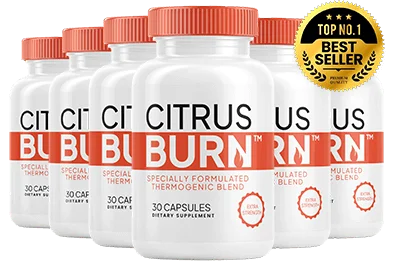
Citrus Burn is a dietary supplement sold as a “thermogenic blend.” The label gives one capsule daily as the suggested use and lists a US distributor in Aurora, Colorado. It names no manufacturer. We worked from the label image, which is the highest-priority formula source, because the sales pages we found disagree with it. The maker’s official product page (affiliate link) is where you can check the current label and variants. Which site is the real one is unconfirmed, so compare whatever you find there with the label described here.
Ingredients and formula
The Supplement Facts panel lists chromium as chromium picolinate at 100 mcg, which the label states as 286% of the Daily Value. Everything else sits in a “Proprietary Blend” of 510 mg total, with no Daily Value established.
| Blend | Total blend | Ingredient (as listed) | Amount per serving | Studied range (context only) | Evidence label | Assessment |
|---|---|---|---|---|---|---|
| Proprietary Blend | 510 mg | Green Tea (Camellia sinensis) Leaf Extract | Undisclosed | Not compared | Limited evidence | Dose comparison not possible: amount not publicly disclosed |
| Proprietary Blend | 510 mg | Apple Cider Vinegar | Undisclosed | Not compared | Not assessed this session | Dose comparison not possible |
| Proprietary Blend | 510 mg | Berberine HCL | Undisclosed | Not compared | Not assessed (efficacy) | Interaction concerns below; dose comparison not possible |
| Proprietary Blend | 510 mg | Ginger (Zingiber officinale) Root | Undisclosed | Not compared | Not assessed this session | Dose comparison not possible |
| Proprietary Blend | 510 mg | Cinnamon (Cinnamomum cassia) Bark Extract | Undisclosed | Not compared | Not assessed this session | Dose comparison not possible |
| Proprietary Blend | 510 mg | Bitter Orange (Citrus aurantium L.) Fruit Extract | Undisclosed | Not compared | Limited evidence | Synephrine content not stated; dose comparison not possible |
| Proprietary Blend | 510 mg | Cayenne (Capsicum annuum) Fruit | Undisclosed | Not compared | Not assessed this session | Dose comparison not possible |
| Proprietary Blend | 510 mg | Banaba (Lagerstroemia speciosa) Leaf Extract | Undisclosed | Not compared | Not assessed this session | Dose comparison not possible |
| Proprietary Blend | 510 mg | Ginseng Korean (Panax ginseng) Aerial Extract | Undisclosed | Not compared | Not assessed this session | Aerial parts, not root; dose comparison not possible |
| Proprietary Blend | 510 mg | Resveratrol (from Polygonum cuspidatum root extract) | Undisclosed | Not compared | Not assessed this session | Dose comparison not possible |
Other ingredients are hypromellose capsule, microcrystalline cellulose, magnesium stearate, and silicon dioxide. The label does not state caffeine content or whether the green tea extract is decaffeinated.
The sales pages we found describe the formula differently. They mention Seville orange peel and p-synephrine, “Spanish red apple vinegar,” “ceremonial” green tea, and “Korean red ginseng,” which are not the terms printed on the label. They omit banaba and resveratrol, which the label does list. Because the label is the working source, this review follows it. We could not determine which description reflects the current formula.
Ingredient evidence and dose comparison
Only chromium has a disclosed amount, so it is the only ingredient we can compare with studied doses.
| Ingredient | Product amount | Studied range | Evidence label | Assessment |
|---|---|---|---|---|
| Chromium (picolinate) | 100 mcg per serving | 137 to 1,000 mcg daily for 8 to 26 weeks | Limited evidence | Below the lowest dose in the meta-analysis NIH describes |
NIH’s Office of Dietary Supplements says a meta-analysis found doses of 137 to 1,000 mcg chromium daily for 8 to 26 weeks reduced body weight by 0.5 kg and body fat by 0.46%. A Cochrane review’s authors described the weight effect as of debatable clinical relevance, with low overall evidence quality. This label’s 100 mcg sits below that range, so the comparison is approximate and the studies do not speak to this product.
Does Citrus Burn work? Evidence for the finished product
We did not identify product-specific clinical evidence in the sources reviewed. The research below concerns individual ingredients, and ingredient research does not establish that this capsule produces the same effect.
Green tea extract. NCCIH’s clinical digest says green tea extracts, bitter orange, and several other products have been investigated, but none are effective for weight loss, and each has side effects.
Bitter orange. NCCIH reports that most human studies were small, some were not rigorous, and many tested multi-ingredient products, so its effects on body weight are unclear. A review sponsored by industry-linked authors reports modest weight loss over six to 12 weeks, but it also notes that it is unclear whether combination-product results came from the bitter orange or the other components.
Everything else in the blend. We did not review efficacy research for apple cider vinegar, berberine, ginger, cinnamon, cayenne, banaba, ginseng aerial extract, or resveratrol in this session. Even if each has research behind it, the undisclosed amounts mean we cannot match the formula to any studied dose.
Manufacturer claims versus independent evidence
| Claim (sales pages) | What we found | Limit |
|---|---|---|
| Activates thermogenesis and burns stored fat | No finished-product trial identified | Ingredient research for weight is limited or mixed |
| “Stimulant-free” | Label lists bitter orange and green tea extract; caffeine content not stated | Whether the product contains stimulants cannot be settled from the label |
| “No under-dosed ingredients” | Nine of ten blend ingredients have undisclosed amounts | Dosing cannot be judged |
| “No side effects” | NIH sources document safety concerns for several ingredients | See next section |
| “Clinically studied ingredients” | No citations given | Not verified |
| “Third-party tested” | No certificate or public COA found | Not verified |
These are claims by sellers, not findings. Some of the pages also use a “$900 off only for today” banner, which is a countdown-style urgency tactic. We repeat none of it as fact.
Is Citrus Burn safe? Side effects and interactions
The label advises against use under 18, during pregnancy or nursing, and without medical consultation if you take medication or have a condition. Those cautions are reasonable, and several ingredient sources point the same way.
Green tea extract and the liver. LiverTox, the NIH’s drug-induced liver injury resource, cites US studies in which green tea extract was the single most commonly implicated herbal agent among supplement-related liver injury cases. A review of the cases describes the injury as uncommon, with risk possibly higher in people who fast or use extracts for more than four weeks. The label does not give the catechin content, so we cannot tell how this product compares with the products in those reports. If you notice dark urine, yellowing of the skin or eyes, or severe fatigue, stop and seek medical care.
Bitter orange and the heart. NCCIH says some studies indicate bitter orange raises blood pressure and heart rate, but others do not, and it advises against use in pregnancy and breastfeeding. Stimulant drugs combined with bitter orange are a recognized concern in reference summaries. If you have high blood pressure, a heart rhythm condition,n or take stimulant medication, ask a physician first.
Berberine and medications. A 2026 narrative review describes berberine as a source of supplement-drug interactions, and notes the research is fragmented across pharmacokinetic studies and case reports. NCCIH notes that berberine can cause or worsen jaundice in newborns. People taking diabetes drugs, blood thinners, immunosuppressants, ts or other prescriptions should talk to a pharmacist before using a product with berberine. Berberine’s amount here is undisclosed.
Chromium. NIH says trivalent chromium appears to be well tolerated, though isolated case reports link chromium supplements to several adverse events.
We did not assess cinnamon, ginseng, banaba, cayenne, or resveratrol interactions in depth.
Transparency and third-party testing
The label discloses one amount and withholds nine. It does not name the manufacturer, extract standardizations, or a testing program. Sales pages claim FDA-registered, GMP-certified manufacturing and third-party testing. We found no certificate, NSF, USP, or Informed Sport listing, or public COA. Those are manufacturer statements, not verified findings, and a facility registration describes a facility rather than approval of a product.
Scope note. This review addresses the US market. Regulatory treatment of supplements differs by country, so readers elsewhere should check their own regulator. US: The label carries the standard statement that FDA has not evaluated its claims. We could not verify FDA warnings, recalls, or the maker’s registration claim from an official source in this session. Regulatory status is not evidence of effectiveness.
Price, subscription, shipping, and refund
We could not verify current price, bundle pricing, subscription terms, shipping, or refund policy from the maker because we could not confirm which site is official. Terms change, so confirm the current price and terms (affiliate link) before deciding and note the date you checked.
What we could verify and what remains uncertain
Verified from the label: serving size, count, chromium amount, ingredient names, blend total, warnings, US distributor.
Not verified: manufacturer identity, formula version, individual blend amounts, caffeine and synephrine content, testing, price, refund terms, any FDA action.
Conflicts: label versus sales-page ingredient names and the “stimulant-free” claim.
Who may want to consider it and who should use caution
Someone who wants to try a multi-ingredient supplement should treat it as unproven for weight loss and limit expectations to what the ingredient research shows. People who should talk to a pharmacist or physician first include anyone who takes prescription medication (especially for diabetes, blood pressure, clotting, or immune conditions), has liver or heart concerns, is pregnant nursingn, nursing, or under 18, or has had a bad reaction to a green tea extract product.
Final evidence-based assessment
The evidence supports a narrow conclusion. Chromium at this dose and green tea extract and bitter orange as ingredients each have small or unclear weight effects, and none of that research tested this capsule. The evidence does not establish that Citrus Burn burns fat. The formula is limited by a 510 mg blend with nine individually undisclosed amounts, and transparency is limited by an unnamed manufacturer and unverified testing. The main safety questions are green tea extract and the liver, bitter orange and cardiovascular effects, and berberine and drug interactions. Before buying, compare the label on the official product page (affiliate link) with this review, especially whether any lot-specific testing is published and whether the formula matches the label we reviewed.
Frequently asked questions
Is Citrus Burn FDA approved?
The label carries the standard statement that the FDA has not evaluated its claims. We could not verify any FDA status from an official source in this session. Facility registration or GMP, if accurate, describes a facility rather than product approval, and neither shows the product works.
Does Citrus Burn contain caffeine or stimulants?
The label does not list caffeine, but it includes green tea extract and bitter orange extract, and it does not say whether the green tea is decaffeinated or how much synephrine is present. Sales pages call it “stimulant-free,” which we could not confirm.
Can I take it with medication?
Ask a pharmacist or physician first. Berberine has documented interaction concerns, bitter orange may affect heart rate and blood pressure, and the label itself tells anyone taking medication to consult a physician.
How many calories does it burn?
We did not identify a figure for this product. Research on its individual ingredients shows small or unclear weight effects, and none of it tested this formula.
References
- NCCIH. Bitter Orange: Usefulness and Safety. https://www.nccih.nih.gov/health/bitter-orange (retrieved October 3, 2026).
- NCCIH Clinical Digest. Dietary Supplements Marketed for Weight Loss, Bodybuilding, and Sexual Enhancement. https://nccih.nih.gov/health/providers/digest/DietarySupplements (retrieved October 3, 2026).
- NCCIH Clinical Digest. Herb-Drug Interactions: What the Science Says. https://www.nccih.nih.gov/health/providers/digest/herb-drug-interactions-science (retrieved October 3, 2026).
- NIH ODS. Chromium, Health Professional Fact Sheet. https://ods.od.nih.gov/factsheets/Chromium-HealthProfessional/ (retrieved October 3, 2026).
- NIH ODS. Dietary Supplements for Weight Loss, Health Professional Fact Sheet. https://ods.od.nih.gov/factsheets/WeightLoss-HealthProfessional/ (retrieved October 3, 2026).
- NIDDK LiverTox. Herbal and Dietary Supplements. https://www.ncbi.nlm.nih.gov/books/NBK548441/ (retrieved October 3, 2026).
- Berberine-Drug Interactions: Mechanisms, Clinical Relevance and Risk Stratification, narrative review. https://www.ncbi.nlm.nih.gov/pmc/articles/PMC13516377/ (retrieved October 3, 2026).
- A Review of the Human Clinical Studies Involving Citrus aurantium Extract and p-Synephrine. https://www.medsci.org/v09p0527.htm (retrieved October 3, 2026).