How to Get More Deep Sleep

You wake up after a full night in bed and still feel tired. Not a little tired. Bone-tired. Like you barely slept at all. That feeling is not just in your head, and it is not always about how many hours you slept. A lot of the time, it is about which kind of sleep you are getting.
Deep sleep is the stage where your body does its most important repair work. It is quiet, slow, and powerful. And most adults are not getting nearly enough of it.
This article explains what deep sleep is, what cuts into it, and what you can realistically do to get more of it every night.
What Deep Sleep Actually Is
Sleep is not one continuous thing. It moves in cycles, usually four to six per night, and each cycle has different stages. The stages fall into two broad categories: REM sleep (where most dreaming happens) and non-REM sleep (which includes the deepest, most restorative stage).
Deep sleep is officially called slow-wave sleep or N3. During this stage, your brain produces slow, high-amplitude waves called delta waves. Your heart rate drops. Your muscles relax. Your breathing slows down and becomes very steady.
This is the stage where your body releases growth hormone, repairs tissue, strengthens the immune system, and consolidates memories from the day. Without enough of it, none of those processes happen fully.
Most adults spend only about 15 to 20 percent of their total sleep time in deep sleep. For someone sleeping seven hours, that is roughly one to one and a half hours. The problem is that many people get far less than that, often without realizing it.
Why You Might Not Be Getting Enough Deep Sleep
There is no single reason people miss out on deep sleep. Usually it is a combination of habits, lifestyle factors, and sometimes underlying health issues.
Age plays a bigger role than most people expect. Deep sleep naturally decreases as you get older. Children spend a large portion of their sleep in deep sleep stages. By the time people reach their mid-forties, deep sleep starts declining noticeably. This is normal, but it also means older adults need to be more deliberate about protecting whatever deep sleep they can get.
Alcohol is one of the biggest disruptors, and this surprises a lot of people. Alcohol makes you fall asleep faster, which feels helpful. But it fragments the second half of your sleep significantly and suppresses deep sleep. The more you drink and the closer to bedtime, the worse the effect.
Stress and anxiety keep the brain in a lighter state of alertness. When your nervous system is activated, deep sleep becomes harder to reach and harder to maintain. Chronic stress, even low-level everyday stress, affects sleep architecture over time.
Irregular sleep schedules confuse your internal clock. Your body expects sleep and wakefulness to follow a predictable rhythm. When your bedtime shifts around regularly, your brain does not get the signal it needs to slide into deep sleep efficiently.
Screen light in the evening suppresses melatonin. Melatonin is the hormone that signals your brain that it is time to sleep. Blue light from phones and screens delays its release, which pushes back your entire sleep cycle and can cut into deep sleep time.
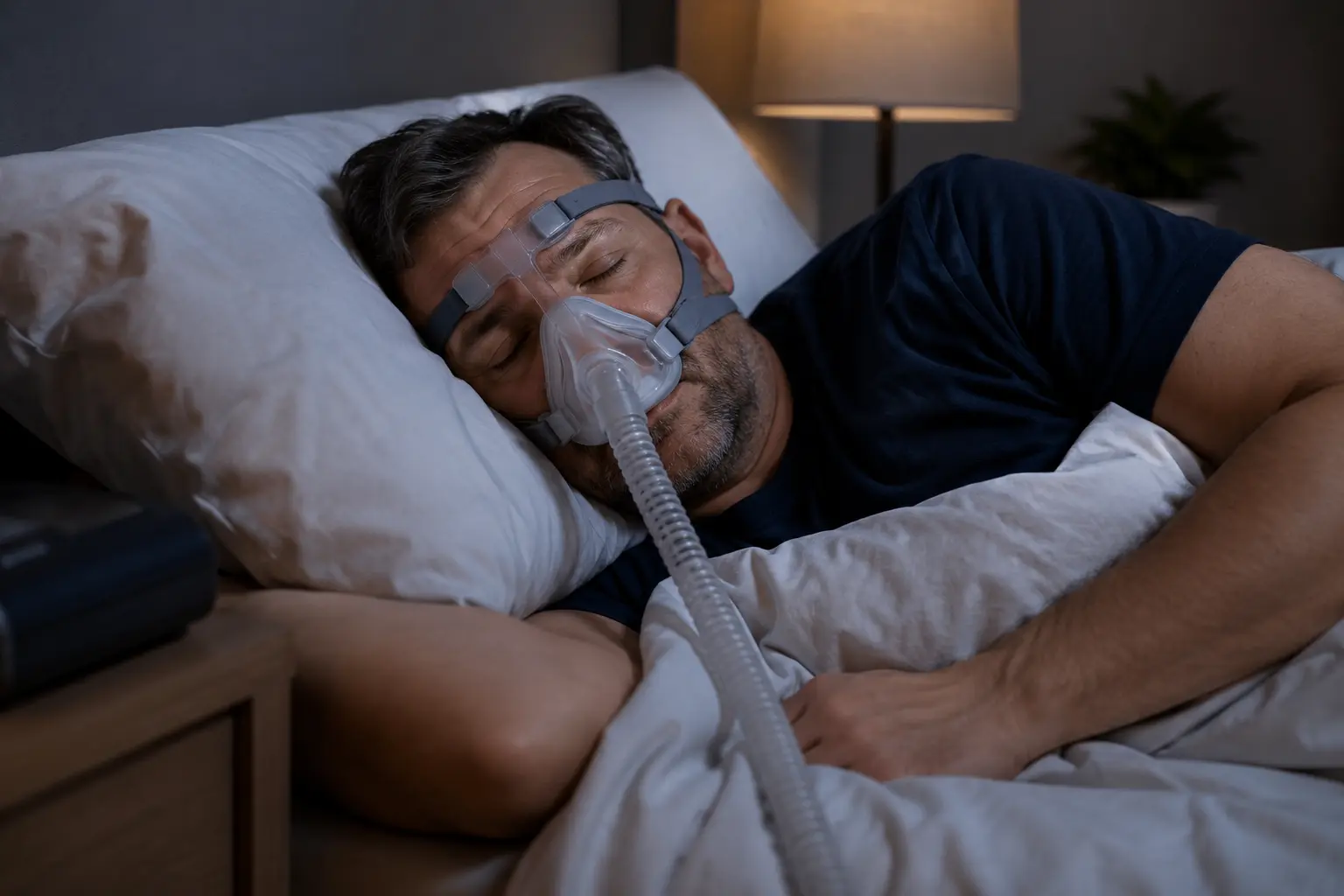
Sleep disorders like sleep apnea directly interrupt deep sleep. Apnea causes the body to briefly wake itself up to resume breathing, sometimes dozens or hundreds of times per night. Most of those awakenings are so brief the person does not remember them. But each one interrupts the sleep cycle and makes deep sleep nearly impossible to sustain.
Signs You Are Not Getting Enough Deep Sleep
There is no way to know for certain without a sleep study or a wearable device that tracks sleep stages. But some signs point clearly in that direction.
You wake up tired even after sleeping a full night. That is the most obvious one. You might also feel foggy or slow in the mornings, have trouble concentrating during the day, or notice that your memory feels off. Minor illnesses taking longer than usual to clear up can also be a sign, since the immune system does a lot of its maintenance work during deep sleep.
Some people notice mood changes too. Irritability, low motivation, and a kind of dullness that does not go away after coffee are all connected to poor sleep quality, not just poor sleep quantity.
How to Get More Deep Sleep: Practical Steps That Work
Keep Your Sleep and Wake Times Consistent
This is the single most effective thing most people can do, and it is also the most ignored. Your body runs on a circadian rhythm, an internal clock that governs when you feel sleepy and when you feel alert. When you go to bed and wake up at the same time every day, including weekends, that clock becomes very predictable.
A consistent schedule helps your brain move into deep sleep faster and stay there longer. Even small shifts of an hour or two on weekends, sometimes called social jetlag, can disrupt this pattern enough to affect sleep quality for the next few days.
Keep Your Bedroom Cool
Body temperature drops naturally as part of the process of falling into deep sleep. A room that is too warm can interfere with this process. Most sleep researchers point to somewhere between 65 and 68 degrees Fahrenheit as a range many people find helpful, though individual preference matters here.
Simple fixes like using lighter bedding, keeping a window cracked, or running a fan can make a real difference. If you wake up sweating regularly, your room temperature is probably working against your sleep quality.
Limit Alcohol, Especially Close to Bedtime
This is worth repeating because it runs counter to what many people believe. A drink with dinner is unlikely to cause major problems. Two or three drinks right before bed is a different matter. If you drink regularly and also feel unrested in the mornings, cutting back, at least as an experiment, is worth trying.
Exercise, but Not Too Late
Physical activity, particularly aerobic exercise, is associated with better deep sleep. People who exercise regularly tend to spend more time in slow-wave sleep. The timing matters, though. Vigorous exercise within two to three hours of bedtime can increase alertness and heart rate in ways that delay sleep onset.
Morning or afternoon workouts are generally better for sleep quality. Even walks or light movement count. You do not need intense workouts to see a benefit.
Wind Down Before Bed
This sounds obvious, but most people skip it. The hour before bed matters more than most people give it credit for. Your brain needs time to shift from active, problem-solving mode into something quieter.
Dim the lights. Put the phone down or use night mode. Avoid checking email or anything that might trigger stress. Read something light, stretch gently, or simply sit quietly. The goal is to give your nervous system a chance to downshift before you expect it to reach deep sleep.
Watch What You Eat at Night
A heavy meal right before bed forces your digestive system to stay active during a time your body is trying to slow down. This can fragment sleep and reduce deep sleep time.
That said, going to bed hungry is also disruptive. Some people sleep better with a small, easy-to-digest snack in the evening. Things like a small amount of whole grain food, a banana, or a handful of nuts work better than a full meal. Caffeine, obviously, should be cut off by early afternoon for most people, though individual sensitivity varies quite a bit.
Manage Stress Through the Day, Not Just at Bedtime
Trying to calm down only at bedtime after a stressful day is harder than it sounds. Stress management works better as an ongoing practice. Regular physical activity, time outdoors, simple breathing exercises, journaling, or whatever genuinely helps you decompress- all of these reduce baseline stress levels over time and make it easier for your body to reach deep sleep at night.
There is solid evidence that mindfulness practices, even short ones done consistently, reduce nighttime arousal and improve sleep depth. You do not need a meditation app. Even ten minutes of quiet sitting or gentle breathing before bed can make a difference.
Limit Naps or Time Them Carefully
Napping is not inherently bad, but long naps taken late in the day reduce what is called sleep pressure, the natural buildup of sleepiness that helps you reach deep sleep at night. If you nap, keep it to 20 to 30 minutes and take it in the early afternoon, not the evening.
When to Talk to a Doctor
Some sleep problems go beyond what lifestyle changes can fix. If you have been trying these strategies consistently for a few weeks and still wake up exhausted, or if your bed partner has mentioned that you snore loudly, gasp, or stop breathing during sleep, it is worth speaking to a doctor.
Sleep apnea is extremely common and very underdiagnosed. It is also very treatable. Restless legs syndrome, certain medications, thyroid issues, and other medical conditions can also interfere with deep sleep in ways that no bedtime routine will solve on its own.
A sleep study, either in a clinic or done at home with a monitoring device, can give clear information about what is actually happening during your sleep.
A Note on Sleep Trackers
Consumer sleep trackers have become popular, and many people use them to estimate their time in different sleep stages. They can be useful for spotting patterns, like noticing that your deep sleep is lower on nights when you drink or sleep in later. But they are not accurate enough to be taken as precise measurements.
If your tracker says you got 45 minutes of deep sleep and you feel fine, that is probably a limitation of the device rather than a real problem. If you feel consistently unrested regardless of what the tracker says, that feeling matters more than the numbers.
Common Myths About Deep Sleep
“You can catch up on deep sleep on the weekends.” Not really. Some recovery is possible, but sleeping in on weekends disrupts your rhythm and does not fully compensate for chronic deep sleep loss during the week.
“Sleeping pills improve deep sleep.” Most common sleep medications, including older sedatives and over-the-counter antihistamine-based options, actually suppress deep sleep rather than improve it. They help with sleep onset, but not sleep quality. Some newer prescription medications work differently, but this is worth discussing with a doctor.
“Snoring means you are sleeping deeply.” Snoring is often a sign of partial airway obstruction and can coexist with fragmented, shallow sleep. Loud snoring, especially with pauses or gasping, is a reason to get checked for sleep apnea, not reassurance that you are resting well.
“Alcohol helps you sleep better.” Alcohol helps you fall asleep faster. It does not help you sleep better. The two are very different things.
Frequently Asked Questions
How much deep sleep do adults need each night?
Most adults need about one to two hours of deep sleep per night. This typically represents 15 to 20 percent of total sleep time. As people age, that amount naturally decreases, which is one reason older adults often feel less rested even with adequate total sleep time.
Can I train myself to get more deep sleep?
Not directly. You cannot consciously decide to spend more time in deep sleep the way you can decide to go to bed earlier. But you can create conditions, through consistent schedules, exercise, lower stress, and reduced alcohol, that allow your body to reach deep sleep more reliably and stay in it longer.
Does melatonin help with deep sleep?
Melatonin helps regulate the timing of sleep, meaning it can help you fall asleep at the right time. It does not directly increase deep sleep. It is most useful for people dealing with jet lag or shift work, where the sleep timing is off. For most people with general deep sleep problems, melatonin alone will not solve the issue.
Why do I feel more tired after sleeping longer?
This can happen when you sleep significantly past your natural wake time and interrupt a sleep cycle midway, particularly during a lighter stage. It can also happen when total sleep quality is poor regardless of duration. Waking up groggy after a long sleep is often a sign of poor sleep architecture rather than simply too much sleep.
Can stress permanently affect deep sleep?
Chronic, long-term stress can cause lasting changes in sleep patterns. But sleep is also very adaptable. Many people see significant improvement in deep sleep within a few weeks of reducing stress, improving sleep hygiene, and keeping a more consistent schedule. It is rarely permanent unless an underlying condition is left untreated.
Final Thoughts
Deep sleep is not something you can force. But it is something you can support, and the way you support it is less about supplements or gadgets and more about basic, consistent habits that your body genuinely responds to.
Go to bed at the same time. Keep your room cool and dark. Cut back on evening alcohol. Move your body during the day. Give yourself time to wind down before sleep. These are not complicated ideas, but they work. And for most people, they work better than any shortcut on the market.
If you have been doing all of this and still wake up exhausted, that is worth looking into medically. Sometimes deep sleep problems are a symptom of something that needs proper attention.
But for most people, the path to better deep sleep is not a mystery. It is just a matter of being more deliberate about a few things that are easy to overlook.
References
- Ohayon, M., et al. (2017). National Sleep Foundation’s sleep quality recommendations: first report. Sleep Health, 3(1), 6-19. PubMed. https://pubmed.ncbi.nlm.nih.gov/28346153/
- National Institute of Neurological Disorders and Stroke. (2023). Brain basics: Understanding sleep. NIH. https://www.ninds.nih.gov/health-information/public-education/brain-basics/brain-basics-understanding-sleep
- Mander, B. A., Winer, J. R., & Walker, M. P. (2017). Sleep and human aging. Neuron, 94(1), 19-36. PubMed. https://pubmed.ncbi.nlm.nih.gov/28384471/
- Ebrahim, I. O., et al. (2013). Alcohol and sleep I: Effects on normal sleep. Alcoholism: Clinical and Experimental Research, 37(4), 539-549. PubMed. https://pubmed.ncbi.nlm.nih.gov/23347102/
- Kredlow, M. A., et al. (2015). The effects of physical activity on sleep: a meta-analytic review. Journal of Behavioral Medicine, 38(3), 427-449. PubMed. https://pubmed.ncbi.nlm.nih.gov/25596964/