
How To Sleep With a Chemo Port
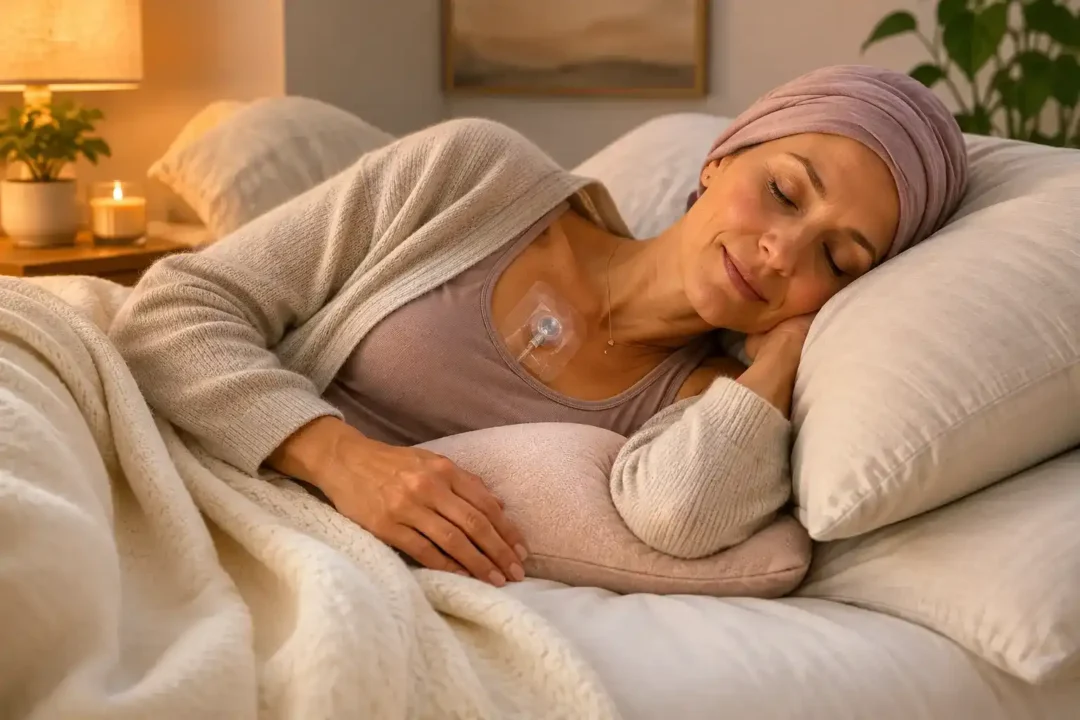
Holding a sleep is a very hard thing during cancer treatment. Add a chemotherapy port to the picture, and suddenly every position that used to feel natural now hits something tender and unfamiliar under your collarbone.
A port, or implanted central venous catheter, sits just beneath the skin in the chest. It gives doctors reliable IV access without poking a new vein every session. That is genuinely useful. But it also means you are now sleeping with a raised, slightly foreign object in your chest wall, and your body is going to remind you about it the moment you roll over wrong.
The good news: this is a very solvable problem. People work around it every night. The adjustments are not complicated, and most of them cost nothing. What they do require is a bit of patience while your body figures out its new normal.
This article covers everything from safe sleeping positions to the small gear changes that make a real difference. It also touches on what symptoms deserve a call to your care team, because port-related discomfort and port-related complications can look similar from the outside.
What a Chemo Port Actually Is (And Why It Affects Sleep)
Before getting into sleep positions, it helps to understand what you are dealing with.
A port is a small, dome-shaped device, usually about the size of a large button, implanted beneath the skin. A thin tube called a catheter connects it to a major vein near the heart. Nurses access the port through the skin using a special needle, which is far more comfortable than a standard IV for repeated treatments.
Most ports are placed on the left or right side of the chest, just below the collarbone. The procedure is minor and done under local anesthesia, but the area stays sore for a week or two as the tissue heals. Even after full healing, the port creates a small firm bump you can feel, and the skin around it can remain sensitive.
That is the core sleep problem. The port’s location. The chest and shoulder area is involved in almost every sleeping position: on your back, your chest rises and falls; on your side, your shoulder bears weight; even stomach sleeping presses directly into the port site. Understanding this makes the workarounds easier to choose.
How Long Does the Soreness Last?
Most people find the first two to four weeks after port placement the hardest for sleep. The incision heals, the internal bruising fades, and the body gradually stops treating the port like an intruder.
But healing timelines vary. Factors like your immune status, the exact placement, and your skin’s natural healing pace all play a role. Some people feel comfortable within ten days. Others take closer to six weeks to reach a point where the port barely registers.
And even after full healing, certain positions may always feel slightly odd. That is normal. The port is a permanent fixture for the duration of treatment, so learning to accommodate it is a longer-term skill rather than a short-term problem.
The Safest Sleeping Position With a Chemo Port
Sleeping on the Opposite Side
If your port is on the left side of your chest, sleeping on your right side removes almost all pressure from the site. The same logic applies in reverse. This is the position most people find most comfortable earliest in recovery.
The catch is shoulder pressure. Side sleeping puts your weight on the shoulder beneath you. For some people, this creates neck and shoulder tension that builds through the night. Pillow placement solves most of that.
Use a firm pillow between your knees to keep your hips stacked. This takes tension off your lower back and helps your whole posture feel more balanced. A second pillow held loosely against your chest works as a buffer if you wake mid-night and find yourself drifting toward the port side.
Sleeping on Your Back
Back sleeping is the other strong option, especially in the first two weeks when any pressure on the port side feels wrong.
The challenge with back sleeping is that many people are not natural back sleepers. Forcing it can lead to restless nights, snoring, or neck strain. A few small adjustments help.
Raise the head of your bed slightly, or use a wedge pillow. Even a ten- to fifteen-degree incline reduces how much pressure builds in the chest area. It also helps if you wake up with a sore upper back, since it takes some weight off the shoulder blades.
Place a small, soft pillow just under the arm on the port side. This keeps the arm from pulling the shoulder inward, which can tug the skin near the port and cause a dull ache.
What About Stomach Sleeping?
Stomach sleeping is the one position that genuinely does not work well with a port, particularly in the healing phase. Lying face-down places direct pressure on the entire chest wall. For most people, the discomfort is immediate enough to prevent it naturally. But if you are a lifelong stomach sleeper, the transition to a side or back position can feel almost impossible at first.
A body pillow running along your side can help re-train your sleep posture. Hugging it keeps you from fully rolling face-down, which is often enough to protect the port while giving your body the partial weight-forward position it craves.
Pillow Setups That Help
Pillows matter far more than most people expect. The right arrangement can turn a frustrating night into a manageable one.
A donut-shaped or C-shaped pillow. Neck pillows designed for travel work surprisingly well when placed so the port site sits in the open gap. No pressure reaches the raised skin. Some people use a small pillow with a soft center removed. Others sew a simple pocket into a standard pillowcase and stuff it with a softer insert on one side.
A body pillow. Long body pillows give side sleepers something to grip, which prevents the body from slowly rotating toward the prone side during deep sleep. They also support the knees and hips, which reduces overall nighttime movement.
A wedge pillow. Particularly useful for back sleepers. These are angled foam inserts that raise the upper body without stacking multiple soft pillows, which tend to shift and collapse.
A small rolled towel. Placed beneath the arm on the port side, it slightly elevates the shoulder and reduces skin pull near the catheter exit point. This costs nothing and helps many people immediately.
Clothing Choices at Night
What you wear to bed also affects port comfort. Tight necklines, bra bands, and any clothing with interior seams that cross the chest can press directly onto the port site.
Loose, soft fabrics work best. Cotton or bamboo blends tend to feel gentler against healing skin. Some people prefer a lightweight button-front sleep shirt because it opens flat rather than pulling over the head, which avoids any awkward movement that catches on the port.
If you have a dressing or medical tape over the port area, check that the fabric does not snag it. Microfiber or any fabric with a slight texture can catch on adhesive edges and lift the dressing during sleep.
Avoid sleeping with nothing on the port side if the skin is still healing. A light layer provides a small buffer against accidental contact.
Managing Nighttime Anxiety Around the Port
This part rarely gets discussed, but it matters. Some people develop a kind of port anxiety at night, specifically the fear of rolling onto it, damaging it, or pulling the catheter. Worry interrupts sleep even when the port itself is not causing physical pain.
A few things help with this.
First, understand that ports are designed to withstand normal activity, including sleep movement. Rolling onto the port side will be uncomfortable before it causes any harm. Discomfort wakes you. That is the body working correctly.
Second, a simple nighttime checklist can reduce the mental load. Before bed: check that the dressing is secure, confirm the port area feels normal, change into comfortable clothing, and set up your pillow arrangement. Routine creates a sense of control. It shifts focus from fear toward action.
Third, if anxiety about the port is regularly preventing sleep, mention it to your oncology nurse or palliative care team. This is a common experience, and there are both practical and emotional supports available.
Caring for the Port Site Before Bed
Nighttime is a good moment to do a quick visual check of the port area. You do not need to do anything clinical. Just look.
Check for redness that was not there before. Check for swelling around the port bump. Check that any dressing is still flat and adhering. Run a finger gently along the catheter line if it is accessible, checking for any new tenderness.
None of these checks require medical training. They just require attention. Catching an early sign of infection or dressing failure at night gives you time to address it before a morning treatment session.
Do not apply lotions, oils, or moisturizers directly on or around the port site without asking your care team first. Some products interfere with adhesive dressings and can introduce bacteria near the catheter entry point.
Signs the Port Needs Medical Attention
Most nighttime discomfort around a port is normal, especially in the first weeks after placement. But certain symptoms require a call to your care team rather than a pillow adjustment.
Fever. Any fever during treatment gets evaluated, but a fever combined with increased port site pain warrants prompt attention. Infection of a central line is serious and responds well to early treatment.
Redness or warmth spreading outward from the port. Some redness directly at the incision is normal during healing. Redness that is expanding, warm to the touch, or accompanied by red streaks is not.
Swelling in the neck or arm on the port side. This can indicate a blood clot related to the catheter, known as a catheter-associated thrombosis. It is not common, but it needs to be checked.
A popping or shifting sensation. Ports are anchored beneath the skin. If you feel the port has moved or sits at a different angle, contact your team before the next access.
Pain that wakes you up and does not settle. Normal port discomfort tends to ease when you shift position. Pain that persists regardless of position, or that feels different from the usual soreness, is worth calling about.
Most care teams have an after-hours line specifically for questions like these. Use it when something feels wrong. That is exactly what it exists for.
Nutrition and Rest During Treatment
Sleep and nutrition work together more than people often realize during chemotherapy. Poor sleep impairs appetite, and poor nutrition makes it harder to sleep deeply.
Chemotherapy often disrupts appetite, alters taste perception, and causes nausea, all of which affect what and when you eat. A few practical adjustments can reduce the impact on nighttime sleep quality.
Eating a small, gentle meal in the early evening rather than close to bedtime helps reduce the risk of reflux, which is already more common during treatment. Foods high in simple sugars or refined carbohydrates can cause blood sugar fluctuations that disrupt sleep architecture, so a small protein-containing snack before bed, like a few crackers with nut butter or a small portion of cheese, tends to produce more stable overnight sleep than a sugary option.
Hydration matters. Chemotherapy increases the body’s fluid demands, and mild dehydration worsens fatigue and can cause muscle cramps at night. That said, drinking large volumes of fluid close to bedtime increases bathroom trips that interrupt sleep. Aim to get most of your fluid intake during the earlier part of the day.
If nausea is an ongoing problem at night, ask your oncology team about the timing and type of anti-nausea medication. Managing nausea well is directly connected to sleep quality.
Daily Port Habits That Improve Nighttime Comfort
What you do during the day affects how the port feels at night. Some small habits during waking hours reduce nighttime irritation.
Avoid lifting heavy objects on the port side, particularly anything that requires a prolonged raised-arm position. This places tension on the catheter and can cause soreness that lingers into the evening.
When showering, follow your care team’s instructions about protecting the dressing. Getting a wet dressing replaced at night when your team is unavailable adds stress. Waterproof covers designed for port dressings are inexpensive and widely available.
If you drive, check that your seatbelt does not press directly against the port. A small foam pad or a seatbelt cover can reposition the belt slightly.
Wearing a soft, close-fitting undershirt creates a consistent buffer around the port throughout the day. Some people find that the constant light compression of a snug undershirt actually reduces sensitivity over time, because the port site becomes less startled by incidental contact.
Common Myths About Chemo Ports
A few misconceptions come up often enough to address directly.
“You cannot exercise or move freely with a port.” False, once healing is complete. Ports are placed precisely to allow patients to maintain activity. Walking, gentle yoga, and most forms of moderate exercise are not only permitted but encouraged during treatment. Speak with your team about any specific restrictions around the access needle if one is currently in place.
“The port will be visible through clothing.” For most people, the port creates a slight elevation under the skin, but it is rarely visible through normal clothing. Tighter athletic wear may show a small contour. Loose clothing conceals it entirely.
“Any pain near the port means something is wrong.” Soreness in the healing phase is expected. Muscle tension from altered sleep positions is common. The port itself may ache mildly the day after access. Not all pain signals a problem. The patterns to watch for are listed above.
“Sleeping on the port will damage it.” Unlikely. The port is anchored to the chest wall with sutures. Rolling onto it will wake you before it causes structural damage. That said, avoiding the port side during the healing phase is still a good idea simply because it is more comfortable.
Frequently Asked Questions
How long after port placement can I sleep normally?
Most people feel closer to their normal sleep comfort level within two to four weeks of placement. Full healing of the surrounding tissue can take six to eight weeks. During the early phase, back sleeping or sleeping on the opposite side from the port tends to be most comfortable.
Can I sleep on my side with a chemo port?
Yes, sleeping on the side opposite the port is a common and comfortable option for many people. Sleeping on the port side is not recommended during healing and may always feel uncomfortable for some people. A pillow held against the chest can help prevent unconscious rolling during the night.
What pillow works best for port comfort?
There is no single answer, but travel neck pillows and C-shaped pillows are frequently cited by patients because they can position the port bump inside the gap, away from any pressure. Body pillows help side sleepers stay aligned without rolling.
Is it normal for the port area to ache more at night?
Yes. During the day, activity and distraction reduce how much you notice the port. Lying still draws more attention to any underlying soreness. Mild aching that eases with position adjustment is normal. Pain that is getting worse, is accompanied by fever, or does not respond to repositioning should be reported to your care team.
Can I take sleep aids with chemotherapy?
Some sleep aids interact with chemotherapy drugs or anti-nausea medications. Always check with your oncologist or pharmacist before taking anything new, including over-the-counter options like melatonin or antihistamine-based sleep products. Your care team can recommend options that are safe given your specific treatment protocol.
What if I have a port and a PICC line at the same time?
Some patients have both. The same general principles apply: avoid sleeping on the side where the device is located, use pillows to support positioning, and keep dressings intact. Your nurse will give specific guidance on protecting a PICC line, which runs along the arm and requires different care
Practical Daily Management: Building a Routine
Consistency helps. The body adapts to sleep conditions faster when those conditions are predictable.
Set up your pillow arrangement before you get into bed. Do your port check early enough that the results are not still running through your mind when you try to fall asleep. If you wake in the night and find yourself on the wrong side, move slowly, reposition your support pillow, and give yourself a few minutes to settle.
Accept that sleep during treatment is often fragmented. That is not exclusively a port problem. Steroids, anti-nausea drugs, anxiety, and the body’s own inflammatory response all affect sleep architecture. The port adds one more variable. Managing it well removes one source of disruption, which is worth doing, but it may not restore perfect sleep on its own.
Short rest periods during the day are legitimate. Treatment fatigue is real and documented. Rest without guilt.
When to Involve Your Palliative Care Team
Palliative care is not end-of-life care. It is specialized support for managing symptoms during serious illness, and sleep disruption is exactly the kind of symptom it addresses.
If port discomfort combined with treatment-related fatigue is significantly affecting your quality of life and basic sleep hygiene adjustments are not enough, a palliative care referral is worth requesting. Palliative specialists can evaluate sleep disorders, recommend non-drug and pharmacological interventions, and coordinate with your oncology team to address the full picture.
Many major cancer centers include palliative care as a standard part of treatment planning. You do not have to be struggling severely to access it. Prevention is part of the model.
A Final Note
Having a port is not a setback. It is a tool that makes treatment more manageable. But adjusting to it takes time, and the sleep piece is legitimately difficult in the early weeks.
Be patient with yourself. Small changes add up. Most people find a combination of positioning, pillow setup, and clothing changes that works well enough. And once healing is complete, the port tends to fade into the background of daily life, including sleep.
If something feels wrong, call your team. If something just feels uncomfortable, experiment with the suggestions here. The two are different, and trusting your own perception of that difference is part of learning to live with a port.
References
- National Cancer Institute. (2022). Central venous catheters in cancer treatment. cancer.gov
- American Cancer Society. (2023). Implanted ports for chemotherapy. cancer.org
- Mayo Clinic. (2023). Port catheter: what you need to know. mayoclinic.org
- Cleveland Clinic. (2022). Chemo port: care and what to expect. my.clevelandclinic.org
- Johns Hopkins Medicine. (2022). Totally implantable venous access ports. hopkinsmedicine.org
- National Sleep Foundation. (2023). Cancer and sleep: managing disruptions during treatment. sleepfoundation.org
- Oncology Nursing Society. (2021). Central venous access device management guidelines. ons.org
- Memorial Sloan Kettering Cancer Center. (2023). Caring for your implanted port at home. mskcc.org
- BMJ Supportive and Palliative Care. (2020). Palliative care interventions for sleep disturbance in cancer patients. doi:10.1136/bmjspcare-2020-002345
- Journal of Oncology Practice. (2021). Sleep quality and fatigue management in patients receiving systemic chemotherapy. doi:10.1200/JOP.2021.xxx
- NIH MedlinePlus. (2023). Venous access devices. medlineplus.gov
- Harvard Health Publishing. (2022). Sleep and immune function during cancer treatment. health.harvard.edu
Medical disclaimer:
This article is for educational purposes only and does not replace the advice of a qualified healthcare provider. Always consult your oncology team before making changes to your care routine.