
Beyond the Pain: The Top 6 Surprising Reasons Why Your Head Feels Heavy (and How to Fix It)
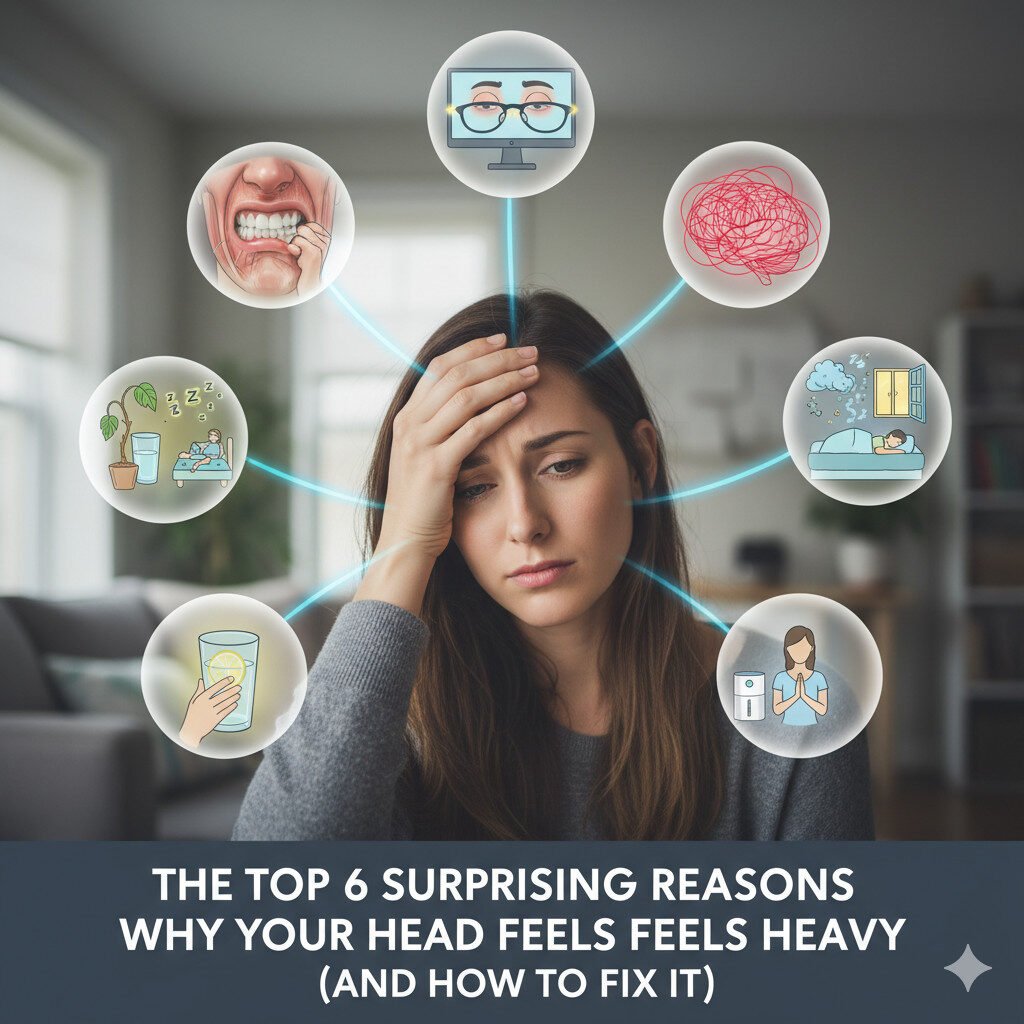
Imagine trying to walk around with a bowling ball balanced on your neck. That is what it can feel like when your head feels heavy. It is more than just a dull ache. It can feel like pressure, fatigue, or mental fog that makes it harder to focus and leaves you feeling unlike yourself.
You are not alone. A heavy-headed feeling can happen for many reasons, ranging from muscle tension and eye strain to poor sleep, dehydration, and environmental factors. If you keep asking yourself, why does my head feel heavy, it is worth looking beyond a simple headache and considering what else may be contributing to the sensation.
The good news is that many common causes are manageable. Below are six possible reasons your head may feel heavy, along with practical steps that may help.
1. TMJ Problems and Jaw Clenching
The Hidden Muscle Strain
Here is a possible source you may not immediately consider: your jaw.
The temporomandibular joints, commonly called TMJs, connect your lower jaw to your skull. Problems involving the jaw joint or the muscles used for chewing can sometimes be associated with headaches, jaw pain, ear discomfort, and pain around the temples. (NIDCR)
Stress can also contribute to jaw clenching or teeth grinding. Some people clench their teeth while concentrating during the day or grind their teeth while sleeping without realizing it.
Think about it. Are your teeth touching right now? When you are not eating, your teeth generally do not need to remain clenched together. Frequent clenching can place extra strain on the jaw muscles and may contribute to discomfort around the temples, face, neck, or ears.
If you regularly wake up with jaw soreness, headaches, tooth sensitivity, or a tired jaw, nighttime teeth grinding may be worth discussing with a dentist.
The Fix: Give Your Jaw a Break
Simple habits may help reduce unnecessary jaw tension:
- Relax Your Jaw: When you are not eating, allow your jaw to relax rather than keeping your teeth clenched together.
- Avoid Excessive Jaw Strain: Reduce habits such as chewing gum for long periods or biting your nails if these aggravate your symptoms.
- Talk to Your Dentist: If you grind or clench your teeth during sleep, a dentist can evaluate your teeth and jaw and determine whether a mouth guard or other treatment is appropriate.
Do not force your jaw through painful exercises. If jaw pain persists, seek professional advice. (NIDCR)
2. Uncorrected Vision or Digital Eye Strain
The Fatigue From Constant Focusing
When was the last time you had your eyes checked?
Uncorrected vision problems can make digital eye strain worse. Spending long periods looking at computers, phones, tablets, or other screens can also contribute to tired eyes, headaches, blurred vision, and general discomfort. (AOA)
You might not experience obvious eye pain. Instead, you may notice pressure or discomfort around your forehead and temples, particularly after several hours of screen use.
This may explain why your head feels heavier later in the day, especially if you spend much of your working day reading small text or focusing on a screen.
The Fix: Rest Your Eyes and Check Your Vision
Protecting your eyes can help reduce digital eye strain.
- Try the 20-20-20 Rule: Every 20 minutes, look at something about 20 feet away for at least 20 seconds. This gives your eyes a regular break. (AOA)
- Reduce Glare: Adjust your screen position and lighting so you are not constantly fighting reflections or glare.
- Check Your Prescription: If your vision has changed or your glasses or contact lenses no longer seem comfortable, schedule a comprehensive eye examination.
Blue-light filters are sometimes marketed as a solution for eye strain, but they should not be presented as a proven way to prevent all digital eye strain. Taking regular breaks, blinking normally, managing glare, and addressing vision problems are more established approaches.
3. Sleep Apnea or Poor Sleep Quality
Getting Sleep Versus Getting Restorative Sleep
You might spend eight hours in bed and still wake up feeling exhausted.
Sometimes the answer to why your head feels heavy is simply that your sleep has not been restorative. Sleep apnea is one possible reason.
Sleep apnea causes breathing to repeatedly stop and start during sleep. Symptoms can include loud snoring, gasping for air, daytime sleepiness, fatigue, difficulty concentrating, and morning headaches. (NHLBI, NIH)
The problem is that you may not realize your breathing is being interrupted. A partner or family member may notice loud snoring, gasping, or pauses in breathing before you do.
Poor-quality sleep can leave you feeling mentally foggy and physically drained the following day.
The Fix: Pay Attention to Your Sleep
- Track Your Symptoms: A smartwatch or sleep app may help you notice general patterns, but consumer sleep trackers should not be used to diagnose sleep apnea.
- Ask Your Partner: If someone notices loud snoring, gasping, or pauses in your breathing, take those observations seriously.
- Talk to a Doctor: If you have persistent daytime sleepiness, loud snoring, nighttime breathing problems, or repeated morning headaches, ask a healthcare professional whether a sleep evaluation or sleep study is appropriate. (NHLBI, NIH)
Treating an underlying sleep disorder can improve sleep quality and daytime symptoms.
4. Dehydration
The Slow Drain
Not drinking enough fluids can contribute to headaches, fatigue, dizziness, and a general feeling of being unwell.
A dehydration headache can feel like a dull ache or pressure and may occur along with symptoms such as dark urine, dry mouth, fatigue, thirst, and reduced urination. (Cleveland Clinic)
However, dehydration should not automatically be assumed to be the cause of every heavy-headed feeling. Your fluid needs vary depending on factors such as activity, temperature, diet, illness, and other individual circumstances.
The Fix: Stay Consistently Hydrated
- Drink Regularly: Keep water available throughout the day instead of waiting until you feel extremely thirsty.
- Pay Attention to Your Body: Dark urine, dry mouth, unusual thirst, fatigue, and reduced urination can be signs that you need more fluids. (Cleveland Clinic)
- Replace Fluids After Heavy Sweating: After prolonged exercise or significant fluid loss, replacing fluids and electrolytes may be useful. For most everyday situations, however, plain water and a balanced diet are sufficient.
You do not need to force yourself to drink a gallon of water every day. Excessive water intake can also be harmful.
5. Indoor Air Quality and Environmental Irritants
The Invisible Environmental Factors
The air inside your home or workplace can affect how you feel, particularly when indoor pollutants are present.
Common indoor pollutants include volatile organic compounds (VOCs), mold, particulate matter, smoke, and carbon monoxide. Some indoor air pollutants can contribute to symptoms such as headaches, dizziness, eye or throat irritation, and fatigue. (US EPA)
VOCs can come from products such as paints, cleaning products, air fresheners, furnishings, and other household materials. EPA information notes that concentrations of some VOCs can be higher indoors than outdoors. (US EPA)
Mold and moisture problems can also affect indoor air quality. Mold exposure may trigger allergy-like symptoms and can be associated with headaches, nasal irritation, dizziness, and fatigue, although the health effects of some mold-related compounds are not fully understood. (US EPA)
One important environmental hazard should not be overlooked: carbon monoxide. It can cause headaches, dizziness, confusion, nausea, and fatigue and can be fatal at high concentrations. (US EPA)
The Fix: Improve the Air Around You
- Improve Ventilation: When appropriate, increase fresh-air ventilation to reduce indoor pollutant concentrations.
- Address Moisture: Look for leaks, damp areas, and visible mold. Fix the underlying moisture problem rather than simply covering up the mold.
- Use Air Cleaning Carefully: A properly selected portable air cleaner can help reduce some airborne particles, but it will not solve an underlying mold or moisture problem. (US EPA)
- Use Carbon Monoxide Alarms: Homes with fuel-burning appliances should have functioning carbon monoxide alarms.
If your symptoms repeatedly improve when you leave a particular building, consider whether an indoor environmental factor could be contributing and investigate the source.
6. Stress and Muscle Tension
The Body’s Constant Alarm System
Stress can contribute to physical symptoms, including muscle tension and headaches.
Tension-type headaches are commonly described as pressure or tightness around the forehead or sides and back of the head. Tenderness in the scalp, neck, and shoulder muscles may also occur, and stress is a commonly reported trigger. (Mayo Clinic)
You may not always recognize how much tension you are carrying. You might raise your shoulders while working, tighten your jaw while concentrating, or hold your neck in one position for hours.
Over time, this combination can contribute to discomfort and make your head feel heavy or pressured.
The Fix: Release the Tension
- Take Movement Breaks: If you sit at a desk for long periods, stand up and move regularly rather than remaining in one position for hours.
- Relax Your Neck and Shoulders: Gentle neck movements and shoulder stretches may help reduce muscular tension. Stop if an exercise causes pain or makes your symptoms worse.
- Try Progressive Muscle Relaxation: Gradually tense and relax different muscle groups while breathing slowly. This can help you become more aware of physical tension and practice relaxation.
If stress, anxiety, or persistent worry is affecting your daily life, consider speaking with a qualified healthcare professional.
When to See a Doctor: Do Not Ignore These Signs
A heavy-headed sensation can have many relatively common explanations, but you should not assume that every new or severe symptom is caused by stress, dehydration, or poor sleep.
Seek urgent medical attention if the sensation is:
- Sudden and severe: It appears suddenly and intensely, particularly if it is unlike anything you have experienced before.
- Combined with a high fever and stiff neck: These symptoms can require urgent evaluation.
- Accompanied by weakness or numbness: Especially sudden weakness or numbness affecting the face, arm, or leg.
- Accompanied by confusion or speech problems: Sudden difficulty speaking, understanding speech, or staying oriented requires urgent attention.
- Associated with sudden vision changes: Sudden loss or major changes in vision require prompt medical evaluation.
Sudden weakness or numbness, confusion, trouble speaking, sudden vision problems, difficulty walking, or a sudden severe headache can be warning signs of stroke and require emergency medical attention. (CDC)
If your symptoms are persistent, recurrent, worsening, or interfering with your daily activities, arrange an appointment with a healthcare professional.
Conclusion: Start Feeling Lighter
If you keep asking, why does my head feel heavy, there may be several possible explanations. Jaw clenching, digital eye strain, poor sleep, dehydration, indoor air quality, and stress can all contribute to headaches, fatigue, pressure, or a heavy-headed sensation.
The important point is not to assume that one cause explains everyone’s symptoms.
Start by paying attention to patterns. Does the sensation appear after long hours at a computer? Do you wake up with jaw soreness? Do you snore or feel exhausted despite getting enough time in bed? Does it improve after drinking fluids, taking a break, or leaving a particular environment?
Those clues can help you decide what to address first.
If you found these practical health tips helpful, visit Think Health Tips for more health and wellness information.
Frequently Asked Questions
When is a heavy head feeling serious enough to worry about?
A heavy-headed sensation deserves prompt medical attention when it is sudden, severe, or accompanied by symptoms such as weakness, numbness, confusion, difficulty speaking, sudden vision changes, difficulty walking, or a severe headache with no known cause. These can be warning signs of a serious condition, including stroke. (CDC)
Is stress causing the heavy head feeling, or is the heavy head causing my stress?
It can work both ways. Stress can contribute to muscle tension and tension-type headaches, while persistent physical discomfort can understandably increase worry. Stress is a commonly reported trigger for tension-type headaches. (Mayo Clinic)
Why does my head feel the heaviest right when I wake up?
Morning heaviness can have several possible explanations. Poor-quality sleep, sleep apnea, teeth grinding, jaw clenching, dehydration, and headaches are among the possibilities. If you regularly wake up exhausted, snore loudly, gasp during sleep, or have repeated morning headaches, talk with a healthcare professional about whether a sleep evaluation is appropriate. (NHLBI, NIH)
Can a heavy head feeling be mistaken for a normal headache?
Yes. A heavy or pressured sensation can occur with different types of headaches and other conditions. Tension-type headaches, for example, are commonly described as pressure or tightness around the head. (Mayo Clinic)
Can poor posture cause a heavy head feeling?
Poor posture can contribute to neck and shoulder discomfort, particularly when you remain in one position for long periods. However, it is better not to claim that poor posture is always the direct cause of a heavy-headed sensation. Taking regular movement breaks, adjusting your workstation, and avoiding prolonged static positions may help reduce musculoskeletal strain.
What is the fastest thing I can do when my head feels heavy?
There is no single fastest fix because the cause matters. If you have been staring at a screen for hours, take a break and use the 20-20-20 rule. If you have not had enough fluids, drink some water. If you are clenching your jaw, consciously relax it. If the sensation is sudden, severe, or accompanied by neurological symptoms, seek urgent medical attention rather than trying to treat it yourself.
References
1. TMJ / jaw clenching / TMD
Source: National Institute of Dental and Craniofacial Research — TMD
For teeth grinding: NIDCR — Bruxism
2. Digital eye strain / 20-20-20 rule
Source: American Optometric Association — Computer Vision Syndrome
Additional source: MedlinePlus — Eye Care
This supports taking screen breaks and the 20-20-20 rule. (MedlinePlus)
3. Sleep apnea
Best primary source: National Heart, Lung, and Blood Institute — Sleep Apnea Symptoms
4. Dehydration and headaches
Useful clinical source: Cleveland Clinic — Dehydration Headache
5. Indoor air quality / VOCs / mold
Source: U.S. EPA — Indoor Air Quality
For VOCs specifically: U.S. EPA — Volatile Organic Compounds and Indoor Air Quality
For mold: U.S. EPA — Mold
For carbon monoxide: U.S. EPA — Carbon Monoxide’s Impact on Indoor Air Quality
6. Stress / tension-type headaches
Mayo Clinic — Tension Headache: Symptoms and Causes