How to Stop Sensitive Teeth Pain Immediately
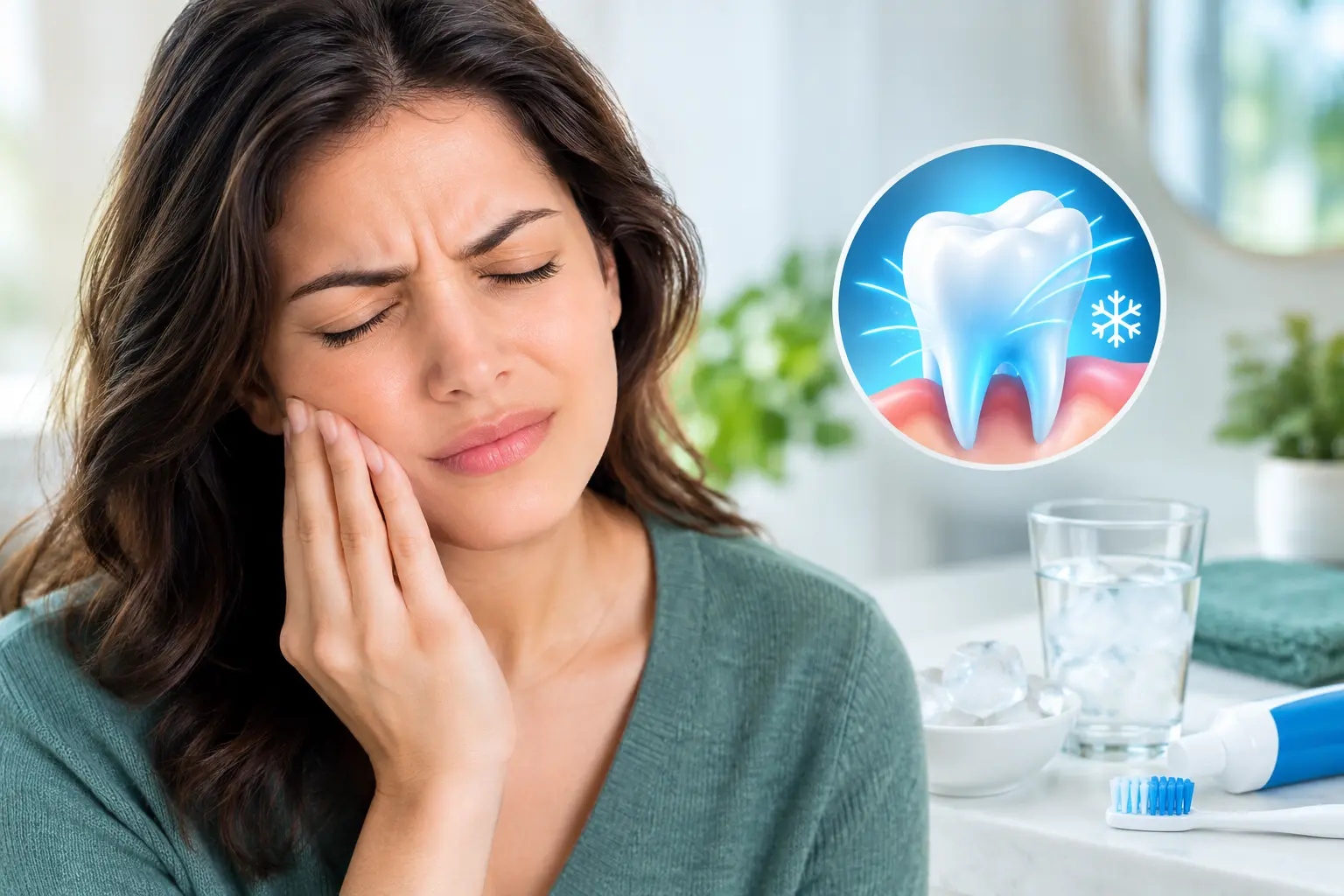
To ease sensitive teeth pain quickly, avoid very hot, very cold, and sweet foods and drinks, avoid biting on the sore tooth, and use a desensitizing toothpaste on the affected area. An over-the-counter painkiller can help if the label allows it. These steps manage symptoms rather than the cause, so pain that persists or comes with facial swelling needs a dentist (NHS Wales, Toothache).
Medical review status: This article is based on published research and official guidance, and has not been medically reviewed.
Key takeaways
- The safest first steps are avoiding hot, cold, and sugary triggers, protecting the sore tooth from biting, and using a desensitizing toothpaste.
- These steps ease symptoms but do not fix the cause, which is usually exposed dentine from enamel wear or gum recession, and sometimes decay or another dental problem.
- Persistent sensitivity, or any facial or mouth swelling, is a reason to see a dentist.
What can you do right now to calm sensitive teeth pain?
Start with low-risk steps.
- Avoid the triggers. NHS Wales advises avoiding very hot or very cold food and drink, such as hot drinks and ice cream, and avoiding sweet foods when a tooth hurts (NHS Wales, Toothache).
- Protect the tooth from biting. NHS Wales suggests a soft diet and avoiding biting on teeth that are tender (NHS Wales, Toothache).
- Use a desensitizing toothpaste. Desensitizing toothpastes work in one of two ways. Some block the tiny channels in exposed dentine, and others, such as those containing potassium salts, are thought to reduce the nerve’s response to pain signals (Arginine-containing toothpaste meta-analysis, PMC; Clinical comparison of three desensitizing toothpastes, PMC). In that clinical comparison, a toothpaste containing arginine gave the greatest reduction in sensitivity after a single application, compared with a potassium salt paste and a herbal paste.
- Take a painkiller only as directed. NHS Wales lists paracetamol or ibuprofen taken according to the dosing instructions on the packet, and advises asking a dental professional or pharmacist which painkiller suits you (NHS Wales, Toothache). Ask a pharmacist first if you are pregnant, have other health conditions, or take other medicines.
- Avoid smoking. NHS Wales notes that smoking can make some dental problems worse (NHS Wales, Toothache).
How well do desensitizing toothpastes work?
A 2018 systematic review and meta-analysis of randomized trials in adults found that toothpastes with active desensitizing ingredients reduced dentine hypersensitivity better than toothpaste without them. Strontium-containing and amorphous calcium phosphate-containing toothpastes were the exceptions. The review also rated the quality of the evidence, which ranged from very low to moderate depending on the ingredient (Effect of desensitizing toothpastes on dentine hypersensitivity, Journal of Dentistry, 2018, PubMed).
A separate meta-analysis concluded that arginine-containing toothpaste is effective for dentin hypersensitivity (Arginine-containing desensitizing toothpaste meta-analysis, PMC). A scoping review of randomized trials describes the many active ingredients and brands now available, which is why the choice can feel confusing (Formulations of desensitizing toothpastes for dentin hypersensitivity: a scoping review, PMC). The practical point is that the active ingredient matters, so check the label for the ingredient rather than relying on the product name.
Why does the pain happen?
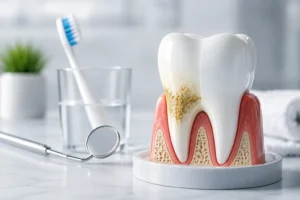
Dentin hypersensitivity is a short, sharp pain from exposed dentine. Dentine is the layer under the hard outer enamel, and it contains tiny channels that lead toward the nerve.
A literature review explains that dentine becomes exposed in two main ways (Dentin Hypersensitivity: Etiology, Diagnosis and Treatment, PMC):
- Enamel loss. This comes from wear caused by tooth-on-tooth contact (attrition), from abrasion such as hard brushing, from acid erosion, and from stress on the tooth near the gum line (abfraction).
- Gum recession. The review states that dentine exposure mostly happens when gums recede, and the cementum that covers the root surface is lost.
Sensitivity can also have other causes. NHS Wales lists tooth decay as a cause of toothache, and notes that pain felt in a tooth can sometimes be referred from sinusitis, a jaw joint problem (TMD), or an ear infection (NHS Wales, Toothache).
What should you avoid while your teeth are sensitive?
- Very hot, very cold, and sweet foods and drinks, as above (NHS Wales, Toothache).
- Acidic drinks and foods. Acid erosion is a recognized cause of enamel loss, so limiting acidic drinks is a sensible step (PMC literature review).
- Forceful or hard brushing. Abrasion is also a recognized cause of enamel loss and gum recession, so gentle brushing is the safer approach (PMC literature review).
- Biting on the sore tooth while it is tender (NHS Wales, Toothache).
How can you reduce sensitive teeth pain over the longer term?
Quick relief fades if the cause stays. Using desensitizing toothpaste regularly, brushing gently, and limiting acidic drinks address the common causes described above. A dentist can find the cause and match treatment to it. Canadian consensus recommendations describe a step-by-step diagnostic process that guides dentists toward the right management for each case (Consensus-based recommendations for the diagnosis and management of dentin hypersensitivity, Journal of the Canadian Dental Association, 2003, PubMed). Reviews also cover professional treatment options for cases that home care does not settle (PMC literature review).
When should you see a dentist about sensitive teeth?
NHS Wales advises seeing a dentist if you have toothache, because the dentist can assess the tooth and advise on treatment (NHS Wales, Toothache). Book a dental visit if sensitivity doesn’t settle with a desensitising toothpaste, keeps returning, or affects eating or drinking.
NHS Wales directs people with swelling of the face or mouth alongside toothache to its dedicated swelling guidance (NHS Wales, Toothache). Seek urgent care for facial swelling, especially if it is spreading or you have trouble swallowing or breathing.
Conclusion
Avoiding triggers, protecting the sore tooth, and using a desensitizing toothpaste give the best chance of quick relief at home. Evidence supports most active ingredients in desensitizing toothpastes, though their quality varies. These steps don’t fix the cause, so persistent sensitivity is a reason to book a dental check.
References
- NHS Wales (111 Wales). Toothache. Adapted from NHS website content. https://111.wales.nhs.uk/toothache
- Dentin Hypersensitivity: Etiology, Diagnosis and Treatment; A Literature Review. PubMed Central. https://pmc.ncbi.nlm.nih.gov/articles/PMC3927677/
- Effect of desensitizing toothpastes on dentine hypersensitivity: A systematic review and meta-analysis. Journal of Dentistry. 2018;75:12-21. doi:10.1016/j.jdent.2018.05.012. PubMed. https://pubmed.ncbi.nlm.nih.gov/29787782/
- Arginine-containing desensitizing toothpaste for the treatment of dentin hypersensitivity: a meta-analysis. PubMed Central. https://pmc.ncbi.nlm.nih.gov/articles/PMC4708190
- Comparison of the effectiveness of three different desensitizing toothpastes in reducing dentin hypersensitivity: A 4-week clinical study. PubMed Central. https://pmc.ncbi.nlm.nih.gov/articles/PMC6519181
- Formulations of desensitizing toothpastes for dentin hypersensitivity: a scoping review. PubMed Central. https://pmc.ncbi.nlm.nih.gov/articles/PMC8908863
- Consensus-based recommendations for the diagnosis and management of dentin hypersensitivity. Journal of the Canadian Dental Association. 2003;69(4):221-6. PubMed. https://pubmed.ncbi.nlm.nih.gov/12662460/
Related Articles:
- Why Are My Teeth Yellow When I Brush Them Every Day?
- How to Remove Tartar From Teeth Without Dentist (What Actually Works)
- How to Remove Plaque From Your Teeth (And Keep It From Coming Back)
- How to Prevent Cavities: What Actually Works and What Doesn’t
Medical disclaimer
This article is for general information only and is not medical or dental advice. It cannot diagnose your condition or replace an examination by a qualified dentist or doctor. Do not delay seeking professional care because of something you read here. If you have severe pain, facial swelling, fever, or trouble swallowing or breathing, seek urgent care. Check with a pharmacist or doctor before taking pain relievers, especially if you are pregnant, have other health conditions, or take other medicines.