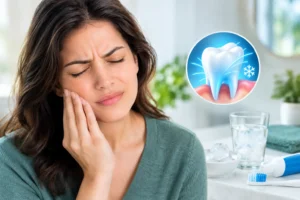
Why Are My Teeth Yellow When I Brush Them Every Day?
Medical review: This article has not been independently reviewed by a medical professional. It was researched using publicly available scientific literature, authoritative health sources, and product information. It is for general education and is not a substitute for individualized medical advice.
Quick answer
Brushing removes plaque and some surface stains, but it cannot change the natural yellow of dentin, the layer under your enamel. As enamel thins, dentin shows through. Teeth can also stay yellow from coffee, tea, wine, tobacco, tartar, fluorosis, certain medicines, or family genetics [1][5]. A dentist can tell which cause applies to you.
Why do my teeth look yellow even though I brush every day?
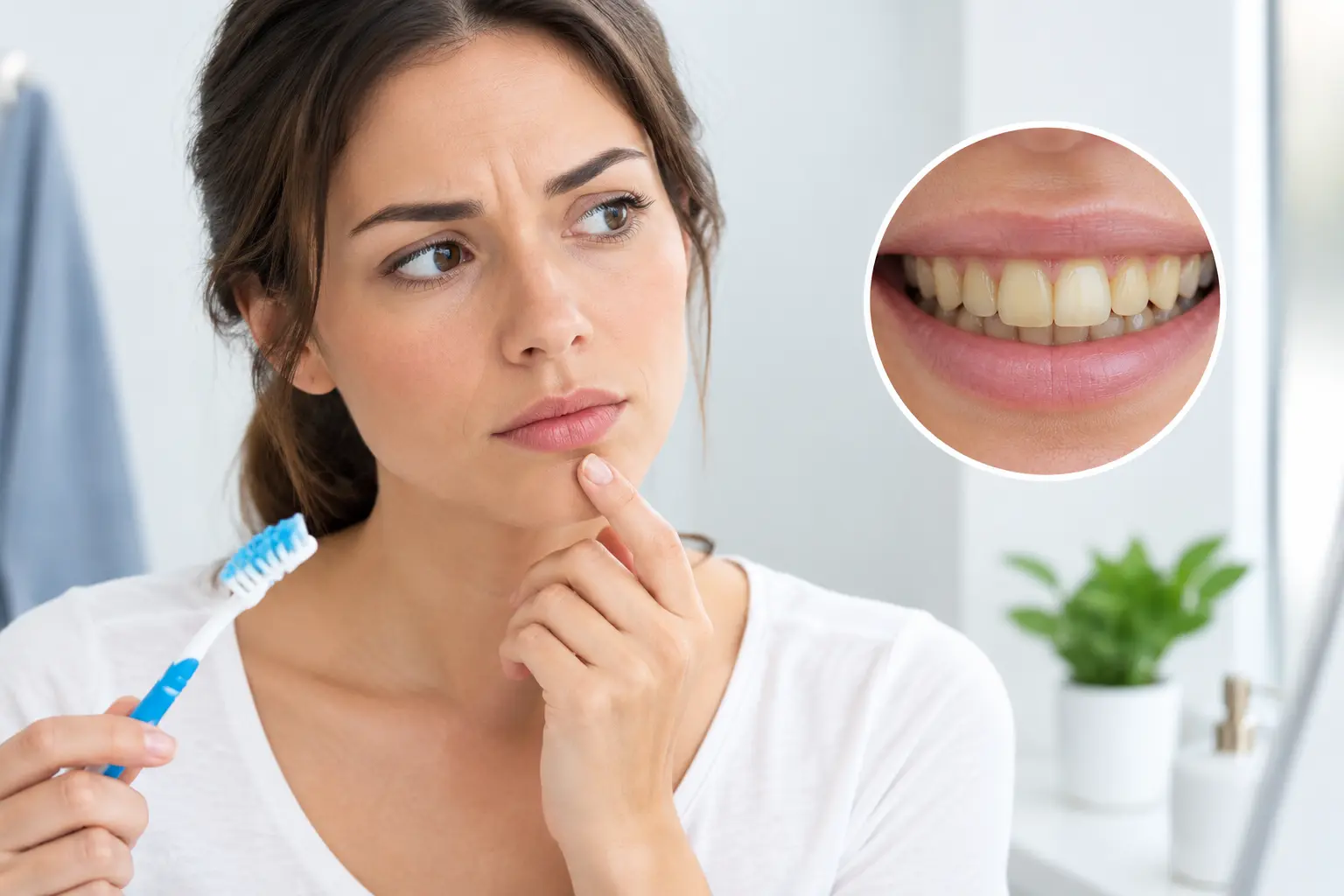
Daily brushing handles only one part of the problem. The yellow you see usually comes from one of two places: the surface of the tooth, or the tooth’s inner structure.
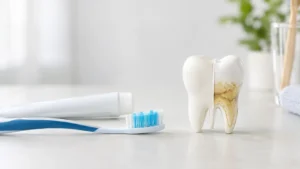
Enamel is the hard, semi-translucent outer layer. Beneath it sits dentin, which is naturally yellowish. According to Colgate’s consumer dental guidance, teeth look yellow when enamel is thin, and the dentin underneath shows through; thick enamel tends to mask it. So a person with perfectly clean teeth can still have a warm, yellowish tone.
The American Dental Association (ADA) describes tooth discoloration as extrinsic (colored compounds building up on enamel), intrinsic (inside the enamel or dentin), or a mix of both [1]. Most of the causes below fall into one of those groups, and knowing which one you have decides what will help.
Surface stains: why brushing doesn’t always clear them
Extrinsic stains sit on the enamel. The ADA notes they can be made worse by smoking or chewing tobacco, poor oral hygiene, and frequent pigmented foods or drinks [1]. Colgate lists coffee, tea, and red wine as common culprits, along with pigmented foods such as tomato sauce, curry spices, and berries, and even balsamic vinegar dressing.
If you brush daily and still see staining, a few things may be going on:
- Pigment exposure outpaces your routine. Several cups of coffee or tea a day can lay down color faster than a twice-daily brush lifts it.
- Plaque is being missed along the gumline. Cleveland Clinic describes plaque as a yellowish, sticky film [5]. Brushing quality matters as much as frequency, because plaque left behind sits on the tooth and shows. If that sounds familiar, our guide on removing plaque covers technique and tools.
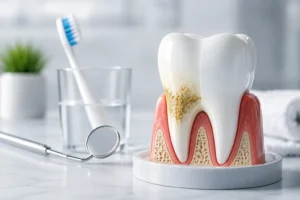
- Plaque has hardened into tartar. Tartar (dental calculus) is mineralized plaque [9][10]. Cleveland Clinic states you cannot remove it with brushing and flossing; a dentist or hygienist must remove it during a professional cleaning [5]. A peer-reviewed literature review notes that calculus is porous and can absorb products that damage gum tissue, which is why it should be thoroughly removed [10]. For what is realistic at home and what is not, see our article on How to Remove Tartar From Teeth Without Dentist (What Actually Works).
The ADA states that many extrinsic stains can be reduced by mechanical means, such as brushing with a whitening toothpaste or a professional cleaning [1]. It also says over-the-counter products like whitening toothpastes mainly affect surface stains and will not significantly change the tooth’s intrinsic color [1]. That is a useful test. If a whitening toothpaste has done little for you, your yellow tone may be coming from deeper than the surface.
Enamel wear: when yellow comes from underneath
Enamel does not grow back. It wears down from chewing, acid exposure, and grinding, and as it thins, more dentin shows. Colgate links this process to age, acidic foods and drinks, and bruxism (teeth grinding).
Brushing itself can contribute. NewMouth, a dental information site, advises against brushing too aggressively because it can erode enamel and worsen staining [3]. A narrative review of toothbrushing research reports that tooth and gum abrasion occur frequently with oral hygiene measures and that studies show a correlation between brushing force and abrasion or recession [11]. A harder scrub does not mean cleaner or whiter teeth.
Two related points are worth knowing:
- Acid wears enamel. Frequent sodas, citrus, and energy drinks can erode enamel, which makes teeth look more yellow and can increase sensitivity. Our guide on how to prevent cavities explains the daily habits that protect enamel.
- Gums matter too. Gum recession is when gum tissue pulls back and exposes more of the tooth’s root [6]. It can change how much of your tooth shows, and Cleveland Clinic advises a dental evaluation for receding gums even without pain or sensitivity [6]. The research on brushing and recession is mixed. A systematic review in the Journal of Clinical Periodontology found the data to support or refute a link inconclusive [7], and a review in the International Dental Journal says recession usually appears in people with periodontal disease or those who practise zealous or improper oral hygiene, while a direct link to brushing remains inconclusive [8]. If your teeth look longer than they used to, read about the causes of gum recession.
Intrinsic causes you can’t brush away
Some discoloration is built into the tooth.
The ADA lists genetic conditions (such as dentinogenesis imperfecta and amelogenesis imperfecta), fluorosis, and aging as causes of intrinsic discoloration [1]. Colgate also names tetracycline antibiotics taken while teeth are developing and excess fluoride exposure that causes yellow or brownish-yellow spots called fluorosis. Tooth shade can run in families as well.
Discoloration can also be a sign of a condition that needs dental treatment [4]. A tooth that is changing color on its own, while the others stay the same, is worth a dental visit rather than a new toothpaste.
What actually helps, depending on the cause
The answer depends on whether the color is on the surface or inside the tooth.
| Likely cause | What the sources say helps | Limits |
|---|---|---|
| Surface stains from food, drink, tobacco | Whitening toothpaste and professional cleaning can reduce many extrinsic stains [1] | Whitening toothpastes mainly address surface stains [1] |
| Plaque and tartar buildup | Thorough daily brushing and flossing for plaque; professional cleaning for hardened tartar [5] | Brushing and flossing cannot remove tartar [5] |
| Thin enamel, aging, intrinsic stain | The ADA says bleaching works through a chemical reaction that changes tooth color and can be effective on both extrinsic and intrinsic staining [1] | Temporary sensitivity and gum inflammation are the most common side effects [1]; results vary with stain type [1] |
| Specific cause (trauma, fluorosis, restorations) | Dental evaluation first [4] | Whitening does not change the color of existing restorations [4] |
The dental sources we reviewed tie successful whitening to a healthy mouth. Decay, cracked or sensitive teeth, infection, and gum disease should be addressed before whitening [4]. That is another reason to check with a dentist before buying strips or kits.
Regulatory note. This article addresses the US market. Regulatory treatment of dental and whitening products differs by country, so readers elsewhere should check their own regulator. We did not review regulatory status for any specific product here, and regulatory status is not evidence that a product works.
What about oral-health supplements?
A supplement is not a replacement for any of the steps above. The ADA material we reviewed describes stain reduction through brushing, professional cleaning, and bleaching, not through supplements [1].
If you are researching oral-health supplements for other reasons, our evidence-focused reviews of ProDentim, Bio Dentex, and ProvaDent look at what each label contains, what research exists for the ingredients, and what could not be verified. Evidence about an ingredient is not evidence that a finished product whitens teeth or changes tooth color.
When to see a dentist
Book a visit if any of these apply:
- One tooth is changing color while the rest are not [4].
- Yellow or brown spots appear, and you are unsure why.
- Your teeth are sensitive, your gums are receding, or you notice rough deposits you cannot remove [5][6].
- Whitening products have made little difference [1].
A dentist can find tartar during a routine exam [5], distinguish surface stain from deeper discoloration, check whether decay or gum disease is present, and tell you whether whitening is appropriate for your teeth [4].
Frequently asked questions
Are slightly yellow teeth normal?
Often, yes. Dentin is naturally yellowish, and enamel thickness and translucency vary between people, so shade differs from person to person. A yellow tone alone does not mean your teeth are unhealthy, though a sudden or one-tooth change deserves a dental opinion [4].
Can I brush yellow teeth white?
Brushing can lift some surface stain, and the ADA says whitening toothpaste can help with extrinsic stains [1]. It cannot change dentin color or restore worn enamel. If brushing has not helped, the cause may be intrinsic or tartar-related [1][5].
Does brushing harder help?
No. NewMouth advises against aggressive brushing because it can erode enamel and increase staining [3]. Evidence linking brushing to gum recession is mixed [7][8], but a narrative review reports a correlation between brushing force and tooth and gum abrasion [11]. Gentle, thorough, and consistent is the better approach.
Why are my teeth yellow right after brushing?
If teeth look yellow even when freshly brushed, the color is more likely coming from dentin showing through thin enamel, intrinsic staining [1], or hardened tartar that brushing cannot remove [5], than from soft plaque.
References
- American Dental Association. “Whitening.” ADA oral health topics. https://www.ada.org/resources/ada-library/oral-health-topics/whitening (retrieved October 18, 2026).
- NewMouth. “Are Teeth Naturally Yellow?” https://www.newmouth.com/dentistry/cosmetic/whitening/are-teeth-naturally-yellow.md (retrieved October 18, 2026). Dental information site.
- Aegis Dental Network (Insights in Dental Assisting). “Fundamentals of Tooth Whitening.” February 2012. https://aegisdentalnetwork.com/ida/2012/02/fundamentals-of-tooth-whitening (retrieved October 18, 2026). Dated source.
- Cleveland Clinic. “Tartar.” https://my.clevelandclinic.org/health/diseases/25102-tartar (retrieved October 18, 2026).
- Cleveland Clinic. “Gum Recession.” https://my.clevelandclinic.org/health/diseases/22753-gum-recession (retrieved October 18, 2026).
- “Toothbrushing and gingival recession.” International Dental Journal. 2003;53(2):67-72. doi:10.1111/j.1875-595x.2003.tb00661.x. https://pubmed.ncbi.nlm.nih.gov/12731692/ (retrieved October 18, 2026).
- “Supragingival calculus: formation and control.” Critical Reviews in Oral Biology and Medicine. 2002;13(5):426-441. doi:10.1177/154411130201300506. https://pubmed.ncbi.nlm.nih.gov/12393761/ (retrieved October 18, 2026).
- Kamath DG, Nayak SU. “Detection, removal and prevention of calculus: Literature Review.” Saudi Dental Journal. 2014;26(1):7-13. doi:10.1016/j.sdentj.2013.12.003. https://doi.org/10.1016/j.sdentj.2013.12.003 (retrieved October 18, 2026).
- “The Impact of Toothbrushing on Oral Health, Gingival Recession, and Tooth Wear: A Narrative Review.” PubMed Central. https://pmc.ncbi.nlm.nih.gov/articles/PMC12111729/ (retrieved October 18, 2026).