How to Remove Tartar From Teeth Without Dentist (What Actually Works)
You run your tongue along the back of your bottom teeth, and there it is again. That rough, almost sandy patch that wasn’t there a few months ago. No amount of brushing seems to touch it. So you start searching, hoping there’s a trick, a paste, a hack, something that dissolves it away before your next dental visit.
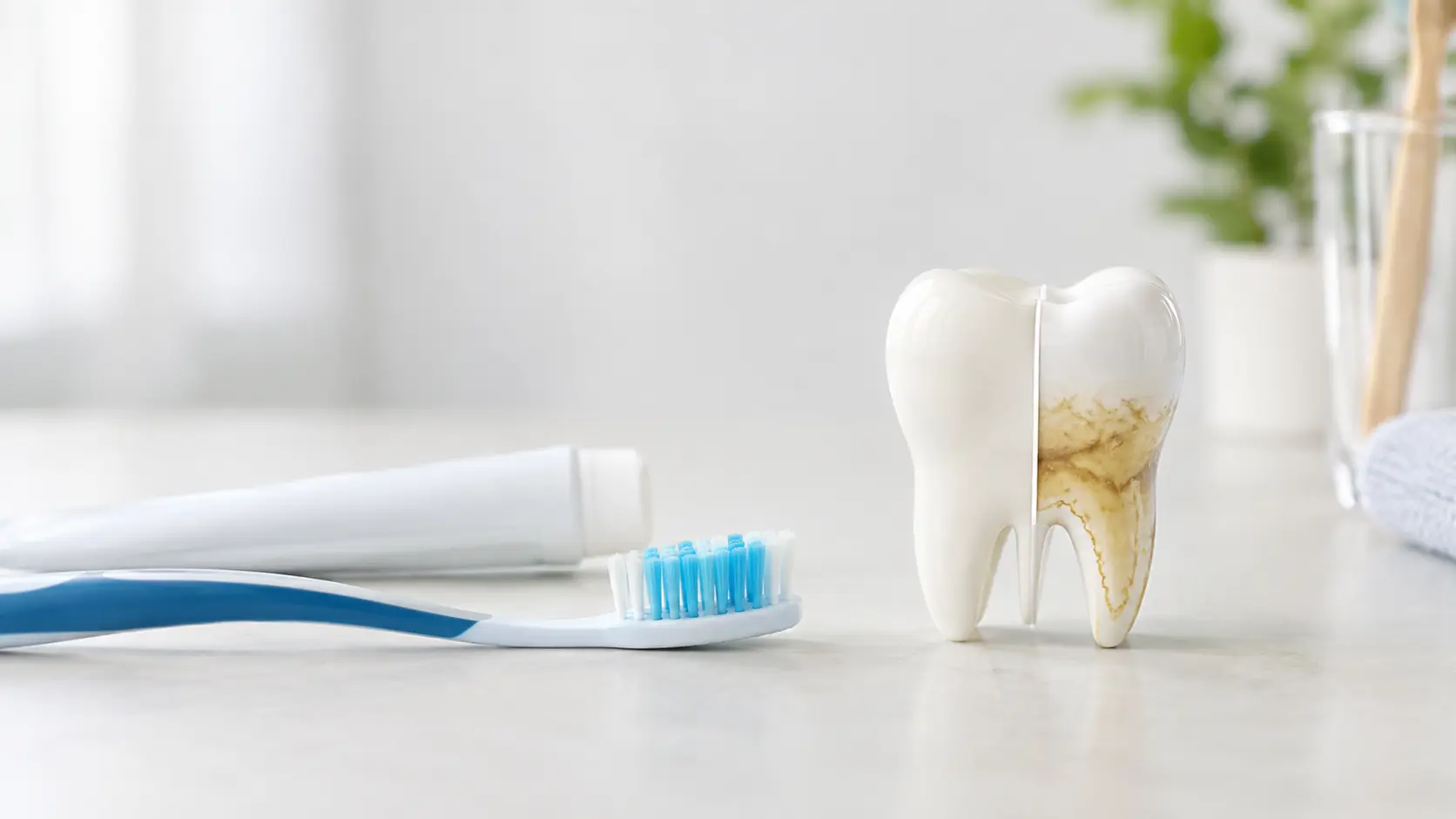
Here’s the honest answer before we go any further: once plaque hardens into tartar, brushing alone won’t remove it. Not because you’re doing something wrong, but because of what tartar actually is. It’s mineralized plaque, essentially plaque that has fused to your enamel with calcium and phosphate from your saliva. Once that happens, it behaves less like a stain and more like a small deposit of rock cemented onto the tooth surface.
That doesn’t mean you’re stuck watching it grow, though. There’s a real difference between removing tartar that has already formed and stopping new tartar from building up, and most of what works at home falls into the second category. Understanding that distinction changes how you approach the whole problem, and it’s where we’re going to spend the rest of this article.
What Tartar Actually Is (And Why It’s So Stubborn)
Plaque forms constantly. It’s a thin, sticky film of bacteria that builds up on your teeth throughout the day, feeding on sugars and starches from what you eat. Brush it away within a day or two, and it’s gone with minimal effort.
Leave it sitting near the gumline, though, and minerals in your saliva start binding to it. Within about 24 to 72 hours, depending on your saliva chemistry and diet, that soft plaque can begin hardening into calculus, which is the clinical term for tartar. Once it hardens, it grips onto enamel and even slips just under the gum edge, where a toothbrush bristle simply cannot reach it.
This is why dentists use metal scaling tools rather than stronger toothpaste. Tartar isn’t a surface stain you polish off. It’s a mineral deposit that needs to be physically scraped away without damaging the enamel underneath, which takes training, the right instruments, and often a bit of pressure control that’s genuinely hard to replicate safely at home.
Signs You’re Dealing With Tartar, Not Just Plaque
- A yellow or brownish crust near the gumline, especially behind the lower front teeth or along the upper molars
- A rough texture your tongue can feel, but a napkin or brush can’t wipe away
- Gums that look slightly puffy or bleed a little when you floss near the buildup
- Persistent bad breath that mouthwash only masks for an hour or two
- Visible buildup between teeth that seems to widen the gaps slightly
If what you’re noticing wipes off with a wet cloth or disappears after a thorough brushing session, it’s probably just plaque or surface staining from coffee, tea, or tobacco. Tartar stays put no matter how hard you scrub.
Can You Remove Existing Tartar at Home? The Honest Picture
Short answer: not fully, and not safely with sharp tools.
A lot of home remedies promise to dissolve or scrape off tartar, and a few of them genuinely soften the surface layer or slow new buildup. But none of them replicate what a dental scaler does, which is mechanically lift hardened calculus off enamel and below the gumline without damaging the tooth surface.
Trying to scrape it off yourself with a metal pick, a fingernail, or a sharp tool is one of the more common mistakes people make, and it’s worth avoiding. You can scratch enamel permanently, push tartar further under the gum tissue instead of removing it, or create small wounds that invite infection. Enamel doesn’t regenerate once it’s scratched, so this isn’t a low-risk experiment.
What you can do at home is:
- Soften and reduce mild, early-stage buildup
- Prevent existing tartar from spreading or thickening
- Make your next professional cleaning easier and less invasive
- Protect the gum tissue around tartar deposits from further irritation
That’s a legitimate goal, even if it isn’t the dramatic “tartar gone overnight” result some articles promise.
What Actually Helps (Backed by Dental Guidance)
Baking Soda Paste
Baking soda is mildly abrasive and slightly alkaline, which helps neutralize the acids that feed plaque bacteria. Mix a small amount with water into a paste and brush gently a couple of times a week rather than daily to help soften surface buildup and slow the rate at which new plaque hardens.
It won’t touch calculus that’s already bonded below the gumline, and overuse can wear down enamel over time, so moderation matters here.
White Vinegar Rinse (Diluted)
Some people rinse with a diluted white vinegar solution, roughly one part vinegar to two parts water, believing the acidity breaks down mineral deposits. There’s limited direct evidence this removes hardened tartar, but the antibacterial properties may help reduce the bacterial load that contributes to new buildup.
Vinegar is acidic enough that using it undiluted, or too often, can soften enamel itself, so this isn’t something to lean on daily.
Oil Pulling
Swishing coconut or sesame oil in the mouth for 10 to 15 minutes is an old practice that’s gained renewed attention. Research on oil pulling remains limited, but some small studies point to a modest reduction in plaque and gingivitis-related bacteria. It’s not going to dissolve existing tartar, but as a low-risk addition to a normal oral care routine, it may help slow new deposits from forming.
Electric Toothbrushes With Tartar Control Bristles
A consistent, thorough brushing routine is still the single most reliable defense against new tartar formation. Electric brushes with oscillating or sonic motion tend to reach the gumline more evenly than manual brushing, which is exactly where tartar likes to start.
Tartar-Control Toothpaste
These typically contain pyrophosphates or triclosan alternatives that interfere with the crystallization process, meaning they help stop soft plaque from hardening in the first place. Think of it as a preventive shield rather than a solvent for buildup that’s already there.
Flossing, Every Day, Not Just Before a Dental Visit
Tartar loves the tight spaces between teeth where a brush can’t fully reach. Daily flossing physically removes plaque before it has the 24- to 72-hour window it needs to mineralize.
What Doesn’t Work (Common Myths)
- Lemon juice on teeth. It’s acidic enough to erode enamel and won’t dissolve tartar in any meaningful way.
- Scraping with metal tools or fingernails. This risks gum injury and enamel damage without actually removing subgingival calculus.
- Charcoal toothpaste as a tartar remover. It’s abrasive and may polish surface stains, but there’s no solid evidence it removes hardened calculus.
- Strawberry and baking soda mixtures. A popular internet trend, but the acidity from strawberries can do more harm to enamel than good.
- Hydrogen peroxide rinses used daily. Occasional use at proper dilution is generally considered safe by dental sources, but frequent or concentrated use can irritate gum tissue.
If a remedy promises to “melt away” tartar overnight, treat that claim with real skepticism.
Risk Factors That Make Tartar Build Up Faster
- Dry mouth, whether from medication, dehydration, or breathing through the mouth at night
- Smoking or tobacco use, which changes saliva chemistry and bacterial balance
- A diet heavy in sugar and refined starches
- Crowded or overlapping teeth that are harder to clean thoroughly
- Skipping flossing, even when brushing is consistent
- Certain medications that reduce saliva flow, since saliva naturally helps wash away food particles and buffer acids
Genetics plays a role too. Some people produce saliva with higher mineral content, and that alone can make them more prone to fast tartar formation even with decent oral hygiene.
Why Professional Cleaning Still Matters
A dental hygienist uses tools designed specifically to remove calculus without harming enamel, including hand scalers and ultrasonic devices that vibrate at frequencies that break tartar loose without excessive scraping pressure. They can also reach below the gumline safely, which is where a meaningful portion of tartar tends to accumulate in people who skip regular cleanings.
Skipping professional cleanings entirely, hoping home remedies will substitute for them long-term, tends to let tartar creep toward the roots of the teeth. Left unaddressed for years, that buildup contributes to gum recession and, eventually, to periodontal disease, where the supporting bone around teeth is affected.
Most dental organizations recommend a cleaning every six months for the average adult, though people prone to fast tartar buildup are sometimes advised to come in every three to four months instead.
Nutrition and Tartar: What You Eat Matters More Than You’d Think
Sugary and starchy foods feed the exact bacteria that produce plaque, so cutting back on sticky sweets, sodas, and refined carbs reduces the raw material tartar needs to form. Crunchy vegetables like celery and carrots create a mild scrubbing action while you chew, which can help clear loose plaque before it has a chance to sit and harden.
Calcium and phosphorus, found in dairy and leafy greens, support enamel strength, which matters because stronger enamel resists the early demineralization process that makes tooth surfaces more receptive to plaque adhesion. Green tea has also drawn some research interest for its polyphenol content, which may reduce the activity of plaque-forming bacteria, though it’s a supporting habit rather than a fix on its own.
Staying hydrated helps too. Saliva is your mouth’s natural rinse cycle, and a dry mouth loses much of that self-cleaning benefit.
Daily Habits That Actually Slow Buildup
- Brush twice daily for a full two minutes, angling bristles slightly toward the gumline.
- Floss once a day, ideally before bed
- Rinse with water after sugary or acidic foods rather than brushing immediately, since enamel is briefly softer right after eating acidic items.
- Replace your toothbrush or brush head every three months
- Chew sugar-free gum with xylitol after meals when brushing isn’t possible, since it stimulates saliva flow
None of these habits are dramatic. But consistency here matters more than intensity.
When to See a Dentist Instead of Waiting
Certain signs suggest home care isn’t enough anymore, and waiting could let a manageable problem turn into a bigger one.
- Gums that bleed regularly, not just occasionally after aggressive flossing
- Visible tartar that’s thick, discolored, or spreading along multiple teeth
- Persistent bad breath despite good hygiene
- Gums that look like they’re pulling away from the teeth
- Loose or shifting teeth
- Sensitivity that’s new or worsening
If any of these show up, it’s worth booking a cleaning rather than experimenting further with home remedies. Gum disease in its early stages, called gingivitis, is reversible with proper care, but it can progress to periodontitis, which involves bone loss and isn’t reversible in the same way.
Common Myths and Misunderstandings
Myth: If it doesn’t hurt, it’s not a problem. Tartar and early gum disease are frequently painless. Discomfort tends to show up only once the condition has progressed, which is part of why routine checkups matter even when nothing feels wrong.
Myth: Whitening toothpaste removes tartar. Whitening formulas target surface stains from coffee, tea, or tobacco. They don’t dissolve mineralized calculus.
Myth: Once you have tartar, it’s permanent and irreversible. The tartar itself needs professional removal, but the gum inflammation it causes is often reversible if addressed early, through both a cleaning and a better home routine afterward.
Myth: Natural remedies are always safer than dental tools. Diluted vinegar or lemon juice used often enough can do more enamel damage over time than a single professional scaling session ever would.
Frequently Asked Questions
Can baking soda dissolve tartar completely?
No. It can help soften surface buildup and slightly reduce new plaque hardening, but it won’t remove tartar that’s already mineralized onto the tooth.
Is it safe to scrape tartar off myself with a dental pick bought online?
It’s generally not recommended. Without proper training, it’s easy to scratch enamel or injure gum tissue, and subgingival tartar below the gumline usually can’t be reached safely this way.
How long does it take for plaque to turn into tartar?
Typically somewhere between 24 and 72 hours, depending on individual saliva chemistry, diet, and oral hygiene habits.
Does oil pulling remove tartar?
Not directly. Some research suggests it may reduce plaque-related bacteria, which could slow new tartar formation, but it doesn’t dissolve existing hardened deposits.
Why does tartar keep coming back even though I brush regularly?
Tartar tends to reform in the same spots because those areas, often behind the lower front teeth or along the gumline near salivary gland openings, are naturally more exposed to mineral-rich saliva.
Can diet alone prevent tartar buildup?
Diet helps significantly by limiting the sugars bacteria feed on, but it works best combined with consistent brushing, flossing, and regular dental visits rather than as a standalone solution.
Is tartar the same thing as a cavity?
No. Tartar is hardened plaque sitting on or near the tooth surface and gumline. A cavity is actual decay within the tooth structure, though untreated tartar buildup can indirectly contribute to conditions that make cavities more likely.
The Final Takeaway
Tartar is stubborn because of what it physically is: a mineral deposit fused to your enamel, not a stain sitting on top of it. Home care can genuinely slow new buildup, soften early surface deposits, and protect your gums in the meantime. What it can’t do is fully replace a professional cleaning once tartar has hardened and spread beneath the gumline.
The realistic approach is a combination. Brush and floss consistently, adjust a few habits around diet and hydration, use tartar-control products as a preventive layer, and still keep up with regular cleanings. That combination, not a single home hack, is what actually keeps tartar from taking over.
References
- American Dental Association, MouthHealthy. Plaque. https://www.mouthhealthy.org/all-topics-a-z/plaque
- American Dental Association. Dental Floss/Interdental Cleaners. https://www.ada.org/resources/ada-library/oral-health-topics/floss
- Cleveland Clinic. Tartar (Dental Calculus): Causes and Removal. https://my.clevelandclinic.org/health/diseases/25102-tartar
- Mayo Clinic. Gingivitis: Symptoms and Causes. https://www.mayoclinic.org/diseases-conditions/gingivitis/symptoms-causes/syc-20354453
- Mayo Clinic. Periodontitis: Symptoms and Causes. https://www.mayoclinic.org/diseases-conditions/periodontitis/symptoms-causes/syc-20354473
- National Institute of Dental and Craniofacial Research (NIH). Periodontal (Gum) Disease. https://www.nidcr.nih.gov/health-info/gum-disease
- Centers for Disease Control and Prevention. Oral Health Tips for Adults. https://www.cdc.gov/oral-health/prevention/oral-health-tips-for-adults.html
- Centers for Disease Control and Prevention. Oral Health. https://www.cdc.gov/oral-health/index.html
- MedlinePlus (National Library of Medicine). Gingivitis. https://medlineplus.gov/ency/article/001056.htm
- MedlinePlus (National Library of Medicine). Periodontitis. https://medlineplus.gov/ency/article/001059.htm
- MedlinePlus (National Library of Medicine). Dental Care – Adult. https://medlineplus.gov/ency/article/001957.htm
- Harvard Health Publishing. Gingivitis: Reversing and Preventing Early Gum Disease. https://www.health.harvard.edu/diseases-and-conditions/gingivitis-reversing-and-preventing-early-gum-disease
- World Health Organization. Oral Health, Fact Sheet. https://www.who.int/news-room/fact-sheets/detail/oral-health
- Cochrane Library. Powered Versus Manual Toothbrushing for Oral Health (Yaacob et al., 2014). https://www.cochranelibrary.com/cdsr/doi/10.1002/14651858.CD002281.pub3/full
- PubMed. The Effect of Oil Pulling in Comparison With Chlorhexidine and Other Mouthwash Interventions in Promoting Oral Health: A Systematic Review and Meta-Analysis. https://pubmed.ncbi.nlm.nih.gov/37635453/
- PubMed. Effect of Oil Pulling on Plaque-Induced Gingivitis: A Randomized, Controlled, Triple-Blind Study. https://pubmed.ncbi.nlm.nih.gov/19336860/
Disclaimer:
This article is for general educational purposes and is not a substitute for professional dental advice, diagnosis, or treatment. Speak with a dentist or dental hygienist about any specific symptoms or concerns.