How to Stop Snoring While Sleeping: A Practical, Evidence-Based Guide
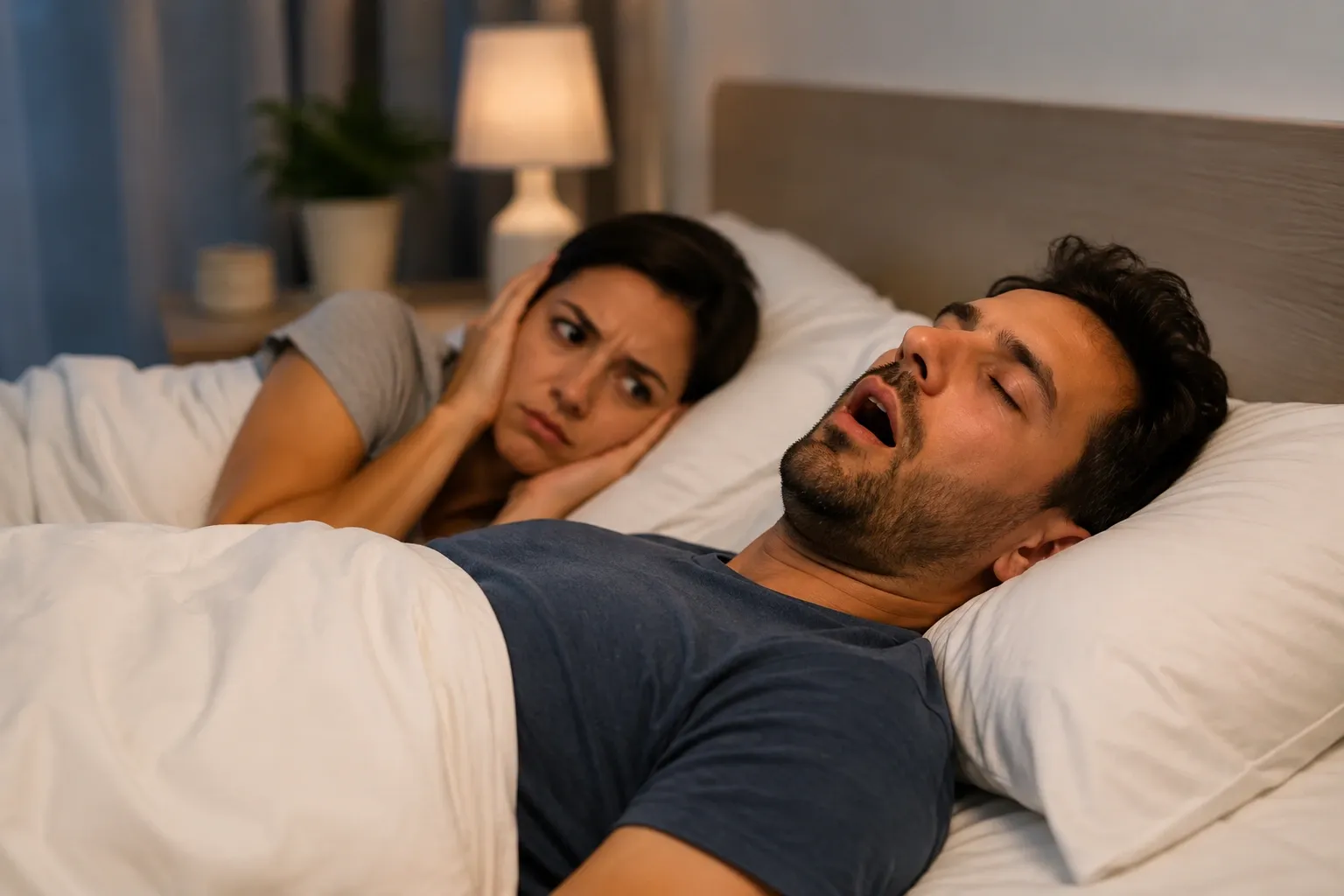
Snoring happens when air can’t move freely through your nose and throat while you sleep. The tissue at the back of your throat relaxes, narrows the airway, and vibrates as you breathe, which produces the sound. For most people, this is not dangerous on its own, but it can wreck a good night’s sleep for you and anyone sharing your room.
The good news is that snoring is often manageable. Sleeping on your side instead of your back, cutting back on evening alcohol, losing excess weight around the neck, and treating nasal congestion resolve or reduce snoring for many people. Devices such as nasal strips, oral appliances, and in some cases surgery can help when lifestyle changes aren’t enough. If your snoring is loud, frequent, and paired with gasping or long pauses in breathing, it may be a sign of obstructive sleep apnea, and that’s worth discussing with a doctor rather than treating with home remedies alone.
What Is Snoring, Exactly
Snoring is the sound of turbulent airflow vibrating soft tissue in your upper airway, mainly the soft palate, uvula, tongue base, and throat walls. When you’re awake, muscle tone keeps this passage relatively open. During sleep, especially deep sleep, those muscles relax. In most people that relaxation is harmless. In people with a narrower airway, extra tissue around the neck, or nasal blockage, the same relaxation is enough to partially close the passage, and the resulting airflow creates noise.
Occasional, quiet snoring after a late night or a cold is common and usually not worth worrying about. Snoring becomes more of a concern when it happens most nights, when it’s loud enough to be heard through walls, or when it’s accompanied by choking sounds, gasping, or breathing pauses that a bed partner notices.
Common Symptoms and Signs Worth Tracking
Snoring itself is the main symptom, but a few related signs are worth paying attention to because they change how urgently you should act:
- Snoring that happens most nights rather than occasionally
- Waking up with a dry mouth or sore throat
- Morning headaches
- Daytime sleepiness or trouble concentrating
- A bed partner noticing gasping, choking, or pauses in breathing
- Restless sleep, tossing, or frequent waking without a clear cause
The first few items point to ordinary snoring related to airway anatomy or lifestyle. The last two, especially gasping and witnessed breathing pauses, point toward the possibility of obstructive sleep apnea and generally warrant a conversation with a doctor.
Why Snoring Happens
Several factors can narrow the airway or increase the amount of tissue vibrating during sleep. Often more than one factor is at play at the same time.
Sleep position. Lying on your back allows gravity to pull the tongue and soft palate backward, narrowing the throat. This is one of the most common and most fixable contributors to snoring.
Body weight and neck size. Extra soft tissue around the neck and throat can press on the airway. Weight gain, particularly around the neck, is a well-recognized risk factor for both snoring and obstructive sleep apnea, with risk factors including increasing age, obesity, weight gain, body posture, retrognathia, nasal blockage, asthma, alcohol consumption, smoking, and the use of muscle relaxants.
Nasal congestion. A stuffy nose from allergies, a cold, or a deviated septum forces you to breathe more forcefully through a narrowed passage, which increases the vibration that causes snoring.
Alcohol and sedatives. Alcohol, sleeping pills, and some other muscle relaxants loosen the throat muscles further than natural sleep already does, making the airway more likely to collapse, since alcohol relaxes the muscles in the back of the throat and increases snoring.
Anatomy. A naturally narrow throat, a long soft palate, a large tongue, enlarged tonsils or adenoids, or a receding chin can all reduce the space air has to move through.
Age. Throat muscle tone tends to decrease with age, which is part of why snoring becomes more common in middle age and beyond.
Smoking. Smoking irritates and inflames the airway lining, which can contribute to snoring independent of other factors.
How Doctors Think About Snoring vs. Sleep Apnea
Not all snoring is the same, and doctors generally separate “primary snoring,” where breathing itself isn’t seriously disrupted, from snoring that’s a symptom of obstructive sleep apnea, where breathing repeatedly stops and restarts during sleep. The distinction matters because primary snoring is mostly a comfort and relationship issue, while untreated obstructive sleep apnea is linked to higher risks for high blood pressure, heart problems, and daytime accidents from poor sleep.
If your doctor suspects sleep apnea based on your symptoms, they may recommend a sleep study, either in a lab or with an at-home testing device, to measure how often your breathing is interrupted overnight. This isn’t something you can diagnose from symptoms alone, and it isn’t something this article can tell you either. What it can do is help you recognize when a home fix is reasonable and when a medical evaluation makes more sense.
What You Can Try at Home
Most people start here, and for many, this is enough to meaningfully reduce or eliminate snoring.
Change your sleep position. Side sleeping keeps the tongue and soft palate from falling backward against the throat the way they can when you’re on your back. Some people find it easier to stay off their back with a positional aid, such as a pillow designed to encourage side sleeping, or by sewing a tennis ball into the back of a pajama shirt so lying flat becomes uncomfortable.
Address nasal congestion. If allergies or a stuffy nose are part of the problem, treating the congestion, whether with saline rinses, allergy management, or a doctor’s guidance on decongestants, can noticeably reduce snoring caused by mouth breathing and airway resistance.
Cut back on alcohol before bed. Avoiding alcohol in the few hours before sleep reduces the extra muscle relaxation that makes the throat more likely to collapse.
Review sedating medications with your doctor. If you take sleep aids, muscle relaxants, or other sedating medications, ask your doctor or pharmacist whether they could be contributing to your snoring, and don’t stop or change a prescribed medication on your own.
Work toward a healthy weight. For people carrying extra weight around the neck and throat, gradual weight loss is one of the more effective lifestyle changes for reducing snoring, though it isn’t a quick fix and won’t resolve every case.
Keep a consistent sleep schedule. Irregular sleep and overtiredness can lead to deeper, heavier relaxation of throat muscles, which can worsen snoring.
Elevate the head of the bed. Raising the head of the entire bed frame by a few inches, rather than just stacking pillows, can reduce the backward collapse of throat tissue for some people.
Over-the-Counter Devices: What Actually Has Evidence Behind It
A wide range of products claim to stop snoring, but they don’t all have the same level of evidence, and none of them are a guaranteed fix.
Nasal strips and internal nasal dilators. These adhesive strips or small internal devices widen the nostrils to ease airflow resistance. They can help specifically when your snoring originates in the nose rather than the throat, but the evidence on how consistently they reduce snoring is mixed, and while some people find that they snore less when using nasal strips at night, studies have not consistently shown that nasal strips can stop or significantly reduce snoring. They’re inexpensive and low-risk, so they’re a reasonable first thing to try, but they aren’t a treatment for sleep apnea, and snoring strips are intended for people who snore for reasons other than obstructive sleep apnea, since studies haven’t found that they effectively treat OSA on their own.
Chin strips. These hold the jaw closed to reduce mouth breathing and can help people whose snoring comes mainly from an open mouth at night, though again, evidence is limited on how well they work compared with other options.
Mandibular advancement devices. These over-the-counter or dentist-fitted mouthpieces gently move the lower jaw forward, which pulls the tongue away from the back of the throat and opens the airway. Custom-fitted versions from a dentist tend to work better and fit more comfortably than generic boil-and-bite versions.
Throat sprays. Marketed to lubricate or tighten throat tissue, these have limited supporting evidence and are best thought of as a minor add-on rather than a primary fix.
None of these devices reliably treat obstructive sleep apnea. If sleep apnea has been diagnosed or is suspected, talk to a doctor before relying on an over-the-counter snoring device, since it could mask the problem without addressing the breathing pauses that matter for your health.
Positional Therapy
For people who mainly snore on their back, staying off your back for the night, whether through a positional pillow, a wearable position sensor, or a low-tech trick like a bulky object sewn into the back of your sleepwear, is one of the more evidence-supported behavioral fixes. A small clinical study using a head-positioning pillow found reductions in both subjective snoring severity and measured snoring events among adults with position-related sleep apnea, in a study of 25 adults with positional obstructive sleep apnea who used a head-positioning pillow over consecutive nights, with snoring severity and an objective snoring index used as the primary outcome measures. This kind of positional approach works best for people whose snoring is clearly worse when lying flat on their back and lighter or absent on their side.
Medical and Dental Treatment Options
When lifestyle changes and over-the-counter devices aren’t enough, or when snoring is tied to a diagnosed condition, medical options include:
Custom oral appliances. A dentist can fit a mouthpiece precisely to your bite that repositions your jaw and tongue to keep the airway more open than a generic device typically can.
Treating nasal or sinus problems. An ear, nose, and throat specialist can evaluate whether a deviated septum, chronic sinus inflammation, or enlarged tonsils and adenoids are narrowing your airway, and correcting these can meaningfully reduce snoring for some people.
CPAP therapy. Continuous positive airway pressure is the standard treatment for moderate to severe obstructive sleep apnea. It’s usually prescribed based on a sleep study rather than for snoring alone, and while it’s highly effective at reducing snoring as a side effect, some people find the mask uncomfortable, which is a reason to work with a doctor on fit and settings rather than stopping use on your own.
Surgical options. Procedures range from stiffening or trimming excess soft palate tissue to correcting structural nasal problems or removing enlarged tonsils. Surgery is generally reserved for cases with a clear anatomical cause or when other treatments haven’t worked, and it doesn’t guarantee complete resolution of snoring, since surgical remedies are typically reserved for patients with obvious anatomic abnormalities and don’t generally provide complete resolution of snoring, though they can improve breathing. A qualified ENT specialist can help you weigh whether surgery is appropriate for your specific anatomy.
Nutrition and Weight Considerations
There’s no specific food or supplement proven to stop snoring. Where nutrition matters most is indirectly, through gradual, sustainable weight loss for people whose snoring is linked to excess weight around the neck and throat. General healthy eating patterns that support steady weight loss, rather than restrictive short-term diets, tend to have more durable effects on snoring over time. If you’re considering a structured weight loss plan for this reason, it’s worth discussing your goals and any underlying health conditions with a doctor or dietitian rather than relying on generic advice.
Common Misconceptions About Snoring
“Only overweight people snore.” Body weight is one contributor, but anatomy, nasal congestion, alcohol use, sleep position, and age all play a role. Thin, fit people can snore too, particularly if they have a naturally narrow airway or chronic nasal congestion.
“Snoring is always harmless.” Occasional, mild snoring usually is. Loud, frequent snoring with gasping or breathing pauses is a different situation and can be a sign of obstructive sleep apnea, which carries real health risks if untreated.
“Any nasal strip or spray will fix it.” These products can genuinely help some people, particularly when nasal congestion is the main driver, but they don’t work for everyone and aren’t designed to treat sleep apnea.
“Snoring only affects the person snoring.” It frequently disrupts a bed partner’s sleep as well, which is part of why it’s worth addressing even when it isn’t a medical emergency.
When to See a Doctor
Consider scheduling a medical evaluation if you notice:
- Snoring most nights, especially if it’s loud
- Gasping, choking, or witnessed pauses in breathing during sleep
- Excessive daytime sleepiness, even after a full night in bed
- Morning headaches or a persistently dry, sore throat
- Difficulty concentrating, mood changes, or high blood pressure that’s hard to explain
- Snoring in a child, which should always be evaluated rather than assumed to be harmless
These symptoms can have several causes, and only a proper evaluation, sometimes including a sleep study, can determine whether obstructive sleep apnea or another underlying issue is involved. If you or someone else notices severe pauses in breathing, significant gasping, or bluish lips or skin during sleep, that warrants prompt medical attention rather than waiting to see if home remedies help.
A Practical Starting Point
If you’re not sure where to begin, a reasonable order to try things is: adjust your sleep position first, since it’s free and often effective; address any nasal congestion; cut back on evening alcohol and review sedating medications with your doctor; and give a nasal strip or a well-fitted oral device a trial if the simpler changes aren’t enough on their own. If snoring persists despite these steps, or if you notice any of the warning signs above, move on to a medical evaluation rather than continuing to cycle through over-the-counter products.
Frequently Asked Questions
Does sleeping on your side really stop snoring?
For many people, yes, or at least it reduces it. Back sleeping lets the tongue and soft palate fall backward against the throat, narrowing the airway. Side sleeping reduces that effect, which is why it’s usually one of the first things worth trying.
Can losing weight stop snoring completely?
It can significantly reduce or resolve snoring for people whose snoring is linked to extra tissue around the neck and throat, but it isn’t guaranteed to eliminate it entirely, especially if anatomy or nasal congestion are also contributing factors.
Are nasal strips actually effective?
They can help when snoring is related to narrow nostrils or nasal airflow resistance, but research on how consistently they reduce snoring is mixed, and they aren’t a treatment for obstructive sleep apnea.
Is snoring a sign of sleep apnea?
Not always. Many people snore without having sleep apnea. Loud, frequent snoring combined with gasping, choking sounds, or witnessed breathing pauses is what raises concern for sleep apnea and is worth discussing with a doctor.
Should I try an anti-snoring mouthguard bought online?
Generic mandibular advancement devices can help some people, but a custom-fitted version from a dentist typically fits better and works more reliably. If you have any diagnosed jaw or dental issues, check with a dentist before using one.
Can children’s snoring be ignored?
No. Snoring in children is common but should be evaluated by a pediatrician, since it can be related to enlarged tonsils or adenoids and, in some cases, pediatric sleep apnea, which affects growth, behavior, and learning differently than it does in adults.
Final Takeaway
Snoring usually comes down to a narrowed airway, whether from sleep position, nasal congestion, extra tissue around the throat, alcohol, or anatomy, and most people can meaningfully reduce it through simple, low-risk changes: sleeping on your side, treating nasal congestion, cutting back on evening alcohol, and working toward a healthy weight if that’s a relevant factor. Over-the-counter devices like nasal strips and oral appliances can add further benefit for the right person. Persistent loud snoring, especially with gasping or breathing pauses, is a different situation and deserves a proper medical evaluation rather than a home remedy, since it may point to obstructive sleep apnea. Read our sleep health guide here to know more about sleep.
Related Articles
- How to increase REM Sleep
- How to sleep fast in 5 minutes
- Why Do I Drool When I Sleep
- Why Do I Want to Sleep All the Time?
- Why Do People Talk in Their Sleep?
- Why You Wake Up Tired After 8 Hours of Sleep
Medical Disclaimer
Content on ThinkHealthTips is for general information only, not medical advice, diagnosis, or treatment. Always consult a qualified healthcare provider for medical concerns, and seek emergency care immediately if needed. Supplement claims are not FDA-evaluated and aren’t intended to diagnose, treat, cure, or prevent disease; results vary. We may earn commissions from product links; this doesn’t affect our editorial accuracy.
Editorial Standards
We source information from government health agencies, medical institutions, and peer-reviewed research, clearly distinguishing established evidence from preliminary findings. We never fabricate statistics, studies, or citations, and we don’t diagnose readers or replace medical treatment with supplement recommendations. Spot an error? Contact us for a correction. Affiliate links don’t influence what we recommend.
References
- Mayo Clinic. “Snoring – Symptoms and causes.” https://www.mayoclinic.org/diseases-conditions/snoring/symptoms-causes/syc-20377694
- Mayo Clinic. “Snoring – Diagnosis and treatment.” https://www.mayoclinic.org/diseases-conditions/snoring/diagnosis-treatment/drc-20377701
- Mayo Clinic News Network. “Mayo Clinic Q and A: Lifestyle changes and treatment options may help with snoring.” https://newsnetwork.mayoclinic.org/discussion/weekend-wellness-lifestyle-changes-and-trying-different-treatment-options-may-help-with-loud-snoring/
- Mayo Clinic. “Sleep apnea – Diagnosis and treatment.” https://www.mayoclinic.org/diseases-conditions/sleep-apnea/diagnosis-treatment/drc-20377636
- Sleep Foundation. “How Do Nasal Strips Work?” https://www.sleepfoundation.org/snoring/how-do-nasal-strips-work
- SleepApnea.org. “Do Nasal Strips Help With Snoring?” https://www.sleepapnea.org/snoring/do-snoring-strips-really-work/
- Patient.info. “Snoring: Causes and Treatment.” https://patient.info/mental-health/insomnia-poor-sleep/snoring
- WebMD. “Snoring Treatments.” https://www.webmd.com/sleep-disorders/snoring-treatments
- NHS East Sussex Healthcare Trust. “Snoring – The Options.” https://www.esht.nhs.uk/wp-content/uploads/2017/08/Snoring-the-options.pdf
- Zhu K, et al. “Head-positioning pillow and positional therapy for positional obstructive sleep apnea.” PMC. https://pmc.ncbi.nlm.nih.gov/articles/PMC4676069
- Park JA, et al. (2022). “Optimal application of soft-palate webbing flap pharyngoplasty combined with nasal surgery for surgical treatment of primary snoring and obstructive sleep apnea.” Sleep and Breathing. https://www.ncbi.nlm.nih.gov/pmc/articles/PMC9663355/