Why Do People Talk in Their Sleep? What Science Knows and When It Matters
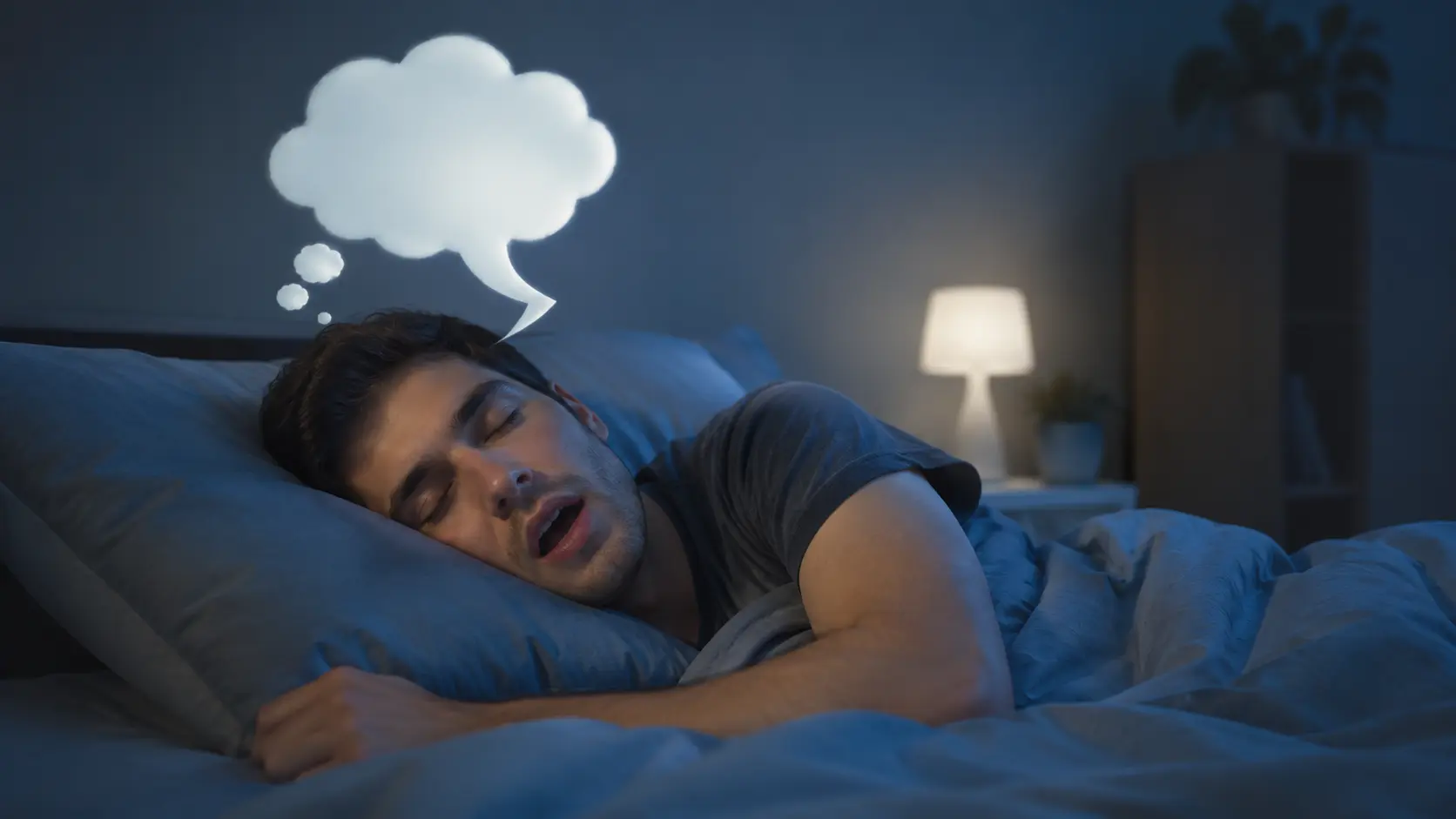
Sleep talking catches most people off guard the first time they hear it: a mumbled sentence, a name spoken into the dark, sometimes a full conversation directed at nobody. The person in bed has no idea any of it is happening.
For bed partners, roommates, or parents listening from the hallway, it can range from amusing to unsettling, depending on what gets said and how often it occurs. And the questions it raises are genuinely interesting. What is the brain doing during those moments? Is it replaying the day, processing emotion, or just misfiring signals during a transition between sleep stages?
Sleep talking, known in medicine as somniloquy, is one of the more common sleep behaviors across all age groups. It tends to be dismissed as a quirk or a punchline, but it raises real questions about how the sleeping brain manages speech, memory, and arousal. Understanding what drives it also helps identify when it might point toward something worth addressing.
What Sleep Talking Actually Is
The formal term is somniloquy, from the Latin words for sleep and speech. It refers to any vocalization during sleep, from a single word or grunt to extended, apparently coherent monologues or back-and-forth exchanges.
Sleep is not a uniform state. The brain cycles through distinct stages across the night, moving between light non-REM sleep, deeper slow-wave sleep, and REM sleep, the stage most associated with vivid dreaming. These cycles repeat roughly every 90 minutes. Each stage involves a different pattern of brain activity, and the body follows different rules in each one.
During REM sleep, a process called REM atonia temporarily suppresses voluntary muscle movement. This keeps the body still while the brain is active in ways that resemble wakefulness. The system is designed so that people do not physically act out their dreams.
Sleep talking can occur in any stage, but the character of the speech often differs depending on when it happens. During REM sleep, when dream content is most vivid and narrative, speech can sound more coherent and contextual, tied to whatever the dreaming brain is processing. During non-REM stages, particularly the lighter transitions in and out of sleep, speech tends to be more fragmented, mumbled, or meaningless.
The reason speech gets through when other movements do not comes down to how the suppression system works. It is not total. Certain automatic or partially automatic behaviors, including breathing, swallowing, and occasionally vocalization, can break through even during stages where larger limb movements are suppressed. Sleep talking appears to sit in that gray zone between full motor control and full inhibition.
How Common Is It
More common than most people realize. Estimates from sleep research place sleep talking in roughly 67 percent of adults at some point in their lives, though regular, frequent sleep talking affects a smaller percentage of the population on any given night.
Children talk in their sleep far more than adults. Among children between ages 3 and 10, it is considered a normal developmental behavior with no clinical significance in most cases. The frequency drops off across adolescence and tends to settle at lower levels in adulthood, though it does not disappear entirely for many people.
Men appear to talk in their sleep more than women across most studies, though the difference is not large enough to be a defining feature. The behavior runs in families, suggesting a genetic component alongside environmental triggers.
The Main Causes Behind Sleep Talking
Sleep talking rarely has a single clean explanation. Several factors contribute, and they often overlap in the same person.
Sleep Stage Transitions
The brain does not switch cleanly between sleep stages. During the brief, imperfect transitions, particularly from deeper sleep into lighter stages, partial arousal states can occur where some systems wake up before others do. Speech can emerge during these moments without the person being conscious or aware. It is the same mechanism behind sleepwalking, night terrors, and confusional arousal events.
Stress and Emotional Processing
The sleeping brain does real work on emotional memory. REM sleep in particular appears to function as a kind of emotional processor, replaying experiences with emotional weight and helping integrate them into long-term memory in a way that reduces their immediate charge. During periods of heightened stress or emotional intensity, this processing can become noisier and more active. Sleep talking tends to increase during these stretches, though the content does not always map directly onto what the person is working through.
Fever
Body temperature and brain activity are tightly linked. A fever disrupts the normal regulation of sleep stages and can trigger vivid dreaming, confusional episodes, and sleep talking even in people who do not ordinarily do it. This is common enough that a sudden onset of sleep talking in an adult is sometimes connected to illness.
Sleep Deprivation
When the body is running short on sleep, the pressure to enter deep sleep stages quickly becomes more intense. This can make transitions between stages less smooth and increase the likelihood of partial arousal behaviors, including sleep talking. People in sleep-deprived states also tend to spend more time in rebound REM sleep when they finally rest, which can amplify sleep talking if that is when it tends to occur.
Alcohol and Certain Medications
Alcohol suppresses REM sleep early in the night and then allows a rebound of REM activity later as it clears the system. This rebound can be more intense than normal REM, with more active dreaming and a higher chance of vocalization. Some medications, including antidepressants, certain sedatives, and drugs that affect neurotransmitters involved in sleep regulation, can also shift sleep architecture in ways that promote sleep talking.
Sleep Disorders
This is where the picture becomes more clinically relevant. Sleep talking on its own is rarely a sign of an underlying disorder, but when it appears alongside other symptoms, it can point toward something that warrants evaluation.
Sleep Disorders Associated With Sleep Talking
Several sleep conditions either cause sleep talking or commonly co-occur with it.
REM Sleep Behavior Disorder
REM sleep behavior disorder, often abbreviated as RBD, is a condition where the normal muscle suppression during REM sleep breaks down. People with RBD act out their dreams physically. They may kick, punch, shout, or get out of bed. Sleep talking in this context is not benign background noise. It often accompanies active, sometimes distressing, physical behavior.
RBD is significant beyond the immediate sleep disruption. The condition has a documented association with neurodegenerative diseases, including Parkinson’s disease, Lewy body dementia, and multiple system atrophy. A substantial proportion of people diagnosed with RBD go on to develop one of these conditions years or decades later. This does not mean sleep talking alone signals neurodegeneration. But when sleep talking occurs alongside acting out dreams, thrashing, shouting during apparent fear or aggression, or confusion on waking, evaluation by a sleep specialist is a reasonable and important step.
Sleep Apnea
Obstructive sleep apnea disrupts sleep architecture throughout the night. Each breathing pause triggers a partial arousal as the brain forces the airway back open. These repeated micro-arousals can produce fragmented, disorganized sleep with frequent transitions between stages, which creates more opportunity for sleep talking and other partial arousal behaviors. Someone who begins talking in their sleep more than usual, especially if they are also snoring or waking tired, might benefit from a sleep apnea evaluation.
Night Terrors
Night terrors occur in non-REM sleep, most often in the first few hours of the night. They involve partial arousal from deep sleep accompanied by intense fear responses, including screaming, crying out, rapid heart rate, and confusion. The person is not dreaming in the narrative REM sense. They are responding to a disorganized arousal from deep sleep. Sleep talking, often incoherent or distressed-sounding, is part of the event in many cases. The person typically has no memory of it the next morning.
Night terrors are more common in children but can occur in adults, particularly during periods of sleep deprivation, stress, or fever.
Sleepwalking
Sleepwalking and sleep talking frequently co-occur because they share the same underlying mechanism: partial arousal from non-REM sleep, where the brain is active enough to produce movement or speech but not conscious enough for the person to be aware. The term for the broader category is parasomnia, which encompasses all abnormal behaviors during sleep.
What Sleep Talkers Actually Say
This question gets more interesting than it might seem.
Research into the content of sleep speech offers some surprising findings. A 2017 study published in Sleep analyzed hundreds of episodes of recorded sleep speech from adult subjects in a sleep laboratory. Negation and cursing appeared far more in sleep speech than in ordinary waking conversation. Phrases expressing refusal, disagreement, or hostility came up with unexpected frequency. The most common word across the dataset was “no.”
This finding connects to theories about what the brain does emotionally during sleep. If sleep functions in part as an emotional processing system, and if the emotional content being processed is weighted toward threat, conflict, or unresolved tension, then the speech that leaks through might reflect that weighting. Sleep is not as peaceful inside as it looks from the outside.
Content during REM sleep tends to be more narrative, tied to what appears to be active dreaming. During non-REM stages, speech is often in fragments, single words, or sounds that bear no obvious relation to recent experience.
Risk Factors That Make It More Likely
Several factors consistently show up in people who sleep-talk more than the average person.
A family history of sleep talking or other parasomnias is one of the stronger predictors. The behavior clusters in families in a pattern that points toward heritability, though no single gene has been identified as responsible.
Younger age is a consistent factor. Sleep talking peaks in childhood and declines across the lifespan, though it does not disappear entirely.
High stress loads correlate with more frequent sleep talking in adults. This includes both acute stressors and chronic background stress.
Sleep deprivation makes existing tendencies more pronounced. People who talk in their sleep somewhat regularly may find that it becomes more frequent during periods of poor or shortened sleep.
Fever reliably increases sleep talking in people who do not otherwise do it, and makes it more frequent and more intense in those who do.
Co-sleeping, in the sense of sharing a sleep space where another person’s sounds might produce partial arousal, can also trigger episodes.
Diagnosing Sleep Talking
Sleep talking does not usually require a formal diagnosis in isolation. But when it occurs alongside other concerning symptoms, a sleep study becomes relevant.
A polysomnography, conducted overnight in a sleep laboratory, monitors brain wave activity, eye movement, muscle activity, heart rate, breathing, and blood oxygen levels. Importantly for sleep talking, the video is recorded throughout the night. This allows clinicians to observe exactly what the body is doing during vocalization episodes and whether other behaviors accompany them.
Home sleep testing, which is more limited, can capture breathing patterns and oxygen data but cannot observe the full range of behaviors that in-lab studies document. For straightforward sleep apnea evaluation, home testing is often adequate. For suspected REM sleep behavior disorder or parasomnias involving physical movement or unusual behaviors, in-lab monitoring with video is the more informative choice.
If sleep talking is a new development in an adult who has never done it before, or if it is accompanied by acting out of dreams, physical injury during sleep, or confusion on waking, these details should be shared with a doctor before a testing pathway is decided.
Treatment and Management
For most people, sleep talking needs no treatment. It is a benign behavior that causes more concern for the person hearing it than for the person doing it. But when it is frequent, disruptive to a bed partner, or connected to an underlying condition, several approaches can help.
Addressing Underlying Causes
If sleep apnea is contributing, treating the apnea often reduces associated sleep talking along with other symptoms. CPAP therapy reduces the number of partial arousals across the night, which cuts down on opportunities for parasomnia behaviors to occur.
If stress is a clear driver, approaches that reduce physiological stress before bed, including wind-down routines, reducing stimulation in the hour before sleep, and consistent sleep scheduling, can reduce episode frequency over time.
If alcohol is a factor, reducing or eliminating it in the evening is one of the more direct ways to normalize sleep architecture.
For REM sleep behavior disorder specifically, the medication clonazepam is often prescribed, as is melatonin at higher doses than used for simple sleep onset problems. These help maintain the muscle suppression that should occur during REM sleep.
Sleep Hygiene Adjustments
Sleep hygiene is an overused phrase, but the core practices have a real effect on sleep architecture. Going to bed and waking at consistent times stabilizes the circadian system. Reducing light exposure in the evening slows the arousal system. Keeping the bedroom cool and dark reduces the likelihood of partial arousals from environmental stimuli. None of these steps will eliminate sleep talking in someone with a strong tendency, but they reduce the frequency in many people.
For Bed Partners
This is genuinely worth addressing. Persistent sleep talking that disrupts a partner’s sleep is a legitimate problem, even when the talker is fine. White noise machines or earplugs help buffer the sound. In some cases, temporary separate sleeping arrangements during stretches of particularly frequent talking are the practical solution.
Nutrition and Sleep Quality
No direct nutritional intervention targets sleep talking. But diet influences sleep quality in ways that affect the frequency of partial arousals and parasomnia behaviors.
Heavy meals close to bedtime increase digestive activity during sleep, which can produce micro-arousals and disrupt sleep stage continuity. Caffeine consumed in the afternoon blocks adenosine receptors that build sleep pressure across the day, which can reduce deep sleep time and make transitions less smooth.
Alcohol, as noted, disrupts REM architecture in ways that are particularly relevant for sleep talking. Magnesium, found in leafy greens, nuts, seeds, and legumes, plays a role in nervous system regulation and sleep quality. Some evidence points to deficiency as a contributor to disturbed sleep, though supplementation studies show mixed results.
Staying hydrated matters more than is generally recognized for sleep quality. Mild dehydration can affect sleep continuity, though the mechanism is less direct than with alcohol or caffeine.
When to See a Doctor
Most sleep talking does not need medical attention. But some situations do.
See a doctor if:
- Sleep talking starts for the first time in an adult with no prior history, particularly after age 50
- It is accompanied by physical movement during sleep, such as kicking, hitting, or getting out of bed
- There are reports of shouting, screaming, or apparent fear during sleep
- The person wakes confused and is slow to orient
- Daytime sleepiness is significant and persistent
- A bed partner has observed breathing pauses or gasping during sleep
- The person has a known or suspected neurodegenerative condition
Children who talk in their sleep during developmental years do not generally need evaluation unless the behavior is severe, accompanied by breathing irregularities, or connected to signs of daytime problems. But a pediatrician is always the right point of contact when a parent is uncertain.
Common Myths About Sleep Talking
“If someone talks in their sleep, you can get them to tell the truth.”
Sleep speech is not an honest confession. The brain is not in a state where truthful self-reporting occurs. Sleep talking often has no direct connection to waking thoughts or intentions. The idea that sleep reveals secrets has no scientific backing.
“Sleep talking always means something is wrong.”
Not true. For most people, it is a normal behavior with no clinical significance. It is more common than people think, precisely because it rarely causes harm.
“Waking someone who is sleep-talking is dangerous.”
This myth applies more to sleepwalking, where abrupt arousal from deep sleep can cause confusion and disorientation. But it is not medically dangerous to wake a sleep talker. They may simply be confused for a moment before orienting.
“Only adults with sleep problems talk in their sleep.”
Children are more likely to talk in their sleep than adults, and for most of them, it is completely normal. No sleep disorder needs to be present.
“Sleep talking is always connected to dreaming.”
It can occur in any sleep stage, including non-REM stages, where dreaming in the narrative sense is not happening. REM sleep talking may reflect dream content, but non-REM sleep talking often does not.
Frequently Asked Questions
Is sleep talking harmful?
For the vast majority of people, no. It does not disrupt the talker’s own sleep in any meaningful way, and there are no health consequences associated with the behavior itself. The main impact is usually on whoever is sharing the sleep space.
Can sleep talking be a sign of a serious condition?
On its own, rarely. But when it accompanies physical behaviors during sleep, such as acting out dreams, or when it starts suddenly in an older adult with no prior history, it can be a sign of a condition worth evaluating, including REM sleep behavior disorder.
Why do I never remember talking in my sleep?
The brain during sleep is not in a state that encodes memory the way waking consciousness does. Speech can occur without any lasting trace in the memory system. This is the same reason most people do not remember the majority of their dreams.
Does stress cause sleep talking?
Stress appears to be one of the more consistent triggers for increased sleep talking in adults. The brain’s overnight emotional processing becomes more active during high-stress periods, which can produce more speech during sleep.
Can children grow out of sleep talking?
Most do. Sleep talking is common in childhood and tends to become less frequent across adolescence and into adulthood. It does not always disappear entirely, but it often reduces in both frequency and intensity.
A Final Word
Sleep talking is one of those behaviors that sits at the edge of consciousness, happening in a state the person never experiences directly. It is strange to think about, but entirely normal in most cases.
Sleep is not silence for the brain. It is active, dynamic, and doing real work. And it is messy. Speech during sleep is just one way that messiness becomes audible.
But when sleep talking changes in character, when it becomes more frequent, more intense, or travels with other behaviors that suggest the body is doing more than it should during rest, that shift deserves attention. A single conversation with a doctor about what a bed partner has observed can open the door to an evaluation that clarifies what is actually happening and whether any of it matters.
If you want to know more deeply about Sleep, check this sleep health page for more detailed information.
Most of the time, it does not. And knowing that is its own form of reassurance.
References
- Arkin AM. Sleep talking: A review. Journal of Nervous and Mental Disease. 1966;143(2):101-122.
- Uguccioni G, Golmard JL, de Fontreaux AN, Leu-Semenescu S, Brion A, Arnulf I. Fight or flight? Dream content during sleepwalking/sleep terrors vs. rapid eye movement sleep behavior disorder. Sleep Medicine. 2013;14(5):391-398. https://pubmed.ncbi.nlm.nih.gov/23522975/
- Arnulf I, Uguccioni G, Gay F, et al. What does the sleeping brain say? Syntax and semantics of sleep talking in healthy subjects and in REM sleep behavior disorder. Sleep. 2017;40(11). https://pubmed.ncbi.nlm.nih.gov/29029249/
- Mahowald MW, Schenck CH. Insights from studying human sleep disorders. Nature. 2005;437(7063):1279-1285. https://pubmed.ncbi.nlm.nih.gov/16251953/
- Schenck CH, Boeve BF, Mahowald MW. Delayed emergence of a Parkinsonian disorder or dementia in 81% of older males initially diagnosed with idiopathic REM sleep behavior disorder. Sleep Medicine. 2013;14(8):744-748. https://pubmed.ncbi.nlm.nih.gov/23474058/
- National Institute of Neurological Disorders and Stroke. REM sleep behavior disorder information page. https://www.ninds.nih.gov/health-information/disorders/rem-sleep-behavior-disorder
- Mayo Clinic Staff. Sleep talking (somniloquy): Causes and when to see a doctor. https://www.mayoclinic.org/diseases-conditions/sleep-disorders/expert-answers/sleep-talking/faq-20057919
- American Academy of Sleep Medicine. International Classification of Sleep Disorders, 3rd edition. Darien, IL: AASM, 2014.
- Cleveland Clinic. Parasomnias: Types, symptoms, causes, and treatment. -parasomnias
- MedlinePlus. Sleep disorders. U.S. National Library of Medicine. https://medlineplus.gov/sleepdisorders.html
- Harvard Health Publishing. Parasomnias: Things that go bump in the night. https://www.health.harvard.edu/
- Ohayon MM, Mahowald MW, Dauvilliers Y, Krystal AD, Leger D. Prevalence and comorbidity of nocturnal wandering in the U.S. adult general population. Neurology. 2012;78(20):1583-1589. https://pubmed.ncbi.nlm.nih.gov/22539565/
- Kotagal S. Parasomnias in childhood. Sleep Medicine Reviews. 2009;13(2):157-168. https://pubmed.ncbi.nlm.nih.gov/18555958/